Results by title

4 books match the query 'Trafficking'

cover of Brokered Subjects: Sex, Trafficking, and the Politics of Freedom

Brokered Subjects

Sex, Trafficking, and the Politics of Freedom

Elizabeth Bernstein

University of Chicago Press, 2018
Brokered Subjects digs deep into the accepted narratives of sex trafficking to reveal the troubling assumptions that have shaped both right- and left-wing agendas around sexual violence. Drawing on years of in-depth fieldwork, Elizabeth Bernstein sheds light not only on trafficking but also on the broader structures that meld the ostensible pursuit of liberation with contemporary techniques of power. Rather than any meaningful commitment to the safety of sex workers, Bernstein argues, what lies behind our current vision of trafficking victims is a transnational mix of putatively humanitarian militaristic interventions, feel-good capitalism, and what she terms carceral feminism: a feminism compatible with police batons.
[more]
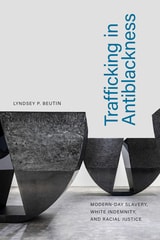
cover of Trafficking in Antiblackness: Modern-Day Slavery, White Indemnity, and Racial Justice

Trafficking in Antiblackness

Modern-Day Slavery, White Indemnity, and Racial Justice

Lyndsey P. Beutin

Duke University Press, 2023
In Trafficking in Antiblackness Lyndsey P. Beutin analyzes how campaigns to end human trafficking—often described as “modern-day slavery”—invoke the memory of transatlantic slavery to support positions ultimately grounded in antiblackness. Drawing on contemporary antitrafficking visual culture and media discourse, she shows how a constellation of media, philanthropic, NGO, and government actors invested in ending human trafficking repurpose the history of transatlantic slavery and abolition in ways that undermine contemporary struggles for racial justice and slavery reparations. The recurring narratives, images, and figures such as “slavery in Africa,” “Arab slave traders,” and “Black incapacity for self-governance” discursively turn Black people across the diaspora into the enslavers of the past and present in place of white Americans and Europeans. Doing so, Beutin contends, creates a rhetorical defense against being held liable for slavery’s dispossessions and violence. Despite these implications, Beutin demonstrates that antitrafficking discourse remains popular and politically useful for former slaving nations and their racial beneficiaries because it refashions historic justifications for white supremacy into today’s abolition of slavery.
[more]
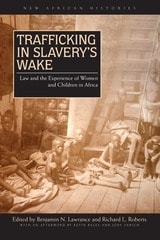
cover of Trafficking in Slavery’s Wake: Law and the Experience of Women and Children in Africa

Trafficking in Slavery’s Wake

Law and the Experience of Women and Children in Africa

Benjamin N. Lawrance

Ohio University Press, 2012

Women and children have been bartered, pawned, bought, and sold within and beyond Africa for longer than records have existed. This important collection examines the ways trafficking in women and children has changed from the aftermath of the “end of slavery” in Africa from the late nineteenth century to the present.

The formal abolition of the slave trade and slavery did not end the demand for servile women and children. Contemporary forms of human trafficking are deeply interwoven with their historical precursors, and scholars and activists need to be informed about the long history of trafficking in order to better assess and confront its contemporary forms. This book brings together the perspectives of leading scholars, activists, and other experts, creating a conversation that is essential for understanding the complexity of human trafficking in Africa.

Human trafficking is rapidly emerging as a core human rights issue for the twenty-first century. Trafficking in Slavery’s Wake is excellent reading for the researching, combating, and prosecuting of trafficking in women and children.

Contributors: Margaret Akullo, Jean Allain, Kevin Bales, Liza Stuart Buchbinder, Bernard K. Freamon, Susan Kreston, Benjamin N. Lawrance, Elisabeth McMahon, Carina Ray, Richard L. Roberts, Marie Rodet, Jody Sarich, and Jelmer Vos.
[more]
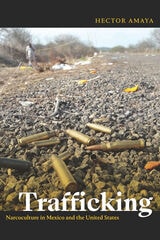
cover of Trafficking: Narcoculture in Mexico and the United States

Trafficking

Narcoculture in Mexico and the United States

Hector Amaya

Duke University Press, 2020

In Trafficking Hector Amaya examines how the dramatic escalation of drug violence in Mexico in 2008 prompted new forms of participation in public culture in Mexico and the United States. He contends that, by becoming a site of national and transnational debate about the role of the state, this violence altered the modes publicness could take, transforming assumptions about freedom of expression and the rules of public participation. Amaya examines the practices of narcocorrido musicians who take advantage of digital production and distribution technologies to escape Mexican censors and to share music across the US-Mexico border, as well as anonymous bloggers whose coverage of trafficking and violence from a place of relative safety made them public heroes. These new forms of being in the public sphere, Amaya demonstrates, evolved to exceed the bounds of the state and traditional media sources, signaling the inadequacy of democratic theories of freedom and publicness to understand how violence shapes public discourse.
[more]