59 books match the query 'Tragedy' and 4 start with a
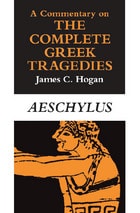
cover of A Commentary on The Complete Greek Tragedies. Aeschylus

A Commentary on The Complete Greek Tragedies. Aeschylus

James C. Hogan

University of Chicago Press, 1985

This commentary offers a rich introduction and useful guide to the seven surviving plays attributed to Aeschylus. Though it may profitably be used with any translation of Aeschylus, the commentary is based on the acclaimed Chicago translations, The Complete Greek Tragedies, edited by David Grene and Richmond Lattimore.

James C. Hogan provides a general introduction to Aeschylean theater and drama, followed by a line-by-line commentary on each of the seven plays. He places Aeschylus in the historical, cultural, and religious context of fifth-century Athens, showing how the action and metaphor of Aeschylean theater can be illuminated by information on Athenian law athletic contests, relations with neighboring states, beliefs about the underworld, and countless other details of Hellenic life. Hogan clarifies terms that might puzzle modern readers, such as place names and mythological references, and gives special attention to textual and linguistic issues: controversial questions of interpretation; difficult or significant Greek words; use of style, rhetoric, and commonplaces in Greek poetry; and Aeschylus's place in the poetic tradition of Homer, Hesiod, and the elegiac poets. Practical information on staging and production is also included, as are maps and illustrations, a bibliography, indexes, and extensive cross-references between the seven plays. Forthcoming volumes will cover the works of Sophocles and Euripides.
[more]
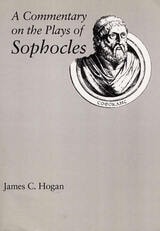
cover of A Commentary on the Plays of Sophocles

A Commentary on the Plays of Sophocles

James C. Hogan

Southern Illinois University Press, 1991

James C. Hogan introduces each play by highlighting specific and interpretive problems relevant to that play before turning to a line-by-line analysis. The line analysis is comprehensive, ranging from the meanings of words and phrases that pertain to a variety of Greek ideas and institutions to metaphor and imagery specific to each play as well as plots and borrowings from earlier poetry, styles, and characterizations.

Along with his examination of the seven extant plays of Sophocles in English translations, Hogan provides a general introduction to the theatre in Sophocles’ time, discussing staging, the conventions of the Greek theatre, the text of the plays, and mythology and religion.
[more]
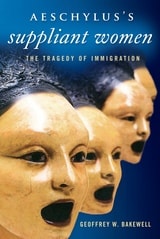
cover of Aeschylus’s Suppliant Women: The Tragedy of Immigration

Aeschylus’s Suppliant Women

The Tragedy of Immigration

Geoffrey W. Bakewell

University of Wisconsin Press, 2013
This book offers a provocative interpretation of a relatively neglected tragedy, Aeschylus's Suppliant Women. Although the play's subject is a venerable myth, it frames the flight of the daughters of Danaus from Egypt to Greece in starkly contemporary terms, emphasizing the encounter between newcomers and natives. Some scholars read Suppliant Women as modeling successful social integration, but Geoffrey W. Bakewell argues that the play demonstrates, above all, the difficulties and dangers noncitizens brought to the polis.
            Bakewell's approach is rigorously historical, situating Suppliant Women in the context of the unprecedented immigration that Athens experienced in the sixth and fifth centuries BCE. The flow of foreigners to Attika increased under the Pisistratids but became a flood following liberation, Cleisthenes, and the Persian Wars. As Athenians of the classical era became increasingly aware of their own collective identity, they sought to define themselves and exclude others. They created a formal legal status to designate the free noncitizens living among them, calling them metics and calling their status metoikia. When Aeschylus dramatized the mythical flight of the Danaids from Egypt in his play Suppliant Women, he did so in light of his own time and place. Throughout the play, directly and indirectly, he casts the newcomers as metics and their stay in Greece as metoikia.
            Bakewell maps the manifold anxieties that metics created in classical Athens, showing that although citizens benefited from the many immigrants in their midst, they also feared the effects of immigration in political, sexual, and economic realms. Bakewell finds metoikia was a deeply flawed solution to the problem of large-scale immigration. Aeschylus's Argives accepted the Danaids as metics only under duress and as a temporary response to a crisis. Like the historical Athenians, they opted for metoikia because they lacked better alternatives.
[more]
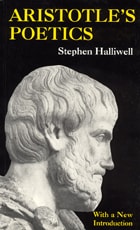
cover of Aristotle's Poetics

Aristotle's Poetics

Stephen Halliwell

University of Chicago Press, 1998

In this, the fullest, sustained interpretation of Aristotle's Poetics available in English, Stephen Halliwell demonstrates that the Poetics, despite its laconic brevity, is a coherent statement of a challenging theory of poetic art, and it hints towards a theory of mimetic art in general. Assessing this theory against the background of earlier Greek views on poetry and art, particularly Plato's, Halliwell goes further than any previous author in setting Aristotle's ideas in the wider context of his philosophical system.

The core of the book is a fresh appraisal of Aristotle's view of tragic drama, in which Halliwell contends that at the heart of the Poetics lies a philosophical urge to instill a secularized understanding of Greek tragedy.

"Essential reading not only for all serious students of the Poetics . . . but also for those—the great majority—who have prudently fought shy of it altogether."—B. R. Rees, Classical Review

"A splendid work of scholarship and analysis . . . a brilliant interpretation."—Alexander Nehamas, Times Literary Supplement

[more]