Results by title
4 books match the query 'Trail of Tears, 1838-1839'
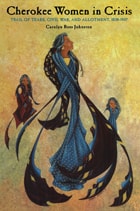
Cherokee Women In Crisis
Trail of Tears, Civil War, and Allotment, 1838-1907Carolyn Johnston
University of Alabama Press, 2003
American Indian women have traditionally played vital roles in social hierarchies at the family, clan, and tribal levels. In the Cherokee Nation, specifically, women and men are considered equal contributors to the culture. With this study, however, we learn that three key historical events in the 19th and early 20th centuries—removal, the Civil War, and allotment of their lands—forced a radical renegotiation of gender roles and relations in Cherokee society.
Carolyn Johnston (who is related to John Ross, principal chief of the Nation) looks at how Cherokee women navigated these crises in ways that allowed them to retain their traditional assumptions, ceremonies, and beliefs and to thereby preserve their culture. In the process, they both lost and retained power. The author sees a poignant irony in the fact that Europeans who encountered Native societies in which women had significant power attempted to transform them into patriarchal ones and that American women struggled for hundreds of years to achieve the kind of equality that Cherokee women had enjoyed for more than a millennium.
Johnston examines the different aspects of Cherokee women’s power: authority in the family unit and the community, economic independence, personal autonomy, political clout, and spirituality. Weaving a great-grandmother theme throughout the narrative, she begins with the protest of Cherokee women against removal and concludes with the recovery of the mother town of Kituwah and the elections of Wilma Mankiller and Joyce Dugan as principal chiefs of the Cherokee Nation and the Eastern Band of Cherokees.

The Cherokee Lottery
A Sequence of PoemsWilliam Jay Smith
Northwestern University Press, 2000
In powerful poetry of epic proportions, which Harold Bloom has called his best work, Smith paints a stark and vivid picture of this ordeal and its principal participants, among them Sequoyah, the inventor of the Cherokee alphabet, and Osceola, the Seminole chief.
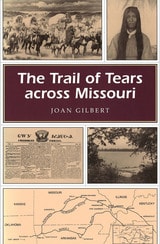
The Trail of Tears across Missouri
Joan Gilbert
University of Missouri Press, 1996
As settlers moved beyond the eastern seaboard during the early nineteenth century, the government forced thousands of American Indians from their ancestral lands. The Cherokees, the largest and most important tribe in the Southeast, fought exile with a combination of passive resistance and national publicity for their plight. Because they had successfully resisted the government's efforts to move them from their homeland, their removal was particularly brutal when it finally came. The Trail of Tears across Missouri is a moving account of the 1837-1838 removal of the Cherokees from the southeastern United States to Indian Territory (now Oklahoma).
After providing an overview of the Cherokees' life in the Southeast and of the events leading up to their exile, Joan Gilbert traces the mass exodus state by state from Tennessee to Arkansas. Successive chapters highlight the experiences and the hardships endured by those forced to travel with inadequate supplies of food, clothing, and transportation. It is estimated that four thousand Cherokees, nearly a quarter of the tribe, died.
In bringing the grim realities of the forced march to life, Gilbert draws from such primary sources as letters, newspaper stories, and the writings of missionaries, guides, and doctors who accompanied them. She focuses on the Cherokees' experiences as they passed through Missouri, using the journals of Dr. W. I. I. Morrow and guide B. B. Cannon.
In addition to chronicling the removal of the Cherokees, Gilbert also brings the story up to date by describing how the nation lives today and how the Trail of Tears has been commemorated.

Their Determination to Remain
A Cherokee Community's Resistance to the Trail of Tears in North CarolinaLance Greene
University of Alabama Press, 2023
The remarkable story of a North Carolina Cherokee community who avoided forced removal on the Trail of Tears
During the 1838 forced Cherokee removal by the US government, a number of close-knit Cherokee communities in the Southern Appalachian Mountains refused to relinquish their homelands, towns, and way of life. Using a variety of tactics, hundreds of Cherokees avoided the encroaching US Army and remained in the region.
In his book Their Determination to Remain: A Cherokee Community’s Resistance to the Trail of Tears in North Carolina, Lance Greene explores the lives of wealthy plantation owners Betty and John Welch who lived on the southwestern edge of the Cherokee Nation. John was Cherokee and Betty was White. Although few Cherokees in the region participated in slavery, the Welches held nine African Americans in bondage.
During removal, the Welches assisted roughly 100 Cherokees hiding in the steep mountains. Afterward, they provided land for these Cherokees to rebuild a new community, Welch’s Town. Betty became a wealthy and powerful plantation mistress because her husband could no longer own land. Members of Welch’s Town experienced a transitional period in which they had no formal tribal government or clear citizenship yet felt secure enough to reestablish a townhouse, stickball fields, and dance grounds.
Greene’s innovative study uses an interdisciplinary approach, incorporating historical narrative and archaeological data, to examine how and why the Welches and members of Welch’s Town avoided expulsion and reestablished their ways of life in the midst of a growing White population who resented a continued Cherokee presence. The Welch strategy included Betty’s leadership in demonstrating outwardly their participation in modern Western lifestyles, including enslavement, as John maintained a hidden space—within the boundaries of their land—for the continuation of traditional Cherokee cultural practices. Their Determination to Remain explores the complexities of race and gender in this region of the antebellum South and the real impacts of racism on the community.