Results by title
12 books match the query 'Training'
Changing the Way We Teach
Writing and Resistance in the Training of Teaching AssistantsSally Barr Ebest
Southern Illinois University Press, 2005
Changing the Way We Teach: Writing and Resistance in the Training of Teaching Assistants draws on eighteen case studies to illustrate the critical role writing plays in overcoming graduate student resistance to instruction, facilitating change, and developing professional identity. Sally Barr Ebest argues that teaching assistants in English must be actively engaged in the theory and practice underlying composition pedagogy in order to better understand how to alter the way they teach and why such change is necessary.
In illustrating the potential for change when the paradigm shift in composition is applied to graduate education, Ebest considers recent discussions of composition pedagogy; post-secondary teaching theories; cognitive, social cognitive, and educational psychology; and issues of gender, voice, and writing.
Stemming from research conducted over a five-year period, this volume explores how a cross-section of teaching assistants responded to pedagogy as students and how their acceptance of pedagogy affected their performance as instructors. Investigating reasons behind manifestations of resistance and necessary elements for overcoming it, Ebest finds that engagement in composition strategies—reflective writing, journaling, drafting, and active learning—and restoration of feelings of self-efficacy are the primary factors that facilitate change.
Concerned with gender as it relates to personal construct, Changing the Way We Teach traces the influence of familial expectations and the effects of literacy experiences on students and draws correlations between feminist and composition pedagogy. Ebest asserts that the phenomena contributing to the development of a strong, unified voice in women—self-knowledge, empathy, positive role models, and mentors—should be essential elements of a constructivist graduate curriculum.
To understand composition pedagogy and to convince students of its values, Ebest holds that educators must embrace it themselves and trace the effects through active research. By providing graduate students with pedagogical sites for research and reflection, faculty enable them to express their anger or fear, study its sources, and quite often write their way to a new understanding.

Child Care and Training
Marion E. Faegre and John E. Anderson
University of Minnesota Press, 1928
Child Care and Training was first published in 1928. Minnesota Archive Editions uses digital technology to make long-unavailable books once again accessible, and are published unaltered from the original University of Minnesota Press editions.
In this completely revised edition, a book with a long and successful history is brought up to date in keeping with current concepts of child development and growth. This basic handbook has been used and enthusiastically endorsed by thousands of teachers, students, doctors, parents, and nurses.
The present volume retains the time-tested plan of previous editions, but much of the material has been revised and new information, including a whole chapter on Personality, Adjustment, and Mental Health, has been added. All of the illustrations are new also.
The authors of the original volume, Marion L. Faegre and John E. Anderson, were joined in the preparation of this revision by Dale B. Harris, Dr. Anderson's successor as director of the Institute of Child Welfare at the University of Minnesota. In his long and distinguished career Dr. Anderson has served as president of the American Psychological Association and of the Society for Research in Child Development, as editor of the Psychological Bulletin and as advisory editor of Parents' Magazine and Childhood Education. Mrs. Faegre, author of numerous other works on child development, served for many years as consultant in parent education in the U. S. Children's Bureau, Washington, D. C.
Whether this book is used as a text for teaching or as a reference or guidebook for the individual, it admirably fills the need for a practical, authoritative source of instruction and advice.

Dog and Gun
A Few Loose Chapters on Shooting, Among Which Will Be Found Some Anecdotes and IncidentsJohnson J. Hooper, with an Introduction by Philip D. Beidler
University of Alabama Press, 1992
A classic portrait of hunting, sport, and gentlemanly culture in the antebellum South.
The least well known of Johnson Jones Hooper’s works, Dog and Gun was first published as a newspaper series, then appeared in six book editions between 1856 and 1871. Hooper is Alabama’s most celebrated antebellum author, and here he gives insight into the meaning of a culture where every male hunts – and a man who shoots as a gentleman will be assumed a gentleman. Beidler’s introduction to this reprint edition explores the social, literary, and technical dimensions of Dog and Gun, which he sees as an important commentary on class distinctions in the antebellum South, as well as a straightforward treatise on hunting.
Although the book is a manual for the hunter, with characteristic humor and a certain disdain, Hooper gives a full picture of the gentlemanly sport of hunting – clearly distinct from hunting for food – in all aspects including hunter, weaponry, and sporting dogs. He takes us back to an autumnal ritual of the hunt, where one is always a boy with his first gun – to the natural mystery of quest, competition, predation, pursuit, survival, bravery, endurance, and eventual defeat, called the mystery of the hunt.
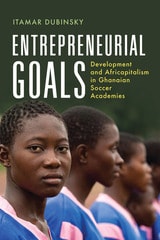
Entrepreneurial Goals
Development and Africapitalism in Ghanaian Soccer AcademiesItamar Dubinsky
University of Wisconsin Press, 2022
Itamar Dubinsky’s extensive ethnographic research offers an innovative theoretical approach by assessing three institutions—Mandela Soccer Academy, Kumasi Sports Academy, and Unistar Soccer Academy—through an Africapitalist prism. He demonstrates that these business endeavors, when viewed from the perspective of local interests, realize many of the educational, financial, and community building ambitions of the region. This pioneering examination of locally owned academies in Ghana reflects Dubinsky’s aim of illuminating the entrepreneurs and programs whose success passes to participating youth and their families, while also exposing the contradictions of for-profit development initiatives that purport to reap collective social benefits.

Hiring, Training, and Supervising Library Shelvers
Patricia Tunstall
American Library Association, 2009

ISDN Applications in Education and Training
Robin Mason
The Institution of Engineering and Technology, 1994
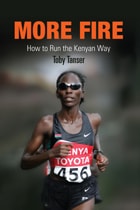
More Fire
How to Run the Kenyan WayToby Tanser
Westholme Publishing, 2008
An Essential Book for Runners of All Abilities
All of the Author’s Proceeds Go to Shoes4Africa to Support the Construction of Children’s Hospitals in Kenya
Kenya has produced the greatest concentration of world-class runners, and fellow athletes have long been intrigued by their remarkable success. Toby Tanser has devoted much of his professional career living and training among Kenyan runners in order to better understand the unique status of East African athletes. In More Fire: How to Run the Kenyan Way, the author builds upon the success of his acclaimed Train Hard, Win Easy, the first book to provide insights into the Kenyan "magic" that so many runners and coaches had sought. Instead of special foods or secret techniques, Tanser found that Kenyan runners simply trained incredibly hard, much harder than anyone had realized. By adapting their training regime—which includes three workouts a day—and following their example, runners, whether novices or champions, are able to improve both their performance and enjoyment in running. For those training for a marathon or any other distance race, this book is both practical and inspirational.
Divided into four parts, the book begins with a description of running in Kenya, the landscape, the physical conditions, and the people; the second part concentrates on details of Kenyan training camps, training methods, and their typical training diet; the third profiles individual runners and coaches from the past and present, with each explaining their approach to running so that readers can gain further insight into their methods. The book ends with a discussion on how the reader can adapt Kenyan training practices for their own running requirements. More Fire: How to Run the Kenyan Way is essential reading for runners of all levels and experience.
Swimming Science
Optimizing Training and PerformanceEdited by G. John Mullen
University of Chicago Press, 2018
Writing to competitive and novice swimmers alike, contributors to this volume break down every aspect of the sport. Swimming Science covers physiology, psychology, and safety, as well as hydrodynamics, nutrition, and technique. Each chapter examines these topics through a series of practical questions. What are the forces acting on you when you swim, and how do your muscles best generate propulsion against those forces? How much protein, salt, and iron should a swimmer consume, and how does energy from carbohydrates compare to energy from fats? How important is the “swimmer’s physique” in competitive swimming, and is technique or strength more necessary for generating speed? These questions are examined with the aid of explanatory diagrams and illustrations, and the book can be used to search for particular topics, or read straight through for a comprehensive overview.
Whether you are a competitive swimmer looking to optimize your performance or just beginning to dip a toe into the sport, Swimming Science is a must-read.
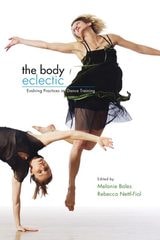
The Body Eclectic
Evolving Practices in Dance TrainingEdited by Melanie Bales and Rebecca Nettl-Fiol
University of Illinois Press, 2007
This rich collection of essays and interviews explores modern-dance technique training from the last fifty years. Focusing on the culture of dance, editors Melanie Bales and Rebecca Nettl-Fiol examine choreographic process and style, dancer agency and participation in the creative process, and changes in the role and purpose of training. Bringing recent writings on dance into dialogue with dance practice, The Body Eclectic: Evolving Practices in Dance Training asks readers to consider the relationship between training practices and choreographic style and content. The contributors explore how technique training both guides and reflects the art of dance.
Contributors include Melanie Bales, Glenna Batson, Wendell Beavers, Veronica Dittman, Natalie Gilbert, Joshua Monten, Martha Myers, and Rebecca Nettl-Fiol.
Dance professionals interviewed include David Dorfman, Ralph Lemon, Bebe Miller, Tere O’Connor, and Shelley Washington.

The Designer
Half a Century of Change in Image, Training, and TechniqueRosemary Sassoon
Intellect Books, 2008
Training and the Private Sector
International ComparisonsEdited by Lisa M. Lynch
University of Chicago Press, 1994
The authors focus on Germany's widespread, formal apprenticeship programs; the U.S. system of learning-by-doing; Japan's low employee turnover and extensive company training; and Britain's government-led and school-based training schemes. The evidence shows that, overall, training in the workplace is more effective than training in schools. Moreover, even when U.S. firms spend as much on training as other countries do, their employees may still be less skilled than workers in Europe or Japan.
Training and the Private Sector points to training programs in Germany, Japan, and other developed countries as models for creating a workforce in the United States that can compete more successfully in today's economy.
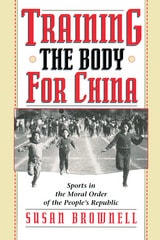
Training the Body for China
Sports in the Moral Order of the People's RepublicSusan Brownell
University of Chicago Press, 1995
Training the Body for China is the first book on Chinese sports based on extended fieldwork by a Westerner. Brownell introduces the notion of "body culture" to analyze Olympic sports as one element in a whole set of Chinese body practices: the "old people's disco dancing" craze, the new popularity of bodybuilding (following reluctant official acceptance of the bikini), mass calisthenics, martial arts, military discipline, and more.
Translating official and dissident materials into English for the first time and drawing on performance theory and histories of the body, Brownell uses the culture of the body as a focal point to explore the tensions between local and global organizations, the traditional and the modern, men and women. Her intimate knowledge of Chinese social and cultural life and her wide range of historic examples make Training the Body for China a unique illustration of how gender, the body, and the nation are interlinked in Chinese culture.