Results by title

3 books match the query 'Traitors'
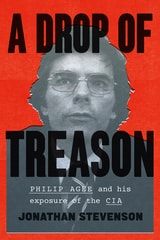
cover of A Drop of Treason: Philip Agee and His Exposure of the CIA

A Drop of Treason

Philip Agee and His Exposure of the CIA

Jonathan Stevenson

University of Chicago Press, 2021

Philip Agee’s story is the stuff of a John le Carré novel—perilous and thrilling adventures around the globe. He joined the CIA as a young idealist, becoming an operations officer in hopes of seeing the world and safeguarding his country. He was the consummate intelligence insider, thoroughly entrenched in the shadow world. But in 1975, he became the first such person to publicly betray the CIA—a pariah whose like was not seen again until Edward Snowden. For almost forty years in exile, he was a thorn in the side of his country.
 
The first biography of this contentious, legendary man, Jonathan Stevenson’s A Drop of Treason is a thorough portrait of Agee and his place in the history of American foreign policy and the intelligence community during the Cold War and beyond. Unlike mere whistleblowers, Agee exposed American spies by publicly blowing their covers. And he didn’t stop there—his was a lifelong political struggle that firmly allied him with the social movements of the global left and against the American project itself from the early 1970s on. Stevenson examines Agee’s decision to turn, how he sustained it, and how his actions intersected with world events.
 
Having made profound betrayals and questionable decisions, Agee lived a rollicking, existentially fraught life filled with risk. He traveled the world, enlisted Gabriel García Márquez in his cause, married a ballerina, and fought for what he believed was right. Raised a conservative Jesuit in Tampa, he died a socialist expat in Havana. In A Drop of Treason, Stevenson reveals what made Agee tick—and what made him run.
[more]
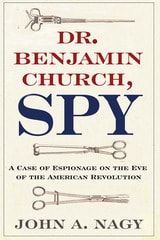
cover of Dr. Benjamin Church, Spy: A Case of Espionage on the Eve of the American Revolution

Dr. Benjamin Church, Spy

A Case of Espionage on the Eve of the American Revolution

John A. Nagy

Westholme Publishing, 2013
Newly Discovered Evidence Against a Man Who Has Long Been Suspected as Being a British Agent and America’s First Traitor 
“John Nagy has devoted his astonishing research skills to unearthing the truth about the least known and most dangerous spy in American history.”—Thomas Fleming, author of Liberty! The American Revolution
Dr. Benjamin Church, Jr. (1734–1778) was a respected medical man and civic leader in colonial Boston who was accused of being an agent for the British in the 1770s, providing compromising intelligence about the plans of the provincial leadership in Massachusetts as well as important information from the meetings of the First Continental Congress in Philadelphia. Despite his eminence as a surgeon—he conducted an autopsy on one of the victims of the Boston Massacre—and his own correspondence and the numbers of references to him from contemporaries, no known image of him exists and many aspects of his life remain obscure. What we do know is that George Washington accused him of being a traitor to the colonial cause and had him arrested and tried; after first being jailed in Connecticut and then Massachusetts, during which he continued to profess his innocence, he was allowed to leave America on a British vessel in 1778, but it foundered in the Atlantic with all hands lost. The question of whether Dr. Benjamin Church was working for the British has never been conclusively demonstrated, and remains among the mysteries of the American Revolution.
In Dr. Benjamin Church, Spy: A Case of Espionage on the Eve of the American Revolution, noted authority John A. Nagy has scoured original documents to establish the best case against Church, identifying previously unacknowledged correspondence and reports as containing references to the doctor and his activities, and noting an incriminating letter in the possession of the Library of Congress that is a coded communication composed by Church to his British contact. Nagy shows that at the cusp of the revolution, when the possibility—let alone the outcome—of an American colonial rebellion was far from assured, Church sought to align himself with the side he thought would emerge victorious—the British crown—and thus line his pockets with money that he desperately needed. A fascinating investigation into a centuries-old intrigue, this well-researched volume is an important contribution to American Revolution scholarship.
 
[more]
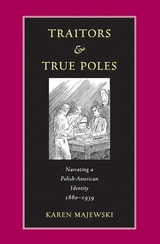
cover of Traitors and True Poles: Narrating a Polish-American Identity, 1880–1939

Traitors and True Poles

Narrating a Polish-American Identity, 1880–1939

Karen Majewski

Ohio University Press, 2003

During Poland’s century-long partition and in the interwar period of Poland’s reemergence as a state, Polish writers on both sides of the ocean shared a preoccupation with national identity. Polish-American immigrant writers revealed their persistent, passionate engagement with these issues, as they used their work to define and consolidate an essentially transnational ethnic identity that was both tied to Poland and independent of it.

By introducing these varied and forgotten works into the scholarly discussion, Traitors and True Poles recasts the literary landscape to include the immigrant community’s own competing visions of itself. The conversation between Polonia’s creative voices illustrates how immigrants manipulated often difficult economic, social, and political realities to provide a place for and a sense of themselves. What emerges is a fuller picture of American literature, one vital to the creation of an ethnic consciousness.

This is the first extended look at Polish-language fiction written by turn-of-the-century immigrants, a forgotten body of American ethnic literature. Addressing a blind spot in our understanding of immigrant and ethnic identity and culture, Traitors and True Poles challenges perceptions of a silent and passive Polish immigration by giving back its literary voice.

[more]