Results by title
12 books match the query 'Transcendence'
Analogies of Transcendence
Stephen M. Fields
Catholic University of America Press, 2016
From Dickinson to Dylan
Visions of Transcendence in Modernist LiteratureGlenn Hughes
University of Missouri Press, 2020
This work is unique in its extended focus, in a comparative study spanning a century, on the persistence and centrality in modernist literature of the struggle to understand and articulate the dependence of human meaning on the mystery of transcendent meaning. Hughes shows us that each of these authors is a mystic in his or her way, and that none are tempted by the modern inclination to suppose that meaning originates with human beings. Together, they address one of the most difficult and important challenges of modern literature: how to be a mystic in modernity.
Get Shown the Light
Improvisation and Transcendence in the Music of the Grateful DeadMichael Kaler
Duke University Press, 2023
Immortal Wishes
Labor and Transcendence on a Japanese Sacred MountainEllen Schattschneider
Duke University Press, 2003
Schattschneider shows how, through dedicated work at the shrine including demanding ascents up the sacred mountain, the worshipers come to associate the rugged mountain landscape with their personal biographies, the life histories of certain exemplary predecessors and ancestors, and the collective biography of the extended congregation. She contends that this body of ritual practice presents worshipers with fields of imaginative possibilities through which they may dramatize or reflect upon the nature of their relations with loved ones, ancestors, and divinities. In some cases, worshipers significantly redress traumas in their own lives or in those of their families. In other instances, these ritualized processes lead to deepening crises of the self, the accelerated fragmentation of local households, and apprehension of possession by demons or ancestral forces. Immortal Wishes reveals how these varied practices and outcomes have over time been incorporated into the changing organization of ritual, space, and time on the mountainscape.
For more information about this book and to read an excerpt, please click here.
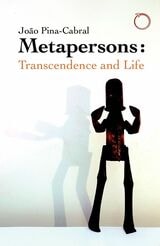
Metapersons
Transcendence and LifeJoão Pina-Cabral
HAU, 2026
Metapersons begins from a simple yet striking observation: across the world, people live in the company of divinities, ancestors, spirits, sacred mountains, or enlivened statues. They pray with intensity, sense the presence of ghosts, and experience forms of coexistence with beings beyond the human. Drawing on fieldwork in Portugal, China, Mozambique, and Brazil, João Pina-Cabral shows how humans continually move beyond their embodied condition through lived relations with such entities.
Revisiting classic anthropological debates—from Durkheim and Mauss on prayer and the sacred to later critiques of religion—this book argues that a “new anthropological synthesis” has emerged in recent decades: one that understands transcendence as a fundamental feature of life itself. In this light, familiar categories such as “superstition” require reconsideration in new terms. Pina-Cabral develops a scalar model of life’s plurality, seeing personhood as the dynamic source of transcendence.
Engaging with contemporary debates across the life sciences, social sciences, and philosophy, Metapersons offers a groundbreaking, person-centered perspective on transcendence, animism, and spirituality. It challenges disciplinary boundaries while providing an innovative framework for rethinking prayer, religion, and the very conditions of human coexistence with the more-than-human world.
Romanticism and Transcendence
Wordsworth, Coleridge, and the Religious ImaginationJ. Robert Barth, S.J.
University of Missouri Press, 2003
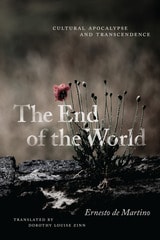
The End of the World
Cultural Apocalypse and TranscendenceErnesto de Martino
University of Chicago Press, 2023
A philosopher, historian of religions, and anthropologist, Ernesto de Martino (1908–1965) produced a body of work that prefigured many ideas and concerns that would later come to animate anthropology. In his writing, we can see the roots of ethnopsychiatry and medical anthropology, discussions of reflexivity and the role of the ethnographer, considerations of social inequality and hegemony from a Gramscian perspective, and an anticipation of the discipline’s “existential turn.” We also find an attentiveness to hope and possibility, despite the gloomy title of his posthumously published book La fine del mondo, or The End of the World. Examining apocalypse as an individual as well as a cultural phenomenon, treating subjects both classic and contemporary and both European and non-Western, ranging across ethnography, history, literature, psychiatry, and philosophy, de Martino probes how we relate to our world and how we might be better subjects and thinkers within it. This new translation offers English-language readers their first chance to engage with de Martino’s masterwork, which continues to appear prescient in the face of the frictions of globalization and environmental devastation.
The Religion of Reality
Inquiry into the Self, Art, and TranscendenceDidier Maleuvre
Catholic University of America Press, 2006
The Turn to Transcendence
The Role of Religion in the Twenty-First CenturyGlenn Olsen
Catholic University of America Press, 2010
Three Economies of Transcendence
Andrea Righi
University of Minnesota Press, 2025
Exploring climate change through the interconnections between sociality, theory of money, and a different concept of time
Three Economies of Transcendence offers a sharp critique of how transcendence underpins the symbolic, economic, and environmental crises of the modern world. Andrea Righi identifies three distinct “economies of transcendence” that sustain neoliberal systems of power. Termed the economy of rank, the economy of infinite valorization, and the phallic economy of time, these economies perpetuate hierarchies, sacrifices, and ecological destruction. Through this framework, Righi not only diagnoses the crisis but also proposes an immanent model of economy that fosters solidarity and is expressly pro-social and ecologically responsible.
This thought-provoking book links climate change to Western cultural and symbolic mechanisms, showing that transformative action must address these deep-seated structures. Righi envisions a future rooted in our shared spatio-temporal existence, challenging the atomizing rivalries and endless growth of neoliberalism.
Transcendence and History
The Search for Ultimacy from Ancient Societies to PostmodernityGlenn Hughes
University of Missouri Press, 2020
Transcendence and Wittgenstein's Tractatus
Michael P. Hodges
Temple University Press, 1990
Although Wittgenstein claimed that his first book, the Tractatus Logico-Philosophicus, was essentially an ethical work, it has been viewed insistently as a purely logical one. His later work, Philosophical Investigations, is generally seen as presenting totally different ideas from his earlier writings. In this book, Michael Hodges shows how Wittgenstein’s later work emerged from his earlier Tractatus, and he unifies the early philosophy, both its well-known logical aspects and the lesser known ethical dimensions, in terms of the notion of transcendence.
Hodges studies the Tractatus in light of Wittgenstein’s own claim that the Philosophical Investigations can only be understood when read against the background of the Tractatus. At the heart of an understanding of the earlier work is the idea of transcendence which structures both Wittgenstein’s logical and ethical insights. Seen in terms of this notion, the rigorous unity of Wittgenstein’s early thinking becomes apparent and the gestalt shift to the later philosophy comes clearly into focus.