Results by title
14 books match the query 'Transcendentalism'
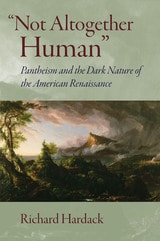
"Not Altogether Human"
Pantheism and the Dark Nature of the American RenaissanceRichard Hardack
University of Massachusetts Press, 2012
Many leading American thinkers in the nineteenth century, who accepted the premises of Emersonian transcendentalism, valued the basic concept of pantheism: that God inheres in nature and in all things, and that a person could achieve a sense of belonging she or he lacked in society by seeking a oneness with all of nature. As Richard Hardack shows, however, writers such as Ralph Waldo Emerson, Nathaniel Hawthorne, and Herman Melville conceived of nature as everything “Other”—other than the white male Protestant culture of which they were a part. This conception of nature, then, became racialized, and the divine became associated with African American and Native American identities, as well as with femininity.
In "Not Altogether Human," Hardack reevaluates transcendentalism in the context of nineteenth-century concerns about individual and national racial identity. Elucidating the influence of pantheism, Hardack draws on an array of canonical and unfamiliar materials to remap the boundaries of what has long been viewed as white male transcendental discourse.
This book significantly revises notions of what transcendentalism and pantheism mean and how they relate to each other. Hardack's close analysis of pantheism and its influence on major works and lesser known writing of the nineteenth century opens up a new perspective on American culture during this key moment in the country's history.
A Power to Translate the World
New Essays on Emerson and International CultureEdited by David LaRocca and Ricardo Miguel-Alfonso
Dartmouth College Press, 2016
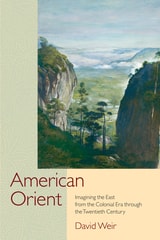
American Orient
Imagining the East from the Colonial Era through the Twentieth CenturyDavid Weir
University of Massachusetts Press, 2011
Surveying the American fascination with the Far East since the mid-eighteenth century, this book explains why the Orient had a fundamentally different meaning in the United States than in Europe or Great Britain. David Weir argues that unlike their European counterparts, Americans did not treat the East simply as a site of imperialist adventure; on the contrary, colonial subjugation was an experience that early Americans shared with the peoples of China and India.
In eighteenth-century America, the East was, paradoxically, a means of reinforcing the enlightenment values of the West: Franklin, Jefferson, and other American writers found in Confucius a complement to their own political and philosophical beliefs. In the nineteenth century, with the shift from an agrarian to an industrial economy, the Hindu Orient emerged as a mystical alternative to American reality. During this period, Emerson, Thoreau, and other Transcendentalists viewed the “Oriental” not as an exotic other but as an image of what Americans could be, if stripped of all the commercialism and materialism that set them apart from their ideal. A similar sense of Oriental otherness informed the aesthetic discoveries of the early twentieth century, as Pound, Eliot, and other poets found in Chinese and Japanese literature an artistic purity and intensity absent from Western tradition. For all of these figures the Orient became a complex fantasy that allowed them to overcome something objectionable, either in themselves or in the culture of which they were a part, in order to attain some freer, more genuine form of philosophical, religious, or artistic expression.
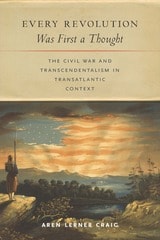
Every Revolution Was First a Thought
The Civil War and Transcendentalism in Transatlantic ContextAren Lerner Craig
University of Massachusetts Press, 2025
Tracing the impact of transcendental philosophy on Union soldiers and their loved ones during the American Civil War
Scholars of the American Civil War have long wondered about the seemingly earnest and sincere sentimental commitment that most Northern soldiers had to their nation and the North’s cause. Unlike many others in other wars, Union soldiers appeared to embrace the war with an unusual conviction and sacrificed their lives with a rare nobility. Their grieving relatives were also buoyed up by their steadfast beliefs in the righteousness of the cause. What was so different about this war, and this period of American history, and what encouraged such an outlook?
In Every Revolution Was First a Thought, Aren Lerner Craig argues that in the Civil War era the American Transcendentalist movement provided a coherent worldview that fostered powerful idealism around issues of character, gender, race, and nationhood, even in the worst of times. Through an exploration of diaries, newspaper editorials, popular songs, and more, Craig demonstrates how Transcendentalist thought moved from elite intellectual circles to the public, providing people a firm belief in the power of individual agency to shape the world and a view of spirituality in which each person was divine, and thus beyond death and destruction. Transcendentalist tenets proved strong enough to withstand the devastation of war and inspired high levels of faith and optimism in soldiers and civilians alike throughout the conflict.
Craig traces the origins of Transcendentalism across the Atlantic, to ideas from Scottish Realism and German Idealism, and connects these philosophies to writings and speeches of major figures like Ralph Waldo Emerson, Henry David Thoreau, and Margaret Fuller. This intellectual history offers a new interpretation of Transcendental thought and its role in the Civil War.
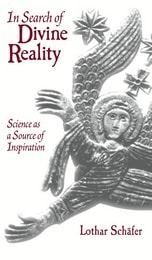
In Search of Divine Reality
Science as a Source of InspirationLothar Schäfer
University of Arkansas Press, 1997

Margaret Fuller and Her Circles
Brigitte Bailey
University of New Hampshire Press, 2013
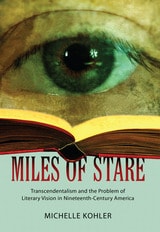
Miles of Stare
Transcendentalism and the Problem of Literary Vision in Nineteenth-Century AmericaMichelle Kohler
University of Alabama Press, 2014
The strangeness of nineteenth-century poetic vision is exemplified most famously by Emerson’s transparent eyeball. That disembodied, omniscient seer is able to shed its body and transcend sight paradoxically in order to see—not to create—poetic language “manifest” on the American landscape. In Miles of Stare, Michelle Kohler explores the question of why, given American transcendentalism’s anti-empiricism, the movement’s central trope becomes an eye purged of imagination. And why, furthermore, she asks, despite its insistent empiricism, is this notorious eye also so decidedly not an eye? What are the ethics of casting a boldly equivocal metaphor as the source of a national literature amidst a national landscape fraught with slavery, genocide, poverty, and war?
Miles of Stare explores these questions first by tracing the historical emergence of the metaphor of poetic vision as the transcendentalists assimilated European precedents and wrestled with America’s troubling rhetoric of manifest destiny and national identity. These questions are central to the work of many nineteenth-century authors writing in the wake of transcendentalism, and Kohler offers examples from the writings of Douglass, Hawthorne, Dickinson, Howells, and Jewett that form a cascade of new visual metaphors that address the irreconcilable contradictions within the transcendentalist metaphor and pursue their own efforts to produce an American literature. Douglass’s doomed witness to slavery, Hawthorne’s reluctantly omniscient narrator, and Dickinson’s empty “miles of Stare” variously skewer the authority of Emerson’s all-seeing poetic eyeball while attributing new authority to the limitations that mark their own literary gazes.
Tracing this metaphorical conflict across genres from the 1830s through the 1880s, Miles of Stare illuminates the divergent, contentious fates of American literary vision as nineteenth-century writers wrestle with the commanding conflation of vision and language that lies at the center of American transcendentalism—and at the core of American national identity.
Nietzsche and the Transcendental Tradition
Michael Steven Green
University of Illinois Press, 2002
In recent years, both analytic thinkers and postmodern theorists have looked at Friedrich Nietzsche's epistemology from the perspectives of their philosophical traditions. Michael Steven Green's penetrating study tries instead to do justice to Nietzsche's views on truth and knowledge by looking at them from the perspective of his contemporaries, particularly the Neo-Kantian philosopher Afrikan Spir, whose ideas exerted a tremendous influence on Nietzsche's thought.
Despite his generally naturalist outlook, Nietzsche was committed to an antinaturalist theory of cognition inherited from Kant and Spir. Green shows how this fundamental tension in Nietzsche's thought led him to present not only the antirealism that has commonly been attributed to him in the past, but two other epistemological positions. These are a denial of the possibility of human thought entirely, and an error theory–-the argument that all of our judgments are false–-that has strong parallels in Spir's thought and Kant's antinomies.
Viewing Nietzsche's error theory in light of Kantian transcendental idealism, Green makes sense of arguments that have previously confounded Nietzsche interpreters. Green also provides the first English translations of many passages from Spir's writings and Nietzsche's notebooks.
In examining Nietzsche's thought through the lens of the philosophical influences upon him–-the philosophers that Nietzsche himself read–-Green establishes a significant new foundation from which to assess Nietzsche's place in modern philosophy and culture.
Reading with the Transcendentalists
Ten Works that Made a MovementPhilip F. Gura
University of Massachusetts Press, 2026
Exploring the books and reading practices behind the creation of Transcendentalist philosophy and community
Transcendentalism emerged in early 19th century New England as a uniquely American philosophical, spiritual, and literary movement. Its first generation of thinkers—including Ralph Waldo Emerson, Theodore Parker, and Margaret Fuller—created a worldview that stressed the inherent goodness of the “self-reliant” individual and the presence of the divine in nature. These intellectuals gathered in informal symposia devoted to what Emerson called “creative reading,” a practice that stresses the transformative potential of the written word that was central to the movement’s emergence, growth, and spread. But what were these thinkers reading and how did it influence the development of Transcendentalism?
In Reading with the Transcendentalists, renowned literary scholar Philip F. Gura focuses on 10 American, British, and European books that were essential to the movement’s thoughts, writings, and activities. Many of the authors of these books—James Marsh, Madame de Staël, Samson Reed, George Ripley, Thomas Carlyle, Albert Brisbane, and George Sand—stood outside of Transcendentalism yet profoundly influenced it. Others such as Emerson, Parker, and Fuller were the movement’s central architects, whose writings in turn inspired the next generation, including Henry David Thoreau and Caroline Healey Dall. Each of these books challenged prevailing religious, philosophical, and social conventions in ways that resonated deeply with burgeoning Transcendentalist ideals.
Blending intellectual biography with book history, Gura crafts a captivating cultural history that reconstructs the dynamic social networks of the early Transcendentalists, in which ideas from the written word circulated, evolved, and acquired new meanings. The result is an rich portrait of reading as a creative and communal act, and an exploration of how books ignite curiosity, sustain friendship, and catalyze intellectual transformation. Through a carefully developed narrative structure that is filled not only with books and reading but with headline-worthy scandals, disputes, and falling outs and realignments, Gura traces the historical arc of a transnational intellectual movement that helped lay the foundation for the idea of “America.”
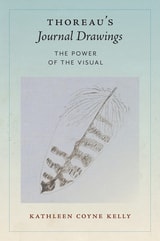
Thoreau's Journal Drawings
The Power of the VisualKathleen Coyne Kelly
University of Massachusetts Press, 2026
Examining journal drawings as an integral—and often delightful—feature of Thoreau’s work
In 1850, Henry David Thoreau began to draw in his Journal—a hedgehog’s quill, a locust’s wing, a goldenrod leaf. The sketches reflect his efforts to train his eye to observe more carefully, to look closely enough that he could see what was in front of him—with intention and attention. As Thoreau worked to combine the vivid language of a writer with the precision of a scientist, his drawings became more vital to the process. For him, writing and drawing were not separate activities; they were part of the same active, hands-on process of learning about the natural world.
Thoreau’s Journal Drawings offers a sustained examination of an understudied aspect of the Journal, emphasizing visual as well as textual analysis. It places Thoreau’s illustrated entries in the broader context of nineteenth-century scientific illustration, nature writing, and visual culture, while also offering close readings of key passages in which text and image work in tandem. The book opens up new possibilities for interpretation—both within the Journal and in the larger project of Thoreau’s thinking.
Ultimately, Thoreau’s illustrated Journal offers a case study in the complexities of representing the natural world through both language and image. His practice raises enduring questions about how we document, interpret, and mediate the more-than-human world across different forms of expression. To read the later volumes of Henry David Thoreau’s Journal without attending to his drawings is to overlook a vital dimension of his practice as both writer and observer.
Transcendental Resistance
The New Americanists and Emerson's ChallengeJohannes Voelz
Dartmouth College Press, 2010
Transcendentalism and the Cultivation of the Soul
Barry M. Andrews
University of Massachusetts Press, 2017
What Is Transcendental Phenomenology?
Foundations of a Phenomenological Speculative IdealismAlexander Schnell; Leonard Ip
Northwestern University Press, 2027
Offering a systematic introduction to a vital discipline
Phenomenology is a now century-old school of philosophy, to which Alexander Schnell offers here a threefold introduction that explores its diversity of approaches. In What Is Transcendental Phenomenology?, Schnell provides an in-depth overview of the Husserlian phenomenological method and its fundamental concepts (epoché and reduction, eidetic variation, phenomenological description, and phenomenological construction). He then examines that method’s limits, stressing the necessity of overcoming them in order to achieve a constructive approach while staying true to its fundamental disciplinary frameworks. Finally, he outlines a theory of understanding that expands the phenomenological method and highlights its speculative grounding before turning to speculative realists’ criticisms of the field. Schnell’s work shows that phenomenology can face the challenge of speculative thinking from an idealist standpoint, making a vital contribution to current debates about new, or speculative, realism. This important volume not only answers its titular question but, in its mode of discussing its subject, is itself phenomenology.
Zizek's Ontology
A Transcendental Materialist Theory of SubjectivityAdrian Johnston
Northwestern University Press, 2008
By taking this avowal seriously, Adrian Johnston finally clarifies the philosophical project underlying Žižek’s efforts. His book charts the interlinked ontology and theory of subjectivity constructed by Žižek at the intersection of German idealism and Lacanian theory. Johnston also uses Žižek’s combination of philosophy and psychoanalysis to address two perennial philosophical problems: the relationship of mind and body, and the nature of human freedom. By bringing together the past two centuries of European philosophy, psychoanalytic metapsychology, and cutting-edge work in the natural sciences, Johnston develops a transcendental materialist theory of subjectivity—in short, an account of how more-than-material forms of subjectivity can emerge from a corporeal being. His work shows how an engagement with Žižek’s philosophy can produce compelling answers to today’s most vexing and urgent questions as inherited from the history of ideas.