Results by title
9 books match the query 'Transfer'
Critical Transitions
Writing and the Question of TransferChris M Anson
University Press of Colorado, 2017
Contributors: Linda Adler-Kassner, Chris M. Anson, Stuart Blythe, Scott Chien-Hsiung Chiu, Irene Clark, Nicolette Mercer Clement, Stacey M. Cozart, Gita DasBender, Christiane Donahue, Dana Lynn Driscoll, Dana R. Ferris, Gwen Gorzelsky, Regina A. McManigell Grijalva, Carol Hayes, Hogan Hayes, Tine Wirenfeldt Jensen, Ed Jones, Ketevan Kupatadze, Jessie L. Moore, Joe Paszek, Donna Qualley, Liane Robertson, Paula Rosinski, Kara Taczak, Elizabeth Wardle, Carl Whithaus, Gitte Wichmann-Hansen, Kathleen Blake Yancey
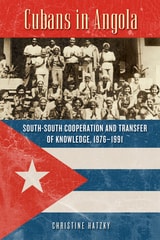
Cubans in Angola
South-South Cooperation and Transfer of Knowledge, 1976–1991Christine Hatzky
University of Wisconsin Press, 2015
Early Images of the Americas
Transfer and InventionEdited by Jerry M. Williams and Robert E. Lewis
University of Arizona Press, 1993

In Defense of Public Lands
The Case against Privatization and TransferSteven Davis
Temple University Press, 2018
Debates continue to rage over the merits or flaws of public land and whether or not it should be privatized—or at least, radically reconfigured in some way. In Defense of Public Lands offers a comprehensive refutation of the market-oriented arguments. Steven Davis passionately advocates that public land ought to remain firmly in the public’s hands. He reviews empirical data and theoretical arguments from biological, economic, and political perspectives in order to build a case for why our public lands are an invaluable and irreplaceable asset for the American people.
In Defense of Public Lands briefly lays out the history and characteristics of public lands at the local, state, and federal levels while examining the numerous policy prescriptions for their privatization or, in the case of federal lands, transfer. He considers the dimensions of environmental health; markets and valuation of public land, the tensions between collective values and individual preferences, the nature and performance of bureaucratic management, and the legitimacy of interest groups and community decision-making. Offering a fair, good faith overview of the privatizers’ best arguments before refuting them, this timely book contemplates both the immediate and long-term future of our public lands.

Outcomes of Engaged Education
From Transfer to TransformationLinda Flower
University Press of Colorado, 2025
Power to the Transfer
Critical Race Theory and a Transfer Receptive CultureDimpal Jain
Michigan State University Press, 2020
Transfer, Memory, and Creativity
After-Learning as Perceptual ProcessGeorge Haslerud
University of Minnesota Press, 1972
Trying to Make Law Matter
Legal Reform and Labor Law in the Soviet UnionKathryn Hendley
University of Michigan Press, 1996
Trying to Make Law Matter provides unique insight into the possibility of creating the rule of law. It is based on Kathryn Hendley's pathbreaking field research into the actual practices of Russian trial courts, lawyers, factory managers, and labor unions, contrasting the idealistic legal pronouncements of workers' rights during the Gorbachev era with tawdry reality of inadequate courts and dispirited workers.
Hendley frames her study of Russian law in action with a lively theoretical analysis of the fundamental prerequisites of the rule of law not only as a set of ideals but as a legal system that rests on the participation of rights-bearing citizens. This work will appeal to law, political science, and sociology scholars as well as area specialists and those who study transitions to market democracy.
Kathryn Hendley is Professor, Law and Political Science, University of Wisconsin, Madison.
Writing across Contexts
Transfer, Composition, and Sites of WritingKathleen Yancey
Utah State University Press, 2014
Addressing how composers transfer both knowledge about and practices of writing, Writing across Contexts explores the grounding theory behind a specific composition curriculum called Teaching for Transfer (TFT) and analyzes the efficacy of the approach. Finding that TFT courses aid students in transfer in ways that other kinds of composition courses do not, the authors demonstrate that the content of this curriculum, including its reflective practice, provides a unique set of resources for students to call on and repurpose for new writing tasks.
The authors provide a brief historical review, give attention to current curricular efforts designed to promote such transfer, and develop new insights into the role of prior knowledge in students' ability to transfer writing knowledge and practice, presenting three models of how students respond to and use new knowledge—assemblage, remix, and critical incident.
A timely and significant contribution to the field, Writing across Contexts will be of interest to graduate students, composition scholars, WAC and writing-in-the-disciplines scholars, and writing program administrators.