Results by title
31 books match the query 'Transformations'
A Respectable Spell
Transformations of Samba in Rio de JaneiroCarlos Sandroni
University of Illinois Press, 2021
Incisive and comprehensive, A Respectable Spell tells the compelling story of an iconic Brazilian musical genre.

After Poststructuralism
Transitions and TransformationsEdited by Rosi Braidotti
University of Chicago Press, 2010
From Kant to Kierkegaard, from Hegel to Heidegger, continental philosophers have indelibly shaped the trajectory of Western thought since the eighteenth century. Although much has been written about these monumental thinkers, students and scholars lack a definitive guide to the entire scope of the continental tradition. The most comprehensive reference work to date, this eight-volume History of Continental Philosophy will both encapsulate the subject and reorient our understanding of it. Beginning with an overview of Kant’s philosophy and its initial reception, the History traces the evolution of continental philosophy through major figures as well as movements such as existentialism, phenomenology, hermeneutics, and poststructuralism. The final volume outlines the current state of the field, bringing the work of both historical and modern thinkers to bear on such contemporary topics as feminism, globalization, and the environment. Throughout, the volumes examine important philosophical figures and developments in their historical, political, and cultural contexts.
The first reference of its kind, A History of Continental Philosophy has been written and edited by internationally recognized experts with a commitment to explaining complex thinkers, texts, and movements in rigorous yet jargon-free essays suitable for both undergraduates and seasoned specialists. These volumes also elucidate ongoing debates about the nature of continental and analytic philosophy, surveying the distinctive, sometimes overlapping characteristics and approaches of each tradition. Featuring helpful overviews of major topics and plotting road maps to their underlying contexts, A History of Continental Philosophy is destined to be the resource of first and last resort for students and scholars alike.
All Is Leaf
Essays and TransformationsJohn T Price
University of Iowa Press, 2022
He employs an array of forms and voices, whether penning a break-up letter to America or a literary rock-n-roll road song dedicated to prairie scientists, or giving pregame pep talks to his son’s losing football team. Here, too, are moving portrayals of his father’s last effort as a small-town lawyer to defend the rights of abused women, and his own efforts as a writing teacher to honor the personal stories of his students.
From his Iowa backyard to the edge of the Arctic Circle, from the forgotten recesses of the body to the far reaches of the solar system, this book demonstrates the ways imagination and informed compassion can, as Price describes it, expand thousandfold the boundaries of what we might “have naïvely considered an individual self.”
American Families Past and Present
Social Perspectives on TransformationsRoss, Susan
Rutgers University Press, 2006
American families today are noted for their wide variety of guises. Among the mix are single-parent families, childless-by-choice marriages, nuclear families, multigenerational families, and same-sex couples. Although this diversity has come under the scrutiny of everyone from politicians to the media, family diversity is not a recent development of contemporary culture. While nuclear families with a mother, a father, and children are the presumed historical norm, people have always resided in an assortment of family formations.
Bringing together essays by twenty-one distinguished scholars who have helped shape the field of family sociology in the last decade, this interdisciplinary anthology examines variation within family experience, especially as it has evolved across racial, ethnic, social, gender, and generational lines. The essays place historical and institutional frameworks at the center of the discussion.
The first part of the book focuses on the development of socially constructed dominant ideologies, demographic shifts in family composition, and historical perspectives on family rituals and mythmaking. Essays in the second part provide a historical perspective on the interdependence between the family as a social institution and other institutions. Selections highlight changes in women’s roles, the impact of economic, racial, and social inequalities on household labor and child care, the effects of war and military service, and the implications of the political climate for family welfare policy.
In-depth chapter introductions along with critical questions to spark class discussion make this an ideal text for courses focusing on family composition, trends, and controversies in the United States.
Body Battlegrounds
Transgressions, Tensions, and TransformationsChris Bobel
Vanderbilt University Press, 2019
Crossing Boundaries
Traditions and Transformations in Law and Society ResearchAustin Sarat
Northwestern University Press, 1998
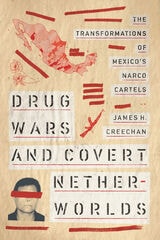
Drug Wars and Covert Netherworlds
The Transformations of Mexico's Narco CartelsJames H. Creechan
University of Arizona Press, 2021
In Drug Wars and Covert Netherworlds sociologist and criminologist James H. Creechan draws on decades of research to paint a much more nuanced picture of the transformation of Mexico’s narco cartels. Creechan details narco cartel history, focusing on the decades since Richard Nixon declared the War on Drugs. With sobering detail, Creechan unravels a web of government dependence, legitimate enterprises, covert connections, and violent infighting. He details how drug smuggling organizations have grown into powerful criminal mafias with the complicit involvement of powerful figures in civil society to create covert netherworlds.
Mexico is at a moment of change—a country on the verge of transition or perdition. It can only move forward by examining its history of narco-connections spun and re-spun over the last fifty years.
Globalization and Race
Transformations in the Cultural Production of BlacknessKamari Maxine Clarke and Deborah A. Thomas, eds.
Duke University Press, 2006
A number of the essays bring to light the formative but not unproblematic influence of African American identity on other populations within the black diaspora. Among these are an examination of the impact of “black America” on racial identity and politics in mid-twentieth-century Liverpool and an inquiry into the distinctive experiences of blacks in Canada. Contributors investigate concepts of race and space in early-twenty-first century Harlem, the experiences of trafficked Nigerian sex workers in Italy, and the persistence of race in the purportedly non-racial language of the “New South Africa.” They highlight how blackness is consumed and expressed in Cuban timba music, in West Indian adolescent girls’ fascination with Buffy the Vampire Slayer, and in the incorporation of American rap music into black London culture. Connecting race to ethnicity, gender, sexuality, nationality, and religion, these essays reveal how new class economies, ideologies of belonging, and constructions of social difference are emerging from ongoing global transformations.
Contributors. Robert L. Adams, Lee D. Baker, Jacqueline Nassy Brown, Tina M. Campt, Kamari Maxine Clarke, Raymond Codrington, Grant Farred, Kesha Fikes, Isar Godreau, Ariana Hernandez-Reguant, Jayne O. Ifekwunigwe, John L. Jackson Jr., Oneka LaBennett, Naomi Pabst, Lena Sawyer, Deborah A. Thomas
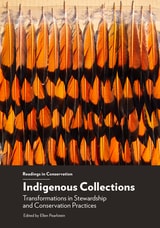
Indigenous Collections
Transformations in Stewardship and Conservation PracticesEllen Pearlstein
J. Paul Getty Trust, The, 0
A critical survey of the values, challenges, implications, history, and future of conserving Indigenous collections globally.
Once the exclusive realm of non-Indigenous curators and conservators, the care of Indigenous works in museums is now largely carried out either in collaboration with or by community members—a significant change from the colonial origins of museum collections and conservation practice.
This volume brings together over 100 readings—by Indigenous and non-Indigenous authors from around the world—that trace the development of the conservation of Indigenous collections. The writers provide a wide range of expertise, from archaeology and ethnography to law, and include community leaders, anthropologists, and art historians, as well as conservators and curators.
The book begins with an examination of the changes in terminology that reflect trust and respect, Indigenous care practices that predate the emergence of museums, and the impact of policy and legislation on Indigenous art and artifacts. Other readings explore the challenges associated with managing large, complex collections and the changes that resulted from addressing them: the development of specialized technical approaches, the incorporation of intangible heritage in conservation agendas, and a broadening view of what conservation means and how to practice it. Indigenous Collections concludes by looking at new approaches to museums—managed by or jointly with the people most closely connected to the holdings—and to the future, through innovations in conservation education.

Japanese Americans
The Formation and Transformations of an Ethnic GroupSpickard, Paul
Rutgers University Press, 2008
In this concise history, Paul Spickard traces the struggles and achievements of Japanese Americans in claiming their place in American society. He outlines three forces shaping ethnic groups in general: shared interests, shared institutions, and shared culture, and chronicles the Japanese American experience within this framework, showing how these factors created and nurtured solidarity.
Latino Los Angeles
Transformations, Communities, and ActivismEdited by Enrique C. Ochoa and Gilda L. Ochoa
University of Arizona Press, 2005
Love and Globalization
Transformations of Intimacy in the Contemporary WorldMark B. Padilla
Vanderbilt University Press, 2007
The richly-textured ethnographies provoke a series of questions about emerging vocabularies for friendship and romance; the adoption of cultural forms from faraway places; the emergence of new desires, pleasures, and emotions that circulate as commodities in the global marketplace; and the ways economic processes shape public and private expressions of sexual intimacy.
Mestizaje and Globalization
Transformations of Identity and PowerEdited by Stefanie Wickstrom and Philip D. Young
University of Arizona Press, 2014
Mestizaje and Globalization presents perspectives on the underlying transformation of identity and power associated with the term during times of great change in the Americas. The volume offers a comprehensive and empirically diverse collection of insights concerning mestizaje’s complex relationship with indigeneity, the politics of ethnic identity, transnational social movements, the aesthetic of cultural production, development policies, and capitalist globalization, with particular attention to cases in Latin America and the United States.
Beyond the narrow and often inadequate meaning of mestizaje as biological and racial mixing, the concept deserves an innovative theoretical consideration due to its multidimensional, multifaceted character and its resilience as an ideological construct. The contributors argue that historical analyses of mestizaje do not sufficiently understand contemporary ways that racism, ethnic discrimination, and social injustice intermingle with current discourse and practice of cultural recognition and multiculturalism in the Americas.
Mestizaje and Globalization contributes to an emerging multidisciplinary effort to explore how identities are imposed, negotiated, and reconstructed. The chapter authors clearly set forth the issues and obstacles that indigenous peoples and subjugated minorities face, as well as the strategies they have employed to gain empowerment in the face of globalization.
Mexicans in California
Transformations and ChallengesEdited by Ramon A. Gutierrez and Patricia Zavella
University of Illinois Press, 2008
Oratorical Culture in Nineteenth-Century America
Transformations in the Theory and Practice of RhetoricGregory Clark and S. Michael Halloran
Southern Illinois University Press, 1993
Gregory Clark and S. Michael Halloran bring together nine essays that explore change in both the theory and the practice of rhetoric in the nineteenth-century United States.
In their introductory essay, Clark and Halloran argue that at the beginning of the nineteenth century, rhetoric encompassed a neoclassical oratorical culture in which speakers articulated common values to establish consensual moral authority that directed community thought and action. As the century progressed, however, moral authority shifted from the civic realm to the professional, thus expanding participation in the community as it fragmented the community itself. Clark and Halloran argue that this shift was a transformation in which rhetoric was reconceived to meet changing cultural needs.
Part I examines the theories and practices of rhetoric that dominated at the beginning of the century. The essays in this section include "Edward Everett and Neoclassical Oratory in Genteel America" by Ronald F. Reid, "The Oratorical Poetic of Timothy Dwight" by Gregory Clark, "The Sermon as Public Discourse: Austin Phelps and the Conservative Homiletic Tradition in Nineteenth-Century America" by Russel Hirst, and "A Rhetoric of Citizenship in Nineteenth-Century America" by P. Joy Rouse.
Part 2 examines rhetorical changes in the culture that developed during that century. The essays include "The Popularization of Nineteenth-Century Rhetoric: Elocution and the Private Learner" by Nan Johnson, "Rhetorical Power in the Victorian Parlor: Godey’s Lady’s Book and the Gendering of Nineteenth-Century Rhetoric" by Nicole Tonkovich, "Jane Addams and the Social Rhetoric of Democracy" by Catherine Peaden, "The Divergence of Purpose and Practice on the Chatauqua: Keith Vawter’s Self-Defense" by Frederick J.Antczak and Edith Siemers, and "The Rhetoric of Picturesque Scenery: A Nineteenth-Century Epideictic" by S. Michael Halloran.
Racially Writing the Republic
Racists, Race Rebels, and Transformations of American IdentityBruce Baum and Duchess Harris, eds.
Duke University Press, 2009
The contributors analyze Thomas Jefferson’s legacy in light of his sexual relationship with his slave, Sally Hemings; the way that Samuel Gompers, the first president of the American Federation of Labor, rallied his organization against Chinese immigrant workers; and the eugenicist origins of the early-twentieth-century birth-control movement led by Margaret Sanger. They draw attention to the writing of Sarah Winnemucca, a Northern Piute and one of the first published Native American authors; the anti-lynching activist Ida B. Wells-Barnett; the Filipino American writer Carlos Bulosan; and the playwright Lorraine Hansberry, who linked civil rights struggles in the United States to anticolonial efforts abroad. Other figures considered include Alexis de Tocqueville and his traveling companion Gustave de Beaumont, Juan Nepomuceno Cortina (who fought against Anglo American expansion in what is now Texas), Abraham Lincoln, Theodore Roosevelt, and W. E. B. Du Bois. In the afterword, George Lipsitz reflects on U.S. racial politics since 1965.
Contributors. Bruce Baum, Cari M. Carpenter, Gary Gerstle, Duchess Harris, Catherine A. Holland, Allan Punzalan Isaac, Laura Janara, Ben Keppel, George Lipsitz, Gwendolyn Mink, Joel Olson, Dorothy Roberts, Patricia A. Schechter, John Kuo Wei Tchen, Jerry Thompson

Reforming Scriptures
Theories, Transformations, and Experiences Across American ReligionsEdited by Matthew Bowman, Heather Marie Burrow, Rebekah Call, and James W. Yuile
University of Illinois Press, 2027
The contributors draw on pioneering theorists like Vincent Wimbush and William Graham to grapple with how we might understand what we call scripture. The first section asks what makes a text scripture; the second looks at how scripture might change from medium to medium or context to context; and the third delves into how people use scripture. Two key themes emerge: that it is communities that produce and confer authority on scripture; and that fully grasping what a piece of scripture means must account for the medium that transmits it.
Diverse and interdisciplinary. Reforming Scriptures rethinks what “scripture” really means.
Contributors: Samantha Baskind, Jon Bialecki, James Bielo, Kelly D. Dagley, Megan Sanborn Jones, Joseph McDonald, Tom Mould, Eugene C. Staples II, Peter J. Thuesen, Jordan T. Watkins, Rosalynde Frandsen Welch, Lydia Willsky-Ciollo

Rock Over the Edge
Transformations in Popular Music CultureRoger Beebe, Denise Fulbrook, and Ben Saunders, eds.
Duke University Press, 2002
Bridging the disciplines of musicology and cultural studies, the collection has two primary goals: to seek out a language for talking about music culture and to look at the relationship of music to culture in general. The editors’ introduction provides a backward glance at recent rock criticism and also looks to the future of the rapidly expanding discipline of popular music studies. Taking seriously the implications of critical theory for the study of non-literary aesthetic endeavors, the volume also addresses such issues as the affective power of popular music and the psychic construction of fandom.
Rock Over the Edge will appeal to scholars and students in popular music studies and American Studies as well as general readers interested in popular music.
Contributors. Ian Balfour, Roger Beebe, Michael Coyle, Robert Fink, Denise Fulbrook, Tony Grajeda, Lawrence Grossberg, Trent Hill, Josh Kun, Jason Middleton, Lisa Ann Parks, Ben Saunders, John J. Sheinbaum, Gayle Wald, Warren Zanes
States of Memory
Continuities, Conflicts, and Transformations in National RetrospectionJeffrey K. Olick, ed.
Duke University Press, 2003
The contributors—including historians and social scientists—describe societies’ struggles to produce and then use ideas of what a “normal” past should look like. They examine claims about the genuineness of revolution (in fascist Italy and communist Russia), of inclusiveness (in the United States and Australia), of innocence (in Germany), and of inevitability (in Israel). Essayists explore the reputation of Confucius among Maoist leaders during China’s Cultural Revolution; commemorations of Martin Luther King Jr. in the United States Congress; the “end” of the postwar era in Japan; and how national calendars—in signifying what to remember, celebrate, and mourn—structure national identification. Above all, these essays reveal that memory is never unitary, no matter how hard various powers strive to make it so.
States of Memory will appeal to those scholars—in sociology, history, political science, cultural studies, anthropology, and art history-who are interested in collective memory, commemoration, nationalism, and state formation.
Contributors. Paloma Aguilar, Frederick C. Corney, Carol Gluck, Matt K. Matsuda, Jeffrey K. Olick, Francesca Polletta, Uri Ram, Barry Schwartz, Lyn Spillman, Charles Tilly, Simonetta Falasca Zamponi, Eviatar Zerubavel, Tong Zhang
Technology and the Historian
Transformations in the Digital AgeAdam Crymble
University of Illinois Press, 2021
Historians have seen their field transformed by the digital age. Research agendas, teaching and learning, scholarly communication, the nature of the archive—all have undergone a sea change that in and of itself constitutes a fascinating digital history. Yet technology's role in the field's development remains a glaring blind spot among digital scholars.
Adam Crymble mines private and web archives, social media, and oral histories to show how technology and historians have come together. Using case studies, Crymble merges histories and philosophies of the field, separating issues relevant to historians from activities in the broader digital humanities movement. Key themes include the origin myths of digital historical research; a history of mass digitization of sources; how technology influenced changes in the curriculum; a portrait of the self-learning system that trains historians and the problems with that system; how blogs became a part of outreach and academic writing; and a roadmap for the continuing study of history in the digital era.
The Iranian Diaspora
Challenges, Negotiations, and TransformationsEdited by Mohsen Mostafavi Mobasher
University of Texas Press, 2018
The Iranian revolution of 1978–1979 uprooted and globally dispersed an enormous number of Iranians from all walks of life. Bitter political relations between Iran and the West have since caused those immigrants to be stigmatized, marginalized, and politicized, which, in turn, has discredited and distorted Iranian migrants’ social identity; subjected them to various subtle and overt forms of prejudice, discrimination, and social injustice; and pushed them to the edges of their host societies. The Iranian Diaspora presents the first global overview of Iranian migrants’ experiences since the revolution, highlighting the similarities and differences in their experiences of adjustment and integration in North America, Europe, Australia, and the Middle East.
Written by leading scholars of the Iranian diaspora, the original essays in this volume seek to understand and describe how Iranians in diaspora (re)define and maintain their ethno-national identity and (re)construct and preserve Iranian culture. They also explore the integration challenges the Iranian immigrants experience in a very negative context of reception. Combining theory and case studies, as well as a variety of methodological strategies and disciplinary perspectives, the essays offer needed insights into some of the most urgent and consequential issues and problem areas of immigration studies, including national, ethnic, and racial identity construction; dual citizenship and dual nationality maintenance; familial and religious transformation; politics of citizenship; integration; ethnic and cultural maintenance in diaspora; and the link between politics and the integration of immigrants, particularly Muslim immigrants.
The Lancelot-Grail Cycle
Text and TransformationsEdited by William W. Kibler
University of Texas Press, 1994
Composed in Old French between about 1220 and 1240, the Lancelot-Grail Cycle is a group of five prose romances centered on the love affair between Lancelot and Guenevere. It consists of an immense central core, the Lancelot Proper, introduced by The History of the Holy Grail and The Story of Merlin and concluded by The Quest for the Holy Grail and The Death of Arthur.
This volume brings together thirteen essays by noted scholars from the first symposium ever devoted exclusively to the Lancelot-Grail Cycle. Exploring the cycle's evolution across the literatures of medieval France, Italy, Spain, Catalonia, and England, the authors take a variety of approaches that highlight a broad range of cultural, social, historical, and political concerns and offer a comparative and interdisciplinary vision of this great romance.
Transformations in Translation
Comparing Qumran Aramaic Job and Old Greek JobAlun Morton Thomas
SBL Press, 2026
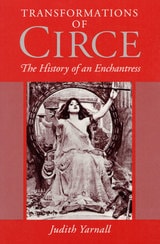
Transformations of Circe
THE HISTORY OF AN ENCHANTRESSJudith Yarnall
University of Illinois Press, 1994
Transformations of Memory and Forgetting in Sixteenth-Century France
Marguerite de Navarre, Pierre de Ronsard, Michel de MontaigneNicolas Russell
University of Delaware Press, 2011
This book proposes that in a number of French Renaissance texts, produced in varying contexts and genres, we observe a shift in thinking about memory and forgetting. Focusing on a corpus of texts by Marguerite de Navarre, Pierre de Ronsard, and Michel de Montaigne, it explores several parallel transformations of and challenges to traditional discourses on the human faculty of memory.
Throughout Classical Antiquity and the Middle Ages, a number of influential authors described memory as a powerful tool used to engage important human concerns such as spirituality, knowledge, politics, and ethics. This tradition had great esteem for memory and made great efforts to cultivate it in their pedagogical programs. In the early sixteenth century, this attitude toward memory started to be widely questioned. The invention of the printing press and the early stages of the scientific revolution changed the intellectual landscape in ways that would make memory less important in intellectual endeavors. Sixteenth-century writers began to question the reliability and stability of memory. They became wary of this mental faculty, which they portrayed as stubbornly independent, mysterious, unruly, and uncontrollable–an attitude that became the norm in modern Western thought as is illustrated by the works of Descartes, Locke, Freud, Proust, Foucault, and Nora, for example.
Writing in this new intellectual landscape, Marguerite de Navarre, Ronsard, and Montaigne describe memory not as a powerful tool of the intellect but rather as an uncontrollable mental faculty that mirrored the uncertainty of human life. Their characterization of memory emerges from an engagement with a number of traditional ideas about memory. Notwithstanding the great many differences in concerns of these writers and in the nature of their texts, they react against or transform their classical and medieval models in similar ways. They focus on memory’s unruly side, the ways that memory functions independently of the will. They associate memory with the fluctuations of the body (the organic soul) rather than the stability of the mind (the intellectual soul). In their descriptions of memory, these authors both reflect and contribute to a modern understanding of and attitude towards this mental faculty.
Published by University of Delaware Press. Distributed worldwide by Rutgers University Press.
Transformations of Sensibility
The Phenomenology of Meiji LiteratureKamei Hideo; Translated, edited, and with an introduction by Michael Bourdaghs
University of Michigan Press, 2002

Transformations of Warfare in the Contemporary World
John C. Torpey
Temple University Press, 2016
Today’s warfare has moved away from being an event between massed national populations and toward small numbers of combatants using high-tech weaponry. The editors of and contributors to the timely collection Transformations of Warfare in the Contemporary World show that this shift reflects changes in the technological, strategic, ideological, and ethical realms.
The essays in this volume discuss:
·the waning connection between citizenship and soldiering;
·the shift toward more reconstructive than destructive activities by militaries;
·the ethics of irregular or asymmetrical warfare;
·the role of novel techniques of identification in military settings;
·the stress on precision associated with targeted killings and kidnappings;
·the uses of the social sciences in contemporary warfare.
In his concluding remarks, David Jacobson explores the extent to which the contemporary transformation of warfare is a product of a shift in the character of the combatants themselves.
Contributors include: Ariel Colonomos, Roberto J. González, Travis R. Hall, Saskia Hooiveld, Rob Johnson, Colonel C. Anthony Pfaff, Ian Roxborough, and the editors

Transformations
Art and the CityEdited by Elizabeth M. Grierson
Intellect Books, 2017
Transformations
Change Work across Writing Programs, Pedagogies, and PracticesHolly Hassel
Utah State University Press, 2021
The collection includes chapters from multiple award-winning writing programs, including the recipients of the Two-Year College Association’s Outstanding Programs in English Award and the Conference on College Composition and Communication’s Writing Program Certificate of Excellence. These authors offer perspectives that demonstrate the deep work of transformation in writing programs and practices writ large, confirm the ways in which writing programs are connected to and situated within larger institutional and disciplinary contexts, and outline successful methods for navigating these contexts in order to transform the work.
In using the prism of transformation as the organizing principle for the collection, Transformations offers a range of strategies for adapting writing programs so that they meet the needs of students and teachers in service of creating equitable, ethical literacy instruction in a range of postsecondary contexts.
Contributors: Leah Anderst, Cynthia Baer, Ruth Benander, Mwangi Alex Chege, Jaclyn Fiscus-Cannaday, Joanne Giordano, Rachel Hall Buck, Sarah Henderson Lee, Allison Hutchinson, Lynee Lewis Gaillet, Jennifer Maloy, Neil Meyer, Susan Miller-Cochran, Ruth Osorio, Lori Ostergaard, Shyam Pandey, Cassie Phillips, Brenda Refaei, Heather Robinson, Shelley Rodrigo, Julia Romberger, Tiffany Rousculp, Megan Schoen, Paulette Stevenson
Transformations
Thinking after HeideggerGail Stenstad
University of Wisconsin Press, 2006
How are we to think and act constructively in the face of today’s environmental and political catastrophes? Gail Stenstad finds inspiring answers in the thought of German philosopher Martin Heidegger. Rather than simply describing or explaining Heidegger’s transformative way of thinking, Stenstad’s writing enacts it, bringing new insight into contemporary environmental, political, and personal issues. Readers come to understand some of Heidegger’s most challenging concepts through experiencing them. This is a truly creative scholarly work that invites all readers to carry Heidegger’s transformative thinking into their own areas of deep concern.
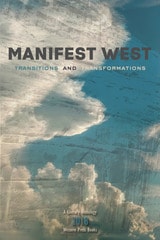
Transitions and Transformations
Elizabyth Hiscox
University Press of Colorado, 2018
What changes, alters, undergoes renewal or metamorphosis in the West? The space shared and sparred-over in urban Oregon versus remote Colorado casts doubt on the concept of a true continuity to the west. Where and when do those frontiers, borders, or alterations in course occur? Each watershed and microclimate is a slight shift from the next, each city center and community hall a locus of both change and tradition, and the emotional landscapes can be as dramatic or serene as those on the map. Language can do some of the work of capturing that flux: tracking transition and transformation to get at the heart of a life lived. The poems, short stories, and creative nonfiction essays collected here raise as many questions as they answer about that often fraught, always exciting liminal space between the proverbial here and there, the now and now again.
Contributors:Eric Aldrich, Jeffrey Alfier, Betsy Bernfeld, Heidi E. Blankenship, Kierstin Bridger, Yuan Changming, David Lavar Coy, Tim Donovan, Andrea England, Matthew Gavin Frank, Rick Kempa, Mark Haunschild, Cynthia Hogue, Caitlin Horrocks, Charles Jensen, Lisa Levine, Stephen Lottridge, Jessica McDermott, Scot Siegel, Jared Smith, Victoria Waddle, Tim Weed, Susan Brown Weitzman, Lesley Wheeler
Manifest West is Western Press Books’ literary anthology series. The press, affiliated with Western State Colorado University, produces one anthology annually and focuses on Western regional writing.