Results by title
2 books match the query 'Transnational Encounters'

Reproductive Technologies as Global Form
Ethnographies of Knowledge, Practices, and Transnational EncountersEdited by Michi Knecht, Maren Klotz, and Stefan Beck
Campus Verlag, 2012
In the thirty years since the first “test-tube baby,” in-vitro fertilization and other methods of reproductive assistance have become a common aspect of family life and medicine in developed nations—and, increasingly, throughout the world. This collection brings together ethnographic studies of how these reproductive technologies are deployed across a wide variety of nations and cultures, taking special account of how they are linked to aspirations towards modernity—and how they contribute to an ongoing reconfiguration of the boundaries of knowledge and human agency. The resulting volume offers both a current snapshot of the cultural state of reproductive technologies and a plethora of provocative questions for the future.
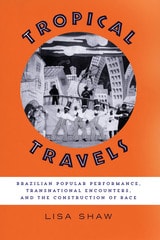
Tropical Travels
Brazilian Popular Performance, Transnational Encounters, and the Construction of RaceBy Lisa Shaw
University of Texas Press, 2018
Brazilian popular culture, including music, dance, theater, and film, played a key role in transnational performance circuits—inter-American and transatlantic—from the latter nineteenth century to the middle of the twentieth century. Brazilian performers both drew inspiration from and provided models for cultural production in France, Portugal, Argentina, the United States, and elsewhere. These transnational exchanges also helped construct new ideas about, and representations of, “racial” identity in Brazil. Tropical Travels fruitfully examines how perceptions of “race” were negotiated within popular performance in Rio de Janeiro and how these issues engaged with wider transnational trends during the period.
Lisa Shaw analyzes how local cultural forms were shaped by contact with imported performance traditions and transnational vogues in Brazil, as well as by the movement of Brazilian performers overseas. She focuses specifically on samba and the maxixe in Paris between 1910 and 1922, teatro de revista (the Brazilian equivalent of vaudeville) in Rio in the long 1920s, and a popular Brazilian female archetype, the baiana, who moved to and fro across national borders and oceans. Shaw demonstrates that these transnational encounters generated redefinitions of Brazilian identity through the performance of “race” and ethnicity in popular culture. Shifting the traditional focus of Atlantic studies from the northern to the southern hemisphere, Tropical Travels also contributes to a fuller understanding of inter-hemispheric cultural influences within the Americas.