Results by title
22 books match the query 'Travelers' writings, American'

"A Truthful Impression of the Country"
British and American Travel Writing in China, 1880-1949Nicholas R. Clifford
University of Michigan Press, 2001
Nicholas R. Clifford argues that, for a variety of reasons, travel accounts during this time claimed a particular kind of veracity that distinguished them from the work of other writers--scholars, journalists, diplomats, policymakers, or memoir-writing expatriates--who also sought to represent an unfamiliar China to the West. Yet even as the genre claims to be a "truthful impression," it contains an implicit warning that the traveler's own sensibility enters into the account and into the representation of the unfamiliar and the exotic.
"A Truthful Impression of the Country" will appeal not only to those interested in the broad phenomenon of imperialism but also to those interested in cultural studies and post-colonialism. It will likewise prove accessible to the general reader exploring Sino-Western interactions or in travel writing as a particular genre.
Nicholas R. Clifford is College Professor Emeritus, Middlebury College. He is also the author of the novel The House of Memory and of the monographs Shanghai, 1925: Urban Nationalism and the Defense of Foreign Privilege and Spoilt Children of Empire: Westerners in Shanghai and the Chinese Revolution of 1925--1927.
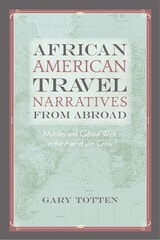
African American Travel Narratives from Abroad
Mobility and Cultural Work in the Age of Jim CrowGary Totten
University of Massachusetts Press, 2015
In this book, Gary Totten examines the global travel narratives of a diverse set of African American writers, including Ida B. Wells, Booker T. Washington, Matthew Henson, Jessie Redmon Fauset, and Zora Neale Hurston. While these writers deal with issues of identity in relation to a reimagined sense of self—in a way that we might expect to find in travel narratives—they also push against the constraints and conventions of the genre, reconsidering discourses of tourism, ethnography, and exploration. This book not only offers new insights about African American writers and mobility, it also charts the ideological distinctions and divergent agendas within this group of writers. Totten demonstrates how these travelers and their writings challenged dominant ideologies about African American experience, expression, and identity in a period of escalating racial violence. By setting these texts in their historical context and within the genre of travel writing, Totten presents a nuanced understanding of both popular and recovered work of the period.
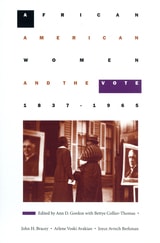
African American Women and the Vote, 1837–1965
Ann D. Gordon
University of Massachusetts Press, 1997
Written by leading scholars of African American and women's history, the essays in this volume seek to reconceptualize the political history of black women in the United States by placing them “at the center of our thinking.” The book explores how slavery, racial discrimination, and gender shaped the goals that African American women set for themselves, their families, and their race and looks at the political tools at their disposal. By identifying key turning points for black women, the essays create a new chronology and a new paradigm for historical analysis. The chronology begins in 1837 with the interracial meeting of antislavery women in New York City and concludes with the civil rights movement of the 1960s.
The contributors focus on specific examples of women pursuing a dual ambition: to gain full civil and political rights and to improve the social conditions of African Americans. Together, the essays challenge us to rethink common generalizations that govern much of our historical thinking about the experience of African American women.
Contributors include Bettina Aptheker, Elsa Barkley Brown, Willi Coleman, Gerald R. Gill, Ann D. Gordon, Evelyn Brooks Higginbotham, Cynthia Neverdon-Morton, Martha Prescod Norman, Janice Sumler-Edmond, Rosalyn Terborg-Penn, and Bettye Collier-Thomas.
And the Monkey Learned Nothing
Dispatches from a Life in TransitTom Lutz
University of Iowa Press, 2016
Border Confluences
Borderland Narratives from the Mexican War to the PresentRosemary A. King
University of Arizona Press, 2004
Folklore in Motion
Texas Travel LoreKenneth L. Untiedt
University of North Texas Press, 2007
Inspired Journeys
Travel Writers in Search of the MuseEdited by Brian Bouldrey
University of Wisconsin Press, 2016
Interwar Itineraries
Authenticity in Anglophone and French Travel WritingEmily O. Wittman
Amherst College Press, 2022
“This book offers a valuable account of literary activity in a genre still inadequately covered in literary-critical history. Emily Witt- man organizes her material through pairings and contextualizing that are instructive and illuminating and often exciting . . . This is comparative literature at its best.” —Vincent Sherry, Washington University

Italy and American Female Imagination
Debra Bernardi
The Ohio State University Press, 2025

Lone Star Vistas
Travel Writing on Texas, 1821-1861By Astrid Haas
University of Texas Press, 2021
Every place is a product of the stories we tell about it—stories that do not merely describe but in fact shape geographic, social, and cultural spaces. Lone Star Vistas analyzes travelogues that created the idea of Texas. Focusing on the forty-year period between Mexico’s independence from Spain (1821) and the beginning of the US Civil War, Astrid Haas explores accounts by Anglo-American, Mexican, and German authors—members of the region’s three major settler populations—who recorded their journeys through Texas. They were missionaries, scientists, journalists, emigrants, emigration agents, and military officers and their spouses. They all contributed to the public image of Texas and to debates about the future of the region during a time of political and social transformation. Drawing on sources and scholarship in English, Spanish, and German, Lone Star Vistas is the first comparative study of transnational travel writing on Texas. Haas illuminates continuities and differences across the global encounter with Texas, while also highlighting how individual writers’ particular backgrounds affected their views on nature, white settlement, military engagement, Indigenous resistance, African American slavery, and Christian mission.
Mark Twain, Travel Books, and Tourism
The Tide of a Great Popular MovementJeffrey Alan Melton
University of Alabama Press, 2008
With the publication of The Innocents Abroad (1869), Mark Twain embarked on a long and successful career as the 19th century's best-selling travel writer. Jeffrey Melton treats Twain's travel narratives in depth, and in the context of his contemporary travel writers and a burgeoning tourism culture. As Melton shows, Twain's five major travel narratives--The Innocents Abroad, Roughing It, Life on the Mississippi, A Tramp Abroad, and Following the Equator--demonstrate Twain's mastery and reinvention of the genre.
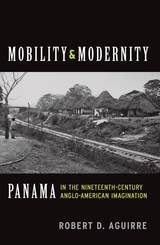
Mobility and Modernity
Panama in the Nineteenth-Century Anglo-American ImaginationRobert D. Aguirre
The Ohio State University Press, 2017
In this study, Robert D. Aguirre provides bold new interpretations of Anthony Trollope, John Lloyd Stephens, and Eadweard Muybridge and also recovers information about literary communities previously lost to history. Mobility and Modernity shows how Panama became defined as a site of incipient globalization and a crucial link of empire. Across this narrow strip of land people and things traveled, technology developed, and political forces erupted. The isthmus became a site of mobility that paradoxically produced varieties of immobility. Parting ways with histories that celebrate the canal as a mighty engineering feat, Mobility and Modernity reveals a more complex story of cultural conflict that began with the first gold rush news in the late 1840s and continued throughout the century.
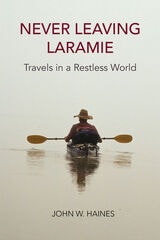
Never Leaving Laramie
Travels in a Restless WorldJohn W. Haines
Oregon State University Press, 2020
In the years since, Haines has added writer to a resume that already included baker and banker. In Never Leaving Laramie, he pulls stories about traveling into an exploration of home: How a rural home fueled and sustained a worldview. How beauty and danger blend together with humility and ego. How itchy feet combine with the comfort of home in Laramie, a tough railroad town turned college town and a launchpad for wanderers. Throughout, Haines returns to ideas of rivers and movement. He ends with a chapter on a different kind of travel, reflecting on how his accident did and did not change him and the varied ways that people can move through the world.
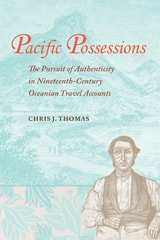
Pacific Possessions
The Pursuit of Authenticity in Nineteenth-Century Oceanian Travel AccountsChris J. Thomas
University of Alabama Press, 2021
Reimagining Oceania through the travel narratives that shaped the meaning of authenticity.
In Pacific Possessions: The Pursuit of Authenticity in Nineteenth-Century Oceanian Travel Accounts, Chris J. Thomas expands the literary canon on Polynesia and Melanesia beyond the giants, such as Herman Melville and Jack London, to include travel narratives by British and American visitors. These accounts were widely read and reviewed when they first appeared but have largely been ignored by scholars. For the first time, Thomas defines these writings as a significant literary genre.
Recovering these works allows us to reconceive of nineteenth-century Oceania as a vibrant hub of cultural interchange. Pacific Possessions recaptures the polyphony of voices that enlivened this space through the writing of these travelers, while also paying attention to their Oceanian interlocutors. Each chapter centers on a Pacific cultural marker, what Thomas refers to as each writer’s “possession”: the Tongan tattoo, the Hawaiian hula, the Fijian cannibal fork, and Robert Louis Stevenson’s cache of South Seas photographs.
Thomas analyzes how westerners formed narratives around these objects and what those objects meant within nineteenth-century Oceanian cultures. He argues that the accounts served to shape a version of Oceanian authenticity that persists today. The profiled traveler-writers had complex experiences, at times promoting exoticized exaggerations of so-called authentic Polynesian and Melanesian cultures and at other times genuinely engaging in cultural exchange. However, their views were ultimately compromised by a western lens. In Thomas’s words, “the authenticity is at once celebrated and written over.”

Road-Book America
Contemporary Culture and the New PicaresqueRowland A. Sherrill
University of Illinois Press, 2000
Road-Book America discloses how the old picaresque tradition, embodied in such novels as Henry Fielding's Tom Jones and Daniel Defoe's Moll Flanders, opens to include a number of new American texts, both fiction and nonfiction, that decisively share the characterizing form. Sherrill's discussion encompasses hundreds of American narratives published in the past four decades, including such examples of the genre as William Least Heat-Moon's Blue Highways, John Steinbeck's Travels with Charley, James Leo Herlihy's Midnight Cowboy, Bill Moyers's Listening to America, and E. L. Doctorow's Billy Bathgate.
Sketching the socially marginal, ingenuous, traveling characters common to both old and new versions, Sherrill shows how the "new American picaresque" transforms the satirical aims of the original into an effort to map and catalog the immensity and variety of America.
Open, resilient, perennially hopeful, and endowed with a protean adaptability, the protagonist of the new American picaresque follows a therapeutic path for the alienated modern self. Mining the relevance of the reformulated picaresque for American life, Road-Book America shows how this old form, adaptable as the picaro himself, lays the groundwork for spiritual renewal and a restoration of cultural confidence in some old ways of being American.
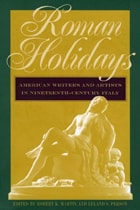
Roman Holidays
American Writers and Artists in Nineteenth-Century ItalyRobert K. Martin
University of Iowa Press, 2001
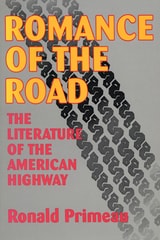
Romance Of The Road
Literature Of The American HighwayRonald Primeau
University of Wisconsin Press, 1996
Writers examined include Jack Kerouac, Jim Dodge, Ralph Waldo Emerson, William Least Heat Moon, Robert M. Pirsig, Henry Miller, Joan Didion, Mona Simpson, and Walt Whitman.
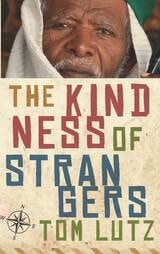
The Kindness of Strangers
Tom Lutz
University of Iowa Press, 2021
You may never visit these places, but Tom Lutz will do it for you. And while global media may serve up a steady diet of division, violence, oppression, hatred, and strife, The Kindness of Strangers shows that people the world over are much more likely to meet strangers with interest, empathy, welcome, and compassion.
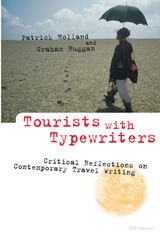
Tourists with Typewriters
Critical Reflections on Contemporary Travel WritingPatrick Holland and Graham Huggan
University of Michigan Press, 2000
The book maps new terrain in a growing area of critical study. Although critical of travel writing's complacency and its often unacknowledged ethnocentrism, the book recognizes its importance as both a literary and cultural form. While travel writing at its worst emerges as a crude expression of economic advantage, at its best it becomes a subtle instrument of cultural self-perception, a barometer for changing views of "other" (i.e., foreign, non-Western) cultures, and a trigger for the information circuits that tap us into the wider world.
Tourists with Typewriters gauges both the best and worst in contemporary travel writing, capturing the excitement of this most volatile--and at times infuriating--of literary genres. The book will appeal to general readers interested in a closer examination of travel writing and to academic readers in disciplines such as literary/cultural studies, geography, history, anthropology, and tourism studies.
"An eminently readable and informative study. It breathes tolerance and intelligence. It is critically perceptive and very au courant. It raises issues (coloniality, postmodernity, gender. . . ) and discusses books that readers of many different stripes will want to find out about." --Ross Chambers, University of Michigan
Patrick Holland, Associate Professor of English, University of Guelph, was born in New Zealand and educated in England, Australia, and Canada. Graham Huggan, Professor of English, University of Munich, was born in Hong Kong and educated in England and in British Columbia.
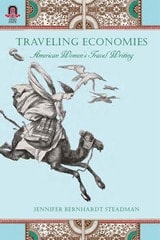
Traveling Economies
American Women's Travel WritingJennifer Bernhardt Steadman
The Ohio State University Press, 2007
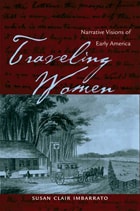
Traveling Women
Narrative Visions of Early AmericaSusan Clair Imbarrato
Ohio University Press, 2006
Susan Clair Imbarrato closely examines women’s accounts of their journeys from 1700 to 1830, including Sarah Kemble Knight’s well-known journal of her trip from Boston to New York in 1704 and many lesser-known accounts, such as Sarah Beavis’s 1779 journal of her travel to Ohio via Kentucky and Susan Edwards Johnson’s account or her 1801–2 journey from Connecticut to North Carolina.
In the women’s keen observations and entertaining wit, readers will find bravado mixed with hesitation, as women set forth on business, to relocate, and for pleasure. These travelers wrote compellingly of crossing rivers and mountains, facing hunger, encountering native Americans, sleeping in taverns, and confronting slavery, expressing themselves in voices that differed in sensibility from male explorers and travelers.
These accounts, as Imbarrato shows, challenge assumptions that such travel was predominately a male enterprise. In addition, Traveling Women provides a more balanced portrait of westward settlement by affirming women’s importance in the settling of early America.
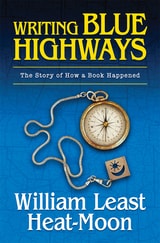
Writing BLUE HIGHWAYS
The Story of How a Book HappenedWillliam Least Heat-Moon
University of Missouri Press, 2023
Winner, Distinguished Literary Achievement, Missouri Humanities Council, 2015
The story behind the writing of the best-selling Blue Highways is as fascinating as the epic trip itself. More than thirty years after his 14,000-mile, 38-state journey, William Least Heat-Moon reflects on the four years he spent capturing the lessons of the road trip on paper—the stops and starts in his composition process, the numerous drafts and painstaking revisions, the depressing string of rejections by publishers, the strains on his personal relationships, and many other aspects of the toil that went into writing his first book. Along the way, he traces the hard lessons learned and offers guidance to aspiring and experienced writers alike. Far from being a technical manual, Writing Blue Highways: The Story of How a Book Happenedis an adventure story of its own, a journey of “exploration into the myriad routes of heart and mind that led to the making of a book from the first sorry and now vanished paragraph to the last words that came not from a graphite pencil but from a letterpress in Tennessee.”
Readers will not find a collection of abstract formulations and rules for writing; rather, this book gracefully incorporates examples from Heat-Moon’s own experience. As he explains, “This story might be termed an inadvertent autobiography written not by the traveler who took Ghost Dancing in 1978 over the byroads of America but by a man only listening to him. That blue-roadman hasn’t been seen in more than a third of a century, and over the last many weeks as I sketched in these pages, I’ve regretted his inevitable departure.” Filtered as the struggles of the “blue-roadman” are through the awareness of someone more than thirty years older with a half dozen subsequent books to his credit, the story of how his first book “happened” is all the more resonant for readers who may not themselves be writers but who are interested in the tricky balance of intuitive creation and self-discipline required for any artistic endeavor.