Results by title
83 books match the query 'Treatment' and 8 start with a
A Cancer Companion
An Oncologist's Advice on Diagnosis, Treatment, and RecoveryRanjana Srivastava
University of Chicago Press, 2015
With candor and compassion, Srivastava provides an approachable and authoritative reference. She begins with the big questions, like what cancer actually is, and she moves on to offer very practical advice on how to find an oncologist, what to expect during and after treatments, and how to manage pain, diet, and exercise. She discusses in detail the different therapies for cancers and why some cancers are inoperable, and she skillfully addresses the emotional toll of the disease. She speaks clearly and directly to cancer patients, caretakers, and their loved ones, offering straightforward information and insight, something that many oncologists can’t always convey in the office.
Addicted to Rehab
Race, Gender, and Drugs in the Era of Mass IncarcerationMcKim, Allison
Rutgers University Press, 2017
Winner of the 2018 Book of the Year Award from the American Society of Criminology's Division on Women and Crime
After decades of the American “war on drugs” and relentless prison expansion, political officials are finally challenging mass incarceration. Many point to an apparently promising solution to reduce the prison population: addiction treatment.
In Addicted to Rehab, Bard College sociologist Allison McKim gives an in-depth and innovative ethnographic account of two such rehab programs for women, one located in the criminal justice system and one located in the private healthcare system—two very different ways of defining and treating addiction. McKim’s book shows how addiction rehab reflects the race, class, and gender politics of the punitive turn. As a result, addiction has become a racialized category that has reorganized the link between punishment and welfare provision. While reformers hope that treatment will offer an alternative to punishment and help women, McKim argues that the framework of addiction further stigmatizes criminalized women and undermines our capacity to challenge gendered subordination. Her study ultimately reveals a two-tiered system, bifurcated by race and class.
Addiction Trajectories
Eugene Raikhel and William Garriott, eds.
Duke University Press, 2013
Contributors. Nancy D. Campbell, E. Summerson Carr, Angela Garcia, William Garriott, Helena Hansen, Anne M. Lovell, Emily Martin, Todd Meyers, Eugene Raikhel, A. Jamie Saris, Natasha Dow Schüll
Addiction, Inc.
Medication-Assisted Treatment and America’s Forgotten War on DrugsEmily Dufton
University of Chicago Press, 2026
Despite epidemic levels of overdoses in the United States, by 2020, only twenty percent of Americans suffering from opioid use disorder (OUD) received medication-assisted treatment (MAT), the gold standard of addiction treatment, which uses methadone, buprenorphine, or naltrexone to reduce illicit drug use and curb the symptoms of withdrawal. While MAT is the most effective treatment available for OUD, it’s also the most controversial, the most expensive, and the most difficult to access. And yet, the medications at the center of this treatment—and the private industries that distribute them—generate roughly sixteen billion dollars each year, on par with national sales of coffee and pet food.
In Addiction, Inc., historian Emily Dufton explains how this promising avenue of treatment emerged during President Richard Nixon’s war on drugs in 1971 as a radical experiment in public health, when hundreds of federally-funded treatment clinics opened nationwide. Dufton then explores how these nationalized clinics gave way to an immensely profitable private industry that offers poor care at high costs to an insufficient number of people. Drawing on original research and over a hundred interviews with policymakers, medical experts, pharmaceutical lobbyists, and patients and their families, she tells a gripping story of squandered potential and missed opportunities, as MAT transformed from a revolutionary political project launched from the White House itself into a commercial success—and a public health disaster.
Urgent, eye-opening, and deeply human, Addiction, Inc. reveals how, over the past fifty years, the United States built an addiction treatment system that made recovery harder instead of easier, and what it will take to change its course.
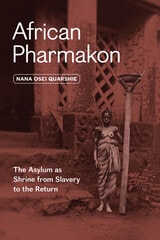
African Pharmakon
The Asylum as Shrine from Slavery to the ReturnNana Osei Quarshie
University of Chicago Press, 2025
For centuries, mental distress in West Africa has been subject to a mix of healing, harming, ritual, and regulation. In African Pharmakon, Nana Osei Quarshie questions conventional narratives about colonial psychiatry. Instead of displacing African therapeutic traditions, he argues, European psychiatric institutions in fact built upon them, adapting long-standing techniques of social control and healing.
With a focus on Ghana, Quarshie explores the shifting landscape of West African mental health practices, tracking their transformation from shrine-based rituals to colonial asylums and modern psychiatric institutions. Combining extensive archival research and ethnographic fieldwork, including the first scholarly examination of patient records from the Accra Psychiatric Hospital, Quarshie identifies five enduring techniques that have shaped the treatment of mental distress: spiritual pawning, logging, manhunting, mass expulsion, and pharmacotherapy.
Rejecting the simplistic opposition of Indigenous healing versus colonial oppression, African Pharmakon provides a nuanced account of how psychiatric care in Ghana became a tool of empowerment as well as exclusion. This pioneering study reframes our understanding of psychiatry and mental health governance in West Africa, past and present.
Alcohol, Science and Society Revisited
Edith Lisansky Gomberg, John A. Carpenter, and Helene Raskin White, Editors
University of Michigan Press, 1982
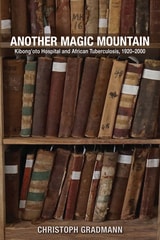
Another Magic Mountain
Kibong'oto Hospital and African Tuberculosis, 1920–2000Christoph Gradmann
Ohio University Press, 2025
Kibong’oto Hospital, opened in 1926, is an East African tuberculosis treatment center located on the slopes of Mount Kilimanjaro. Its history is crucial to understanding tuberculosis in Tanzania and, more broadly, in Africa. With the hospital as a point of departure, Christoph Gradmann presents a history of this disease that engages with local and regional contexts rather than with international elite science and health policies.
The book addresses key questions about the African experience with tuberculosis:
- What did it mean to do clinical science on tuberculosis in colonial and postcolonial contexts?
- Along which trajectories did medical practice and research evolve in a place where international advances in medical science were sometimes heard of only faintly and where resources could be scarce?
- How did a large hospital with several hundred beds dedicated to the treatment of just one condition figure in the development of national and regional health systems?
- How did Kibong’oto Hospital, a pride of colonial health governance, transition after Tanzania gained independence?
- How did treating and researching tuberculosis change throughout the twentieth century in an African hospital dedicated to that condition?
- How did research at the hospital contribute to tuberculosis-control strategies on national and international levels?
The book is based on the hospital’s unique archive: its surviving library of thousands of case summaries. Since 1926, this library has documented an enormous number of patient lives, staff careers, diagnoses, treatments, clinical trials, and much more. For today’s readers, the library provides insight into a history of clinical medicine in Africa, for which very few comparable archives exist. Gradmann supplements this site-specific research with material from national and international archives, as well as interviews with former staff involved in that history. The book’s four chapters offer perspectives on colonial epidemiological research in the interwar years; on late colonial healthcare development plans and the arrival of modern drug therapies; on the role of a national tuberculosis hospital in a newly independent country; and on the history of tuberculosis control in an age of economic crisis, HIV, and emergent global health-treatment programs. Finally, Gradmann discusses what the history of a large hospital can add to today’s tuberculosis research, control policy, and historiography.

At the Limits of Cure
Bharat Jayram Venkat
Duke University Press, 2021