Results by title
4 books match the query 'Tropical medicine'
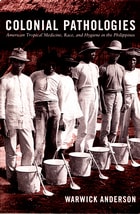
Colonial Pathologies
American Tropical Medicine, Race, and Hygiene in the PhilippinesWarwick Anderson
Duke University Press, 2006
A vivid sense of a colonial culture characterized by an anxious and assertive white masculinity emerges from Anderson’s description of American efforts to treat and discipline allegedly errant Filipinos. His narrative encompasses a colonial obsession with native excrement, a leper colony intended to transform those considered most unclean and least socialized, and the hookworm and malaria programs implemented by the Rockefeller Foundation in the 1920s and 1930s. Throughout, Anderson is attentive to the circulation of intertwined ideas about race, science, and medicine. He points to colonial public health in the Philippines as a key influence on the subsequent development of military medicine and industrial hygiene, U.S. urban health services, and racialized development regimes in other parts of the world.

Geographic Medicine for the Practitioner
Algorithms in the Diagnosis and Management of Exotic DiseasesKenneth D. Warren and Adel A. F. Mahmoud
University of Chicago Press, 1978
"The algorithms in this book have been developed by Drs. Warren and Mahmoud, as the result of a systematic effort to produce such guides. The book is presented as another in the series "Studies in Infectious Disease Research" and is a most welcome addition, certain to supply a major and hitherto inadequately fulfilled need."—from the Foreword, by Edward H. Kass, M. D., Ph.D
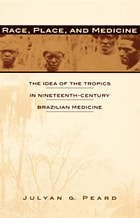
Race, Place, and Medicine
The Idea of the Tropics in Nineteenth-Century BrazilJulyan G. Peard
Duke University Press, 1999
Peard shows how the Tropicalistas adapted Western medicine and challenged the Brazilian medical status quo in order to find new answers to the old question of whether the diseases of warm climates were distinct from those of temperate Europe. They carried out innovative research on parasitology, herpetology, and tropical disorders, providing evidence that countered European assumptions about Brazilian racial and cultural inferiority. In the face of European fatalism about health care in the tropics, the Tropicalistas forged a distinctive medicine based on their beliefs that public health would improve only if large social issues—such as slavery and abolition—were addressed and that the delivery of health care should encompass groups hitherto outside the doctors’ sphere, especially women. But the Tropicalistas’ agenda, which included biting social critiques and broad demands for the extension of health measures to all of Brazil’s people, was not sustained. Race, Place, and Medicine shows how imported models of tropical medicine—constructed by colonial nations for their own needs—downplayed the connection between socioeconomic factors and tropical disorders.
This study of a neglected episode in Latin American history will interest Brazilianists, as well as scholars of Latin American, medical, and scientific history.

The Emergence of Tropical Medicine in France
Michael A. Osborne
University of Chicago Press, 2014
Osborne argues that physicians formulated localized concepts of diseases according to specific climatic and meteorological conditions, and assessed, diagnosed, and treated patients according to their ethnic and cultural origins. He also demonstrates that regions, more so than a coherent nation, built the empire and specific medical concepts and practices. Thus, by considering tropical medicine’s distinctive history, Osborne brings to light a more comprehensive and nuanced view of French medicine, medical geography, and race theory, all the while acknowledging the navy’s crucial role in combating illness and investigating the racial dimensions of health.