Results by title
8 books match the query 'Truth commissions'
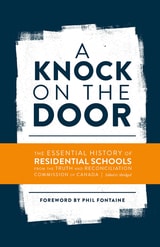
A Knock on the Door
The Essential History of Residential Schools from the Truth and Reconciliation Commission of CanadaUniversity of Manitoba Press, 2015
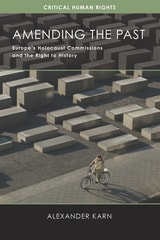
Amending the Past
Europe's Holocaust Commissions and the Right to HistoryAlexander Karn
University of Wisconsin Press, 2017
Alexander Karn analyzes more than a dozen Holocaust commissions—in Germany, Switzerland, France, Poland, Austria, Latvia, Lithuania, and elsewhere—in a comparative framework, situating each in the context of past and present politics, to evaluate their potential for promoting justice and their capacity for bringing the perspectives of rival groups more closely together. Karn also evaluates the media coverage these commissions received and probes their public reception from multiple angles.
Arguing that historical commissions have been underused as a tool for conflict management, Karn develops a program for historical mediation and moral reparation that can deepen democratic commitment and strengthen human rights in both transitional regimes and existing liberal states.
Democracy, Dialogue, and Community Action
Truth and Reconciliation in GreensboroSpoma Jovanovic
University of Arkansas Press, 2012
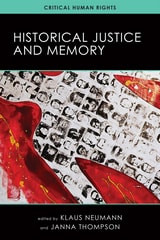
Historical Justice and Memory
Edited by Klaus Neumann and Janna Thompson
University of Wisconsin Press, 2015
The historical justice movement has inspired the spread of truth and reconciliation processes around the world and has pushed governments to make reparations and apologies for past wrongs. It has changed the public understanding of justice and the role of memory. In this book, leading scholars in philosophy, history, political science, and semiotics offer new essays that discuss and assess these momentous global developments. They evaluate the strength and weaknesses of the movement, its accomplishments and failings, its philosophical assumptions and social preconditions, and its prospects for the future.

Pathways of Reconciliation
Indigenous and Settler Approaches to Implementing the TRC's Calls to ActionAimée Craft
University of Manitoba Press, 2020
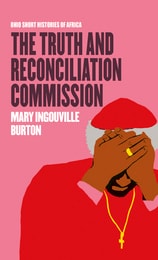
The Truth and Reconciliation Commission
Mary Ingouville Burton
Ohio University Press, 2017
In 1995, South Africa’s new government set up the Truth and Reconciliation Commission, a lynchpin of the country’s journey forward from apartheid. In contrast to the Nuremberg Trials and other retributive responses to atrocities, the TRC’s emphasis on reconciliation marked a restorative approach to addressing human rights violations and their legacies. The hearings, headed by Bishop Desmond Tutu, began in spring of 1996.
The commission was set up with three purposes: to investigate abuses, to assist victims with rehabilitation, and to consider perpetrators’ requests for amnesty. More than two decades after the first hearings, the TRC’s legacy remains mixed. Many families still do not know what became of their loved ones, and the commission came under legal challenges both from ex-president F. W. de Klerk and the African National Congress. Yet, the TRC fulfilled a vital role in the transition from apartheid to democracy, and has become a model for other countries.
This latest addition to the Ohio Short Histories of Africa series is a trenchant look at the TRC’s entire, stunningly ambitious project. And as a longtime activist for justice in South Africa and a former commissioner of the TRC, Mary Ingouville Burton is uniquely positioned to write this complex story.
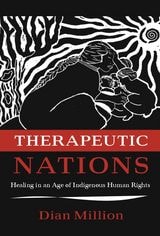
Therapeutic Nations
Healing in an Age of Indigenous Human RightsDian Million
University of Arizona Press, 2013
Million contends that nation-state relations are influenced by a theory of trauma ascendant with the rise of neoliberalism. Such use of trauma theory regarding human rights corresponds to a therapeutic narrative by Western governments negotiating with Indigenous nations as they seek self-determination.
Focusing on Canada and drawing comparisons with the United States and Australia, Million brings a genealogical understanding of trauma against a historical filter. Illustrating how Indigenous people are positioned differently in Canada, Australia, and the United States in their articulation of trauma, the author particularly addresses the violence against women as a language within a greater politic. The book introduces an Indigenous feminist critique of this violence against the medicalized framework of addressing trauma and looks to the larger goals of decolonization. Noting the influence of humanitarian psychiatry, Million goes on to confront the implications of simply dismissing Indigenous healing and storytelling traditions.
Therapeutic Nations is the first book to demonstrate affect and trauma’s wide-ranging historical origins in an Indigenous setting, offering insights into community healing programs. The author’s theoretical sophistication and original research make the book relevant across a range of disciplines as it challenges key concepts of American Indian and Indigenous studies.
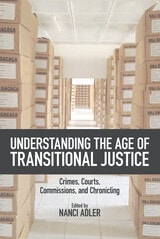
Understanding the Age of Transitional Justice
Crimes, Courts, Commissions, and ChroniclingAdler, Nanci
Rutgers University Press, 2018