Results by title
10 books match the query 'Turks'
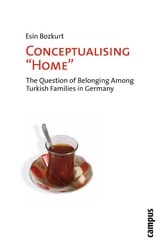
Conceptualising "Home"
The Question of Belonging among Turkish Families in GermanyEsin Bozkurt
Campus Verlag, 2009
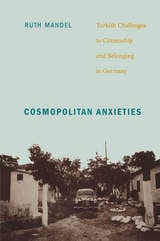
Cosmopolitan Anxieties
Turkish Challenges to Citizenship and Belonging in GermanyRuth Mandel
Duke University Press, 2008
Mandel explains that within Germany the popular understanding of what it means to be German is often conflated with citizenship, so that a German citizen of Turkish background can never be a “real German.” This conflation of blood and citizenship was dramatically illustrated when, during the 1990s, nearly two million “ethnic Germans” from Eastern Europe and the former Soviet Union arrived in Germany with a legal and social status far superior to that of “Turks” who had lived in the country for decades. Mandel analyzes how representations of Turkish difference are appropriated or rejected by Turks living in Germany; how subsequent generations of Turkish immigrants are exploring new configurations of identity and citizenship through literature, film, hip-hop, and fashion; and how migrants returning to Turkey find themselves fundamentally changed by their experiences in Germany. She maintains that until difference is accepted as unproblematic, there will continue to be serious tension regarding resident foreigners, despite recurrent attempts to realize a more inclusive and “demotic” cosmopolitan vision of Germany.

Flowers for Otello
On the Crimes That Came Out of JenaEsther Dischereit
Seagull Books, 2022
Between 1998 and 2007 a series of killings in Germany, disdainfully styled “doner murders” by the media, were attributed by German police to internecine rivalries among immigrants. The victims included eight citizens of Turkish origin, a Greek citizen, and a German policewoman. Not until 2011 did the German public learn not only that the police had ignored signs pointing to the real perpetrators, a neo-Nazi group called the National Socialist Underground, but also that important files, possibly containing evidence implicating state agencies, had disappeared from the archives of Federal Police and intelligence organizations.
Esther Dischereit, one of the preeminent German-Jewish voices of the post-Holocaust generation, takes that failure of the state to protect its citizens from racist violence as the core of her performance text Flowers for Otello: On the Crimes That Came Out of Jena. Seeking an appropriate language with which to meet the bereaved, she also finds a way to raise the blanket of silence that is used by those who would prefer that we forget. Combining witness testimony, myth, and incidents from a history of violence against minorities, Flowers for Otello, in Iain Galbraith’s translation, refuses chaos, instead revealing the chilling, patterned order of tragedy while bringing a great writer’s humanism to the fore.
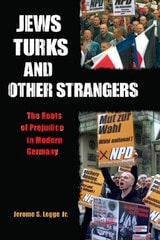
Jews, Turks, and Other Strangers
Roots of Prejudice in Modern GermanyJerome S. Legge, Jr.
University of Wisconsin Press, 2003
Scholarly, objective, insightful, and analytical, Jews, Turks, and Other Strangers studies the causes of prejudice against Jews, foreign workers, refugees, and emigrant Germans in contemporary Germany. Using survey material and quantitative analyses, Legge convincingly challenges the notion that German xenophobia is rooted in economic causes. Instead, he sees a more complex foundation for German prejudice, particularly in a reunified Germany where perceptions of the "other" sometimes vary widely between east and west, a product of a traditional racism rooted in the German past. By clarifying the foundations of xenophobia in a new German state, Legge offers a clear and disturbing picture of a conflicted country and a prejudice that not only affects Jews but also fuels a larger, anti-foreign sentiment.
Minority Memory, Identity, and Reconciliation
The Turkish Muslim Minority of Greece and the Greek Orthodox Minority of TürkiyeGül M. Gür
University of Michigan Press, 2025
Drawing from the personal stories of members of these two minority communities regarding their struggle with displacement, discrimination, and cultural assimilation, as well as comprehensive historical analysis, this book examines how historical traumas, national policies, and sociopolitical dynamics have influenced contemporary minority memory and identity formation. By incorporating interviews with community leaders, civil society representatives, and state officials, this book offers a rich, multifaceted perspective on the processes of memory and identity formation that underscores the broader implications of these processes for international relations in the region and minority rights. Gül M. Gür pulls together theories of nationalism, collective memory, and narrative practice to highlight the unique process of minority memory work and its role in sustaining minority identity and their advocacy efforts.

The Apocalypse in Reformation Nuremberg
Jews and Turks in Andreas Osiander’s WorldAndrew L. Thomas
University of Michigan Press, 2022
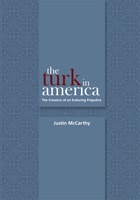
The Turk in America
The Creation of an Enduring PrejudiceJustin McCarthy
University of Utah Press, 2010
Utah Series in Middle East Studies
In The Turk in America, historian Justin McCarthy seeks to explain the historical basis for American prejudice towards Turks in the nineteenth and early twentieth centuries. The volume focuses on fraudulent characterizations of Turks, mostly stemming from an antipathy in Europe and America toward non-Christians, and especially Muslims. Spanning one hundred and fifty years, this history explores the misinformation largely responsible for the negative stereotypes of Turks during this period.
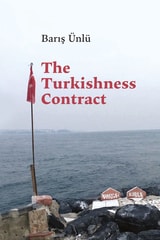
The Turkishness Contract
Baris Ünlü
Temple University Press, 2025
Ünlü uses Critical Race Theory to present a historical–sociological model to examine not only the historical constitution and contemporary functioning of the Turkish nation-state, but also the affective and bodily modalities of being Turkish. He also develops a framework for rethinking the complex relations between the socio-genesis of the Turkish nation and state and the psycho-genesis of the Turkish people, their cognitive habits and emotional orientations, and the structural privileges and unconsciousness strategies of Turkishness.
The Turkishness Contract addresses broader theoretical concerns including histories of colonialism, ethnic/racial social contracts, privilege, Armenian Genocide and the Kurdish question, as well as the unraveling of Turkey’s social contract at a moment of contemporary right-wing authoritarianism.
In the series Critical Race, Indigeneity, and Relationality

Turkish Berlin
Integration Policy and Urban SpaceAnnika Marlen Hinze
University of Minnesota Press, 2013
The integration of immigrants into a larger society begins at the local level. Turkish Berlin reveals how integration has been experienced by second-generation Turkish immigrant women in two neighborhoods in Berlin, Germany. While the neighborhoods are similar demographically, the lived experience of the residents is surprisingly different.
Informed by first-person interviews with both public officials and immigrants, Annika Marlen Hinze makes clear that local integration policies—often created by officials who have little or no contact with immigrants—have significant effects on the assimilation of outsiders into a community and a society. Focusing on the Turkish neighborhoods of Kreuzberg and Neukölln, Hinze shows how a combination of local policy making and grassroots organizing have contributed to one neighborhood earning a reputation as a hip, multicultural success story and the other as a rougher neighborhood featuring problem schools and high rates of unemployment. Aided by her interviews, she describes how policy makers draw from their imaginations of urban space, immigrants, and integration to develop policies that do not always take social realities into consideration. She offers useful examples of how official policies can actually exacerbate the problems they are trying to help solve and demonstrates that a powerful history of grassroots organizing and resistance can have an equally strong impact on political outcomes.
Employing spatial theory as a tool for understanding the complex processes of integration, Hinze asks two related questions: How do immigrants perceive themselves and their experiences in a new culture? And how are immigrants conceived of by politicians and policy makers? Although her research highlights the German–Turk experience in Berlin, her answers have implications that resonate far beyond the city’s limits.
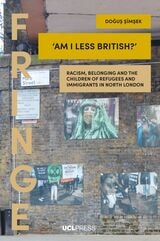
‘Am I Less British?’
Racism, Belonging, and the Children of Refugees and Immigrants in North LondonDogus Simsek
University College London, 2024
‘Am I Less British?’ focuses on the children of refugees and immigrants from Turkey in North London. Providing a rich ethnography of the lives of the children, the book studies their sense of identity and belonging, and their transnational experiences. It aims to understand how the children position themselves within a range of locations (London, North London, and Turkey), where they face class hierarchy, racism, and discrimination. Dogus Simsek explores how these children think about their sense of belonging within the contemporary political context in Britain and Turkey. De-identifying themselves from national identities and holding onto their oppressed identities appear as new forms of resistance in response to racism and exclusion.
The experiences of the young people reflect the complexity of their lives in changing political and social circumstances across the borders of nation-states, as well as the importance of other categories of identity, including local identities. Overall, the book argues that the intersections of local, national, and transnational approaches, the political context through which the lives of young people are framed, and their sophisticated engagement with ideas of race, class, ethnicity, and gender, are crucial to understanding their identity formation.