Results by title

4 books match the query 'Two Cities'

cover of Imagined Homes: Soviet German Immigrants in Two Cities

Imagined Homes

Soviet German Immigrants in Two Cities

Hans Werner

University of Manitoba Press, 2007
Imagined Homes: Soviet German Immigrants in Two Cities is a study of the social and cultural integration of two migrations of German speakers from Eastern Europe and the Soviet Union to Winnipeg, Canada in the late 1940s, and Bielefeld, Germany in the 1970s. Employing a cross-national comparative framework, Hans Werner reveals that the imagined trajectory of immigrant lives influenced the process of integration into a new urban environment. Winnipeg’s migrants chose a receiving society where they knew they would again be a minority group in a foreign country, while Bielefeld’s newcomers believed they were “going home” and were unprepared for the conflict between their imagined homeland and the realities of post-war Germany. Werner also shows that differences in the way the two receiving societies perceived immigrants, and the degree to which secularization and the sexual and media revolutions influenced these perceptions in the two cities, were crucially important in the immigrant experience.
[more]
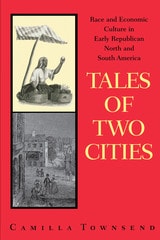
cover of Tales of Two Cities: Race and Economic Culture in Early Republican North and South America

Tales of Two Cities

Race and Economic Culture in Early Republican North and South America

By Camilla Townsend

University of Texas Press, 2000

With a common heritage as former colonies of Europe, why did the United States so outstrip Latin America in terms of economic development in the nineteenth century? In this innovative study, Camilla Townsend challenges the traditional view that North Americans succeeded because of better attitudes toward work—the Protestant work ethic—and argues instead that they prospered because of differences in attitudes towards workers that evolved in the colonial era.

Townsend builds her study around workers' lives in two very similar port cities in the 1820s and 1830s. Through the eyes of the young Frederick Douglass in Baltimore, Maryland, and an Indian woman named Ana Yagual in Guayaquil, Ecuador, she shows how differing attitudes towards race and class in North and South America affected local ways of doing business. This empirical research significantly clarifies the relationship between economic culture and racial identity and its long-term effects.
[more]
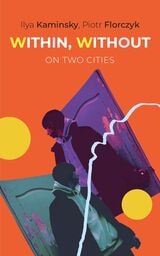
cover of Within, Without: On Two Cities

Within, Without

On Two Cities

Ilya Kaminsky and Piotr Florczyk

Seagull Books, 2026

Brings together two intimate, reflective essays by two acclaimed poets, Ilya Kaminsky and Piotr Florczyck, as they revisit their hometowns of Odesa and Kraków, exploring the complexities of return, memory, and identity.

Within, Without: On Two Cities presents two essays by Eastern European–born poets and translators, Ilya Kaminsky and Piotr Florczyk, now based in the United States. Revisiting their respective hometowns—Odesa and Kraków—they grapple with questions of history, identity, and belonging. What does it mean for an immigrant or refugee to return? Can one ever truly go back to a homeland that has since been transformed? Kaminsky and Florczyk chart a path forward by embracing the complexities of their transnational and translingual identities, as artists and as human beings.

[more]
cover of Young Tel Aviv: A Tale of Two Cities

Young Tel Aviv

A Tale of Two Cities

Anat Helman

Brandeis University Press, 2012

Practical Zionism in the Mandate era (1920–1948) is usually associated with agricultural settlements (kibbutzim), organized socialist workers, and the creation of a formal high culture. This book fills a gap in historical research by presenting a different type of practical Zionism in Jewish Palestine—urban, middle-class, and created by popular and informal daily practices. While research on Tel Aviv has so far been confined to “positivist” historical description or focused nostalgically on local myths, Helman’s book reconstructs and analyzes the city’s formative decades on various levels, juxtaposing historical reality with cultural images and ideological doctrines. Topics include the city’s physical portrait, major public events, consumer culture, patterns of leisure and entertainment, and urban subcultures.
[more]