Results by title
2 books match the query 'U.S. Customs and Border Protection'
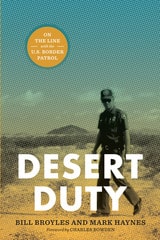
Desert Duty
On the Line with the U.S. Border PatrolBy Bill Broyles and Mark Haynes
University of Texas Press, 2010
While politicians and pundits endlessly debate immigration policy, U.S. Border Patrol agents put their lives on the line to enforce immigration law. In a day's work, agents may catch a load of narcotics, apprehend groups of people entering the country illegally, and intercept a potential terrorist. Their days often include rescuing aliens from death by thirst or murder by border bandits, preventing neighborhood assaults and burglaries, and administering first aid to accident victims, and may involve delivering an untimely baby or helping stranded motorists. As Bill Broyles and Mark Haynes sum it up, "Border Patrol is a hero job," one that too often goes unrecognized by the public.
Desert Duty puts a human face on the Border Patrol. It features interviews with nineteen active-duty and retired agents who have worked at the Wellton, Arizona, station that watches over what is arguably the most perilous crossing along the border—a sparsely populated region of the Sonoran Desert with little water and summer temperatures that routinely top 110°F. The agents candidly discuss the rewards and frustrations of holding the line against illegal immigrants, smugglers, and other criminals—while often having to help the very people they are trying to thwart when they get into trouble in the desert. As one agent explains, "The thrill is tracking 'em up before they die. It's a rough ol' way to go—run outta water in this desert."
Surviving the ICE Age
Children of Immigrants in New YorkJoanna Dreby
Russell Sage Foundation, 2025
Dreby shows that a restrictive approach to immigration creates problems over time and across generations. These issues occur regardless of one’s citizenship status and go beyond deportations. Despite having pride in their heritage, her interviewees did not talk much about immigration. She refers to this unwillingness—and at times, inability—to speak about immigration as silencing. Silencing in a community or family is often intended to protect children, but this can leave them with little information about their backgrounds and status, leading to fear and anxiety instead. Self-silencing often resulted from traumatic experiences tied to enforcement episodes, which sometimes took the form of memory loss or emotional withholding. Dreby finds that experiences with the immigration system that disrupted relationships in a child’s household arising from family separations, moves, or changing roles in the family had especially long-term effects, causing, at times, ongoing mental health issues. Even the risk of immigration involvement left some young adults feeling vulnerable and undermined their sense of safety and security as U.S. citizens.
Dreby also highlights stories that offer hope. Young adults developed strategies to persevere, and children who grew up in communities and families that openly talked about migration felt empowered and fared much better, especially when they had access to resources, such as adequate food and shelter, mental health services, and community support. Dreby calls for policies and practices to mitigate the harms of restrictive migratory control on children’s wellbeing, such avoiding the arrest of parents in front of children and ensuring that U.S. citizen children’s interests are considered in immigration court without their direct involvement.
Surviving the ICE Age details the generational harms caused by U.S. immigration policy and offers suggestions for a better way forward.