60 books match the query 'Ukraine' and 3 start with a
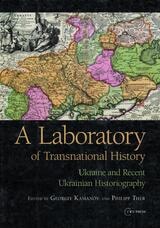
cover of A Laboratory of Transnational History: Ukraine and Recent Ukrainian Historiography

A Laboratory of Transnational History

Ukraine and Recent Ukrainian Historiography

Georgiy Kasianov

Central European University Press, 2009
A first attempt to present an approach to Ukrainian history which goes beyond the standard 'national narrative' schemes, predominant in the majority of post-Soviet countries after 1991, in the years of implementing 'nation-building projects'.An unrivalled collection of essays by the finest scholars in the field from Ukraine, Russia, USA, Germany, Austria and Canada, superbly written to a high academic standard. The various chapters are methodologically innovative and thought-provoking. The biggest Eastern European country has ancient roots but also the birth pangs of a new autonomous state. Its historiography is characterized by animated debates, in which this book takes a definite stance. The history of Ukraine is not written here as a linear, teleological narrative of ethnic Ukrainians but as a multicultural, multidimensional history of a diversity of cultures, religious denominations, languages, ethical norms, and historical experience. It is not presented as causal explanation of 'what has to have happened' but rather as conjunctures and contingencies, disruptions, and episodes of 'lack of history.'
[more]
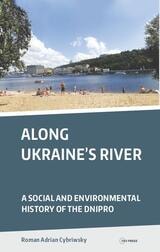
cover of Along Ukraine's River: A Social and Environmental History of the Dnipro

Along Ukraine's River

A Social and Environmental History of the Dnipro

Roman Adrian Cybriwsky

Central European University Press, 2018

The River Dnipro (formerly better known by the Russian name of Dnieper) is intimately linked to the history and identity of Ukraine. Cybriwsky discusses the history of the river, from when it was formed and its many uses and modifications by human agencies from ancient times to the present.

From key vantage points along the river’s course—its source in western Russia, through Belarus and Ukraine, to the Black Sea—interesting stories shed light on past and present life in Ukraine. Scenes set along the river from Russian and Ukrainian literature are evoked, as well as musical compositions and works of art. Topics include the legacy of the region’s cultural ancestors as the Kyivan Rus, the period of Cossack dominion, the epic battles for the river’s bridges in World War II, the building of dams and huge reservoirs by the Soviet Union, and the crisis of Chornobyl (Chernobyl). The author argues that the Dnipro and the farmlands along it are Ukraine’s chief natural resources, and that the country's future depends on putting both to good use.

Written without academic pretence in an informal style with dashes of humor, Along Ukraine's River is illustrated with original line drawings, maps, and photographs.
[more]
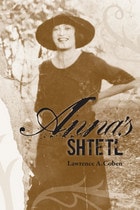
cover of Anna's Shtetl

Anna's Shtetl

Lawrence A. Coben

University of Alabama Press, 2007

A rare view of a childhood in a European ghetto
 
Anna Spector was born in 1905 in Korsun, a Ukrainian town on the Ros River, eighty miles south of Kiev. Held by Poland until 1768 and annexed by the Tsar in 1793 Korsun and its fluid ethnic population were characteristic of the Pale of Settlement in Eastern Europe: comprised of Ukrainians, Cossacks, Jews and other groups living uneasily together in relationships punctuated by violence. Anna’s father left Korsun in 1912 to immigrate to America, and Anna left in 1919, having lived through the Great War, the Bolshevik Revolution, and part of the ensuing civil war, as well as several episodes of more or less organized pogroms—deadly anti-Jewish riots begun by various invading military detachments during the Russian Civil War and joined by some of Korsun’s peasants.
 
In the early 1990s Anna met Lawrence A. Coben, a medical doctor seeking information about the shtetls to recapture a sense of his own heritage. Anna had near-perfect recall of her daily life as a girl and young woman in the last days in one of those historic but doomed communities. Her rare account, the product of some 300 interviews, is valuable because most personal memoirs of ghetto life are written by men. Also, very often, Christian neighbors appear in ghetto accounts as a stolid peasant mass assembled on market days, as destructive mobs, or as an arrogant and distant collection of government officials and nobility. Anna’s story is exceptionally rich in a sense of the Korsun Christians as friends, neighbors, and individuals.
 
Although the Jewish communities in Eastern Europe are now virtually gone, less than 100 years ago they counted a population of millions. The firsthand records we have from that lost world are therefore important, and this view from the underrecorded lives of women and the young is particularly welcome.  


[more]