Results by title
11 books match the query 'Ulysses'

Citizen Critics
Literary Public SpheresRosa A. Eberly
University of Illinois Press, 2000
The condition of our public discussions about literary and cultural works has much to say about the state of our democracy. Classrooms, newspapers, magazines, Internet forums, and many other places grant citizens a place to hold public discourses—and claim a voice on national artistic matters.
Rosa A. Eberly looks at four censorship controversies where professionals asserted their authority to deny citizen critics a voice—and effectively removed discussion of literature from the public sphere. Eberly compares the outrage sparked by the publication of James Joyce's Ulysses and Henry Miller's Tropic of Cancer with the relative quiescence that greeted the much more violent and sexually explicit content of Bret Easton Ellis's American Psycho and Andrea Dworkin's Mercy. Through a close reading of letters to the editor, reviews, media coverage, and court cases, Eberly shows how literary critics and legal experts defused censorship debates—and undercut the authority of citizen critics—by shifting the focus from content to aesthetics and from social values to publicity.
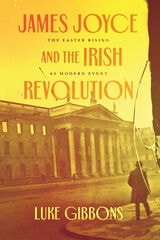
James Joyce and the Irish Revolution
The Easter Rising as Modern EventLuke Gibbons
University of Chicago Press, 2023
When revolutionaries seized Dublin during the 1916 Easter Rising, they looked back to unrequited pasts to point the way toward radical futures—transforming the Celtic Twilight into the electric light of modern Dublin in James Joyce’s Ulysses. For Luke Gibbons, the short-lived rebellion converted the Irish renaissance into the beginning of a global decolonial movement. James Joyce and the Irish Revolution maps connections between modernists and radicals, tracing not only Joyce’s projection of Ireland onto the world stage, but also how revolutionary leaders like Ernie O’Malley turned to Ulysses to make sense of their shattered worlds. Coinciding with the centenary of both Ulysses and Irish independence, this book challenges received narratives about the rebellion and the novel that left Ireland changed, changed utterly.
Joyce's Book of Memory
The Mnemotechnic of UlyssesJohn S. Rickard
Duke University Press, 1999
Offering a detailed reading of Joyce and his methods of writing, Rickard investigates the uses of memory in Ulysses and analyzes its role in the formation of personal identity. The importance of forgetting and repression, and the deadliness of nostalgia and habit in Joyce’s paralyzed Dublin are also revealed. Noting the power of spontaneous, involuntary recollection, Rickard locates Joyce’s mnemotechnic within its historical and philosophical contexts. As he examines how Joyce responded to competing intellectual paradigms, Rickard explores Ulysses’ connection to medieval, modern, and (what would become) postmodern worldviews, as well as its display of tensions between notions of subjective and universal memory. Finally, Joyce’s Book of Memory illustrates how Joyce distilled subjectivity, history, and cultural identity into a text that offers a panoramic view of the modern period.
This book will interest students and scholars of Joyce, as well as others engaged in the study of modern and postmodern literature.
Odyssey of the Psyche
Jungian Patterns in Joyce's UlyssesJean Kimball
Southern Illinois University Press, 1997
The result of the interaction between Bloom and Dedalus, Kimball argues as a central tenet in her unique reading of Ulysses, is the gradual development of a relationship between the two protagonists that parallels C. G. Jung’s descriptions of the encounter between the Ego and the Shadow in that stage of his theoretical individuation process called "the realization of the shadow." These parallels form a unifying strand of meaning that runs throughout this multidimensional novel and is supported by the text and contexts of Ulysses.
Kimball has provided the first comprehensive study of the relationship between Jungian psychology and Joyce’s Ulysses. Bucking critical trends, she focuses on Stephen rather than Bloom. She also notes certain parallels—synchronicities—in the lives of both Jung and Joyce, not because the men influenced one another but because they speculated about personality at the same historical time. Finally, noting that both Jung and Joyce came from strong Christian backgrounds, she asserts that the doubleness of the human personality fundamental to Christian theology is carried over into Jung’s psychology and Joyce’s fiction.

The Argument of Ulysses
Stanley Sultan
The Ohio State University Press, 1900
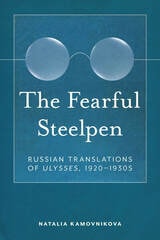
The Fearful Steelpen
Russian Translations of "Ulysses," 1920–1930sNatalia Kamovnikova
University of Massachusetts Press, 2026
Examining how a single book inspired devotion, dread, and lasting superstition in Russian letters
When James Joyce first published Ulysses in 1922, the book enjoyed a hearty welcome in the Soviet Union. In fact, Russian was the second language into which excerpts were translated. However, the early enthusiasm soon gave way to apprehension, and then to public condemnation. The Russian literary community found itself at the epicenter of the political repression of the 1930s, suffering enormous losses among writers and translators, who died en masse through executions and exile. In the context of Ulysses, the numerous violent deaths of its Soviet translators and editors gave rise to rumors, which then developed into superstitious beliefs that managed to outlive their own time. Russian translation scholar Natalia Kamovnikova examines the struggles faced by those who attempted early translations, including death and imprisonment, and how both this translation work and the text itself became sources of fear.
Alongside important background on these early translation attempts, including information on the translators themselves, The Fearful Steelpen unpacks the literary approaches to rendering Joyce’s aesthetics in Russian and traces the socio-political beliefs behind translation and publishing decisions. Kamovnikova goes further, to examine why Ulysses in particular aroused fears in both in its contemporaries and in subsequent generations of Russian writers, as if the text held a dangerous power that could harm those working on it. This fascinating publishing case study reveals the complicated cultural and political dynamics at work behind a seemingly simple translation from one language to another that still resonates in the contemporary moment.

The Subaltern Ulysses
Enda Duffy
University of Minnesota Press, 1994
The Subaltern Ulysses was first published in 1994. Minnesota Archive Editions uses digital technology to make long-unavailable books once again accessible, and are published unaltered from the original University of Minnesota Press editions.
How might an IRA bomb and James Joyce's Ulysses have anything in common? Could this masterpiece of modernism, written at the violent moment of Ireland's national emergence, actually be the first postcolonial novel? Exploring the relation of Ulysses to the colony in which it is set, and to the nation being born as the book was written, Enda Duffy uncovers a postcolonial modernism and in so doing traces another unsuspected strain within the one-time critical monolith. In the years between 1914 and 1921, as Joyce was composing his text, Ireland became the first colony of the British Empire to gain its independence in this century after a violent anticolonial war. Duffy juxtaposes Ulysses with documents and photographs from the archives of both empire and insurgency, as well as with recent postcolonial literary texts, to analyze the political unconscious of subversive strategies, twists on class and gender, that render patriarchal colonialist culture unfamiliar.
Ulysses, Duffy argues, is actually a guerrilla text, and here he shows how Joyce's novel pinpoints colonial regimes of surveillance, mocks imperial stereotypes of the "native," exposes nationalism and other chauvinistic ideologies of "imagined community" as throwbacks to the colonial ethos, and proposes versions of a postcolonial subject. A significant intervention in the massive "Joyce industry" founded on the rhetoric and aesthetics of high modernism, Duffy's insights show us not only Ulysses, but also the origins of postcolonial textuality, in a startling new way.Enda Duffy is assistant professor of English at the University of California at Santa Barbara.
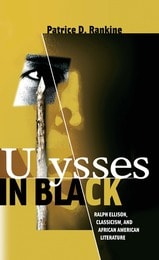
Ulysses in Black
Ralph Ellison, Classicism, and African American LiteraturePatrice D. Rankine
University of Wisconsin Press, 2008
In this groundbreaking work, Patrice D. Rankine asserts that the classics need not be a mark of Eurocentrism, as they have long been considered. Instead, the classical tradition can be part of a self-conscious, prideful approach to African American culture, esthetics, and identity. Ulysses in Black demonstrates that, similar to their white counterparts, African American authors have been students of classical languages, literature, and mythologies by such writers as Homer, Euripides, and Seneca.
Ulysses in Black closely analyzes classical themes (the nature of love and its relationship to the social, Dionysus in myth as a parallel to the black protagonist in the American scene, misplaced Ulyssean manhood) as seen in the works of such African American writers as Ralph Ellison, Toni Morrison, and Countee Cullen. Rankine finds that the merging of a black esthetic with the classics—contrary to expectations throughout American culture—has often been a radical addressing of concerns including violence against blacks, racism, and oppression. Ultimately, this unique study of black classicism becomes an exploration of America’s broader cultural integrity, one that is inclusive and historic.
Outstanding Academic Title, Choice Magazine
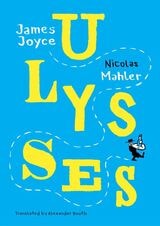
Ulysses
Mahler after JoyceNicolas Mahler
Seagull Books, 2022
Dublin, 16 June 1904: through a day in the life of the advertising agent Leopold Bloom and the sensations of the ordinary, James Joyce created a maximal book from a minimum of matter. Ulysses, the most important novel of modernity, is a defining book of the twentieth century. Joyce’s creation—also spectacularly innovative in form—inspired Nicolas Mahler to attempt a literary retelling that is not a mere illustration or adaption of the novel but an independent and equally as inventive work. Using comics, Mahler transforms the various literary techniques of the original. He assembles his images with humorous and philosophical verve, quoting and rambling along in the spirit of Joyce.
With this graphic interpretation of the modern classic, which also constitutes a homage to the golden era of the newspaper comic strip, Ulysses can be newly discovered in a delightfully unexpected form.
Ulysses
The Mechanics of MeaningDavid Hayman
University of Wisconsin Press, 1982
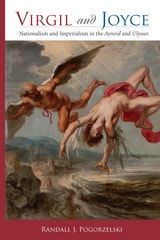
Virgil and Joyce
Nationalism and Imperialism in the <i>Aeneid</i> and <i>Ulysses</i>Randall J. Pogorzelski
University of Wisconsin Press, 2016
Joyce wrote Ulysses during the Irish War of Independence, when militants, politicians, and intellectuals were attempting to create a new Irish nation. Virgil wrote the Aeneid when, in the wake of decades of civil war, Augustus was founding what we now call the Roman Empire. Randall Pogorzelski applies modern theories of nationalism, intertextuality, and reception studies to illuminate how both writers confronted issues of nationalism, colonialism, political violence, and freedom during times of crisis.