Results by title
2 books match the query 'Uncanny'

Gothic Riffs
Secularizing the Uncanny in the European Imaginary, 1780–1820Diane Long Hoeveler
The Ohio State University Press, 2010
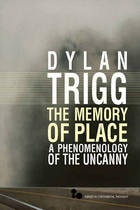
The Memory of Place
A Phenomenology of the UncannyDylan Trigg
Ohio University Press, 2011
From the frozen landscapes of the Antarctic to the haunted houses of childhood, the memory of places we experience is fundamental to a sense of self. Drawing on influences as diverse as Merleau-Ponty, Freud, and J. G. Ballard, The Memory of Place charts the memorial landscape that is written into the body and its experience of the world.
Dylan Trigg’s The Memory of Place offers a lively and original intervention into contemporary debates within “place studies,” an interdisciplinary field at the intersection of philosophy, geography, architecture, urban design, and environmental studies. Through a series of provocative investigations, Trigg analyzes monuments in the representation of public memory; “transitional” contexts, such as airports and highway rest stops; and the “ruins” of both memory and place in sites such as Auschwitz. While developing these original analyses, Trigg engages in thoughtful and innovative ways with the philosophical and literary tradition, from Gaston Bachelard to Pierre Nora, H. P. Lovecraft to Martin Heidegger. Breathing a strange new life into phenomenology, The Memory of Place argues that the eerie disquiet of the uncanny is at the core of the remembering body, and thus of ourselves. The result is a compelling and novel rethinking of memory and place that should spark new conversations across the field of place studies.
Edward S. Casey, Distinguished Professor of Philosophy at Stony Brook University and widely recognized as the leading scholar on phenomenology of place, calls The Memory of Place “genuinely unique and a signal addition to phenomenological literature. It fills a significant gap, and it does so with eloquence and force.” He predicts that Trigg’s book will be “immediately recognized as a major original work in phenomenology.”