Results by title
12 books match the query 'Underground railroad'
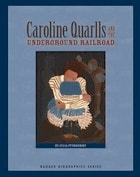
Caroline Quarlls and the Underground Railroad
Julia Pferdehirt
Wisconsin Historical Society Press, 2008
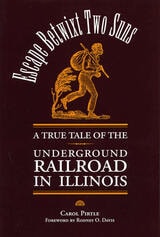
Escape Betwixt Two Suns
A True Tale of the Underground Railroad in IllinoisCarol Pirtle. Foreword by Rodney O. Davis
Southern Illinois University Press, 2000
Although the northern Illinois chapters of the story of Susan “Sukey” Richardson’s escape from slavery on the Underground Railroad are documented, the part played by southern Illinois in that historic episode has remained obscure. Carol Pirtle changes that with her investigation into the 1843 suit Andrew Borders lodged against William Hayes, charging his neighbor with helping slaves from the Borders estate escape to Galesburg. In conjunction with her probe into the past, Pirtle also discovered the Hayes correspondence.
Pirtle documents Hayes’s involvement in the Illinois Underground Railroad through approximately two hundred letters received by Hayes from the early 1820s until his death in 1849. Many of these letters specifically corroborate his participation in the escape of slaves from the Borders estate. One such letter came from T. A. Jones in 1843: “You Dear Sir are to me an unknown friend, yet I believe you are a friend to the poor down trodden Slave. This is as good an introduction as I want from any man. My brother, our cause is a holy one.” Letters written by Galesburg residents show that several prominent citizens of that community also assisted in the affair, proving that Knox College administrators and trustees were active in the Underground Railroad.
Pirtle also includes excerpts from the trial transcript from the 1844 civil case against Hayes, which was tried in Pinckneyville, Illinois. She researched newspaper accounts of the event, most notably those in the Western Citizen and the Sparta Herald. Records of the Covenanter Presbyterian church of which Hayes was a member provide partial explanations of Hayes’s motives.
Telling the story of Hayes and his involvement with Susan Richardson and the Underground Railroad, Pirtle provides insight into the work of abolitionists in Illinois. Escape Betwixt Two Suns, in fact, is one of the few books to substantiate the legends of the Underground Railroad. She tells the story of a quiet man who made a difference, of a man deserving the accolades of a hero.
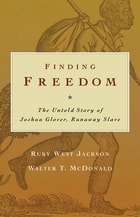
Finding Freedom
The Untold Story of Joshua Glover, Runaway SlaveWalter T. McDonald
Wisconsin Historical Society Press, 2007
"Shall a man be dragged back to Slavery from our Free Soil, without an open trial of his right to Liberty?" —Handbill circulated in Milwaukee on March 11, 1854
In Finding Freedom, Ruby West Jackson and Walter T. McDonald provide readers with the first narrative account of the life of Joshua Glover, the runaway slave who was famously broken out of jail by thousands of Wisconsin abolitionists in 1854. Employing original research, the authors chronicle Glover's days as a slave in St. Louis, his violent capture and thrilling escape in Milwaukee, his journey on the Underground Railroad, and his 33 years of freedom in rural Canada.
While Jackson and McDonald demonstrate how the catalytic "Glover incident" captured national attention—pitting the proud state of Wisconsin against the Supreme Court and adding fuel to the pre-Civil War fire—their primary focus is on the ordinary citizens, both black and white, with whom Joshua Glover interacted. A bittersweet story of bravery and compassion, Finding Freedom provides the first full picture of the man for whom so many fought, and around whom so much history was made.
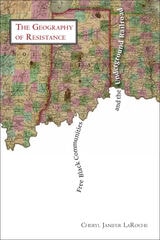
Free Black Communities and the Underground Railroad
The Geography of ResistanceCheryl Janifer LaRoche
University of Illinois Press, 2013
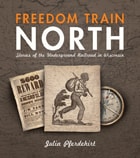
Freedom Train North
Stories of the Underground Railroad in WisconsinJulia Pferdehirt
Wisconsin Historical Society Press, 2011
People running from slavery made many hard journeys to find freedom—on steamboats and in carriages, across rivers and in hay-covered wagons. Some were shot at. Many were chased by slave catchers. Others hid in tunnels and secret rooms. But these troubles were worth it for the men, women, and children who eventually reached freedom. Freedom Train North tells the stories of fugitive slaves who found help in Wisconsin. Young readers (ages 7 to 12) will meet people like Joshua Glover, who was broken out of jail by a mob of freedom workers in Milwaukee, and Jacob Green, who escaped five times before he finally made it to freedom.
This compelling book also introduces stories of the strangers who hid fugitive slaves and helped them on their way, brave men and women who broke the law to do what was right. As both a historian and a storyteller, author Julia Pferdehirt shares these exciting and important stories of a dangerous time in Wisconsin’s past. Using manuscripts, letters, and artifacts from the period, as well as stories passed down from one generation to another, Pferdehirt takes us deep into our state’s past, challenging and inspiring us with accounts of courage and survival.
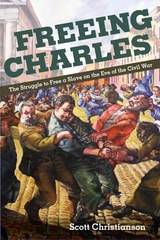
Freeing Charles
The Struggle to Free a Slave on the Eve of the Civil WarScott Christianson
University of Illinois Press, 2010
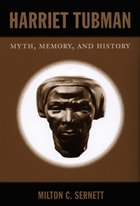
Harriet Tubman
Myth, Memory, and HistoryMilton C. Sernett
Duke University Press, 2007
Three biographies of Harriet Tubman were published within months of each other in 2003–04; they were the first book-length studies of the “Queen of the Underground Railroad” to appear in almost sixty years. Sernett examines the accuracy and reception of these three books as well as two earlier biographies first published in 1869 and 1943. He finds that the three recent studies come closer to capturing the “real” Tubman than did the earlier two. Arguing that the mythical Tubman is most clearly enshrined in stories told to and written for children, Sernett scrutinizes visual and textual representations of “Aunt Harriet” in children’s literature. He looks at how Tubman has been portrayed in film, painting, music, and theater; in her Maryland birthplace; in Auburn, New York, where she lived out her final years; and in the naming of schools, streets, and other public venues. He also investigates how the legendary Tubman was embraced and represented by different groups during her lifetime and at her death in 1913. Ultimately, Sernett contends that Harriet Tubman may be America’s most malleable and resilient icon.
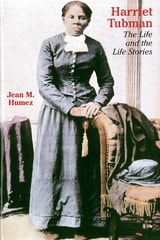
Harriet Tubman
The Life and the Life StoriesJean M. Humez
University of Wisconsin Press, 2005
Harriet Tubman’s name is known world-wide and her exploits as a self-liberated Underground Railroad heroine are celebrated in children’s literature, film, and history books, yet no major biography of Tubman has appeared since 1943. Jean M. Humez’s comprehensive Harriet Tubman is both an important biographical overview based on extensive new research and a complete collection of the stories Tubman told about her life—a virtual autobiography culled by Humez from rare early publications and manuscript sources. This book will become a landmark resource for scholars, historians, and general readers interested in slavery, the Underground Railroad, the Civil War, and African American women.
Born in slavery in Maryland in or around 1820, Tubman drew upon deep spiritual resources and covert antislavery networks when she escaped to the north in 1849. Vowing to liberate her entire family, she made repeated trips south during the 1850s and successfully guided dozens of fugitives to freedom. During the Civil War she was recruited to act as spy and scout with the Union Army. After the war she settled in Auburn, New York, where she worked to support an extended family and in her later years founded a home for the indigent aged. Celebrated by her primarily white antislavery associates in a variety of private and public documents from the 1850s through the 1870s, she was rediscovered as a race heroine by woman suffragists and the African American women’s club movement in the early twentieth century. Her story was used as a key symbolic resource in education, institutional fundraising, and debates about the meaning of "race" throughout the twentieth century.
Humez includes an extended discussion of Tubman’s work as a public performer of her own life history during the nearly sixty years she lived in the north. Drawing upon historiographical and literary discussion of the complex hybrid authorship of slave narrative literature, Humez analyzes the interactive dynamic between Tubman and her interviewers. Humez illustrates how Tubman, though unable to write, made major unrecognized contributions to the shaping of her own heroic myth by early biographers like Sarah Bradford. Selections of key documents illustrate how Tubman appeared to her contemporaries, and a comprehensive list of primary sources represents an important resource for scholars.
Necessary Courage
Iowa's Underground Railroad in the Struggle against SlaveryLowell J. Soike
University of Iowa Press, 2013
Onward to Chicago
Freedom Seekers and the Underground Railroad in Northeastern IllinoisLarry A. McClellan
Southern Illinois University Press, 2023
Uncovering stories of the freedom network in northeastern Illinois
Decades before the Civil War, Illinois’s status as a free state beckoned enslaved people, particularly those in Kentucky and Missouri, to cross porous river borders and travel toward new lives. While traditional histories of the Underground Railroad in Illinois start in 1839, and focus largely on the romanticized tales of white men, Larry A. McClellan reframes the story, not only introducing readers to earlier freedom seekers, but also illustrating that those who bravely aided them were Black and white, men and women. McClellan features dozens of individuals who made dangerous journeys to reach freedom as well as residents in Chicago and across northeastern Illinois who made a deliberate choice to break the law to help.
Onward to Chicago charts the evolution of the northeastern Illinois freedom network and shows how, despite its small Black community, Chicago emerged as a point of refuge. The 1848 completion of the I & M Canal and later the Chicago to Detroit train system created more opportunities for Black men, women, and children to escape slavery. From eluding authorities to confronting kidnapping bands working out of St. Louis and southern Illinois, these stories of valor are inherently personal. Through deep research into local sources, McClellan presents the engrossing, entwined journeys of freedom seekers and the activists in Chicagoland who supported them.
McClellan includes specific freedom seeker journey stories and introduces Black and white activists who provided aid in a range of communities along particular routes. This narrative highlights how significant biracial collaboration led to friendships as Black and white abolitionists worked together to provide support for freedom seekers traveling through the area and ultimately to combat slavery in the United States.

Sailing to Freedom
Maritime Dimensions of the Underground RailroadEdited by Timothy D. Walker
University of Massachusetts Press, 2021
With innovative scholarship and thorough research, Sailing to Freedom highlights little-known stories and describes the less-understood maritime side of the Underground Railroad, including the impact of African Americans' paid and unpaid waterfront labor. These ten essays reconsider and contextualize how escapes were managed along the East Coast, moving from the Carolinas, Virginia, and Maryland to safe harbor in northern cities such as Philadelphia, New York, New Bedford, and Boston.
In addition to the volume editor, contributors include David S. Cecelski, Elysa Engelman, Kathryn Grover, Megan Jeffreys, Cheryl Janifer LaRoche, Mirelle Luecke, Cassandra Newby-Alexander, Michael D. Thompson, and Len Travers.
Till the Dark Angel Comes
Abolitionism and the Road to the Second American RevolutionWilliam S. King
Westholme Publishing, 2016
Establishing himself as a fresh and important voice in the history of African American emancipation,William S. King provides a critical introduction to the lead-up to the Civil War. A skilled and judicious chronicler, King seamlessly weaves multiple and seemingly disparate threads, including early nineteenth-century Revivalism, the emergence of the Republic of Texas, the fugitive slave laws—and even the explosion of a cannon aboard the U.S.S. Princeton in 1844—to explain how the opposition to slavery in America changed from producing speeches and pamphlets to embracing the reality that slavery could be eradicated only through armed conflict. By tracing this transformation through the life of John Brown, King provides an entirely new assessment of this enigmatic figure who was characterized as a “mad man” in the wake of his butchering of proslavery settlers in Kansas and the inept raid on Harpers Ferry, Virginia. King puts these actions in context to explain the paradox of Brown’s legacy. On one hand he was vilified as an unstable threat to American democracy or a fanatical sideshow to the history of the Civil War, while on the other he was an inspiration to the oppressed, a man who garnered the indomitable Harriet Tubman’s commitment to the righteousness of his endeavor.
Elegantly written with a command of period sources, Till the Dark Angel Comes: Abolitionism and the Road to the Second American Revolution is the story of interracial opposition to slavery, the important debates among free blacks as to their future in America, and the arguments and compromises at the highest levels of government. Here we encounter many personalities of the time, some well known, such as Frederick Douglass,William Lloyd Garrison, and John C. Calhoun, and others less so, but no less important—Martin Delany, Henry Highland Garnet, and Elijah Lovejoy.