Results by title

2 books match the query 'Unification'
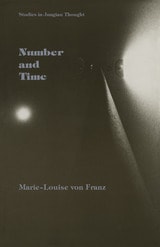
cover of Number and Time: Reflections Leading Toward a Unification of Depth Psychology and Physics

Number and Time

Reflections Leading Toward a Unification of Depth Psychology and Physics

Marie-Louise von Franz

Northwestern University Press, 1986

A classic on mind, matter, and the unified world model

C. G. Jung's work in his later years suggested that the seemingly divergent sciences of psychology and modern physics might, in fact, be approaching a unified world model in which the dualism of matter and psyche would be resolved into “one world” or Unus Mundus. Jung believed that the natural integers are the archetypal patterns that regulate the unitary realm of psyche and matter, and that number serves as a special instrument for man's becoming conscious of this unity.

Written in a clear style and replete with illustrations which help make the mathematical ideas visible, Number and Time is a piece of original scholarship which introduces a view of how "mind" connects with "matter" at the most fundamental level.
 

[more]
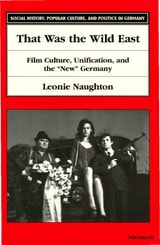
cover of That Was the Wild East: Film Culture, Unification, and the "New" Germany

That Was the Wild East

Film Culture, Unification, and the "New" Germany

Leonie Naughton

University of Michigan Press, 2002

That Was the Wild East presents critical insight into popular film culture and art house cinema in Germany from 1990-1999. It examines box-office hits and cult films, such as the "Trabi comedies" and unification farces, which delighted local and international audiences, but which have been granted scarce critical attention up to this point. The first detailed account of the representation of German unification on film to appear, either in English or German, this work provides valuable and engaging source material otherwise inaccessible to non-German readers. In her focus on a range of "unification films," Leonie Naughton analyzes impressions of unification fostered in films from the East and West, along with the comic and tragic anxieties these films attribute to life in the "new" Germany. The ways in which German filmmakers represented unification throughout the 1990s are discussed with reference to a broad range of recent German films, and Naughton examines both divergent and convergent cinematic impressions of life in a recently unified Germany by 1990s filmmakers. Those interested in film studies and film history, German history and culture, as well as German unification and recent developments in German cinema, will find this book especially appealing.
[more]