Results by title
16 books match the query 'United States. Marine Corps'
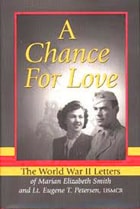
A Chance for Love
The World War II Letters of Marian Elizabeth Smith and Lt. Eugene T. Petersen, USMCREugene Peterson
Michigan State University Press, 1998
In mid-February 1944 Marian Elizabeth Smith, a young Wisconsin woman, met Marine Corps Lieutenant Eugene T. Petersen on the passenger train, El Capitan, as it made its 42-hour run from Los Angeles to Chicago. After a brief acquaintance, he left the United States to join the Third Marine Division on Guam and eventually to take part in the battle for Iwo Jima in February and March of 1945. The collected letters of their subsequent 18-month correspondence reveal much about wartime life at home and abroad. This correspondence represents a time capsule of current events as Smith and Petersen discuss Franklin Roosevelt, the United Nations, internationalism, popular movies, the French aviator and poet Antoine de St. Exupery, the comic strip Barnaby, and the frustrations of dealing with sometimes less-than- enlightened parents. The loss of Marian's brother during the bombing of Ploesti, Rumania, in June 1944, brought Petersen and Smith closer together, and after hundreds of letters the "chance for love" Marian had suggested early in their correspondence evolved into a marriage that has endured for more than half a century.
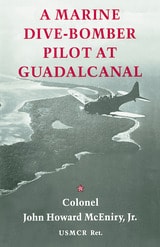
A Marine Dive-bomber Pilot at Guadalcanal
John Howard McEniry
University of Alabama Press, 1987
This book chronicles the World War II experiences of the author, who served as a Marine Corps pilot in the South Pacific. Colonel McEniry describes the organization and deployment of a Marine dive-bombing squadron (VMSB-132) in the early days of the war and follows the squadron through its actions in November and December of 1942.
The participation by the squadron in the naval battle of Guadalcanal, November 12-15, 1942, is related in detail and includes the personal experiences of the author on several bombing missions. This battle, described by Admiral Ernest J. King, the Chief of Naval Operations, as “the fiercest naval battle ever fought,” resulted in the loss by the Japanese of two battleships, ten transport ships, and numerous cruisers and destroyers.
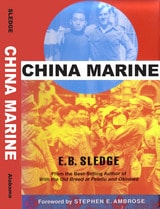
China Marine
E. B. Sledge
University of Alabama Press, 2002
From the respected author of one of the best books on World War II combat, comes an equally captivating saga of battle recovery, healing, and homecoming.
China Marine is the long-awaited sequel to E. B. Sledge’s critically acclaimed memoir, With the Old Breed at Peleliu and Okinawa. Picking up where his previous memoir leaves off, Sledge, a young marine in the First Division, traces his company’s movements and charts his own difficult passage to peace following his horrific experiences in the Pacific. He reflects on his duty in the ancient city of Peiping (now Beijing) and recounts the difficulty of returning to his hometown of Mobile, Alabama, and resuming civilian life haunted by the shadows of close combat.
Distinguished historians have praised Sledge’s first book as the definitive rifleman’s account of World War II, ranking it with the Civil War’s Red Badge of Courage and World War I’s All Quiet on the Western Front. Although With the Old Breed ends with the surrender of Japan, marines in the Pacific were still faced with the mission of disarming the immense Japanese forces on the Asian mainland and reestablishing order. For infantrymen so long engaged in the savage and surreal world of close combat, there remained the personal tasks of regaining normalcy and dealing with suppressed memories, fears, and guilt.
In China Marine, E. B. Sledge completes his story and provides emotional closure to the searing events detailed in his first memoir. He speaks frankly about the real costs of war, emotional and psychological as well as physical, and explains the lifetime loyalties that develop between men who face fear, loss, and horror together. That bond becomes one of the newfound treasures of life after battle.
With his hallmark style of simplicity, directness, and lack of sentimentality, "Sledgehammer" has given us yet another great document of war literature.
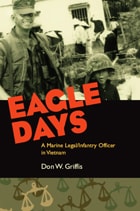
Eagle Days
A Marine Legal/Infantry Officer in VietnamDonald W. Griffis
University of Alabama Press, 2007
A rare Vietnam memoir from the crossroads of combat and military justice.
Much has been written about America’s war in Vietnam, and an enduring and troubling subtext is the composition of the body of soldiers that made up the U.S. troop deployment: from the initially well-trained and disciplined group of largely elite units that served in the mid-sixties to what has been termed an “armed mob” by the end of that decade and into the early 1970s. Drug use, insubordination, racial antagonism that often became violent, theft and black market dealing, and even “fragging” (murder of officers and senior noncoms by disgruntled troops) marred the record of the U.S. military presence. Don Griffis served in the twin roles of legal officer charged at various times with the task of both defending and prosecuting servicemen, while at the same time leading combat patrols in “search and destroy” missions against the Viet Cong and North Vietnamese enemy. Eagle Days is a remarkable account of Griffis’ personal record of experiencing what the military should do best—meet, engage, and defeat the enemy—and what it becomes when esprit de corps, discipline, and a sense of purpose decay.
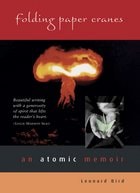
Folding Paper Cranes
An Atomic MemoirLeonard Bird
University of Utah Press, 2005
Among the monuments to tragedy and hope in Hiroshima’s Peace Park stands a statue of Sadako Sasaki holding a crane in her outstretched arms. Sadako was two years old when the atomic bomb was dropped on her city; she was diagnosed with leukemia ten years later. According to popular Japanese belief, folding a thousand paper cranes brings good fortune. Sadako spent the last months of her young life folding hundreds of paper cranes. She folded 644 before she died.
As he journeys from the Geiger counters, radioactive dust, and mushroom clouds of the Nevada desert to the bronze and ivory memorials for the dead in Japan, Bird—himself a survivor of radiation-induced cancer—seeks to make peace with his past and with a future shadowed by nuclear proliferation. His paper cranes are the poetry and prose of this haunting memoir.

Good-Bye to Old Peking
The Wartime Letters Of U.S. Marine Captain John Seymour Letcher, 1937-1939John Seymour Letcher
Ohio University Press, 1998
Captain Letcher describes the flavor of life in pre-Communist China — the food, servants, cold Peking winters and torrid summers, hunting, and excursions to the major tourist sites.
But his letters also tell of the Japanese slaughter of Chinese troops in the opening days of the Sino-Japanese War. He wrote about life in a city under Japanese occupation and the stirring story of the Chinese guerrillas rebounding from devastating defeat.
These letters and accompanying introduction, preface, and notes, draw attention to the Western experience in a place and time largely overlooked by military historians and modern China specialists.
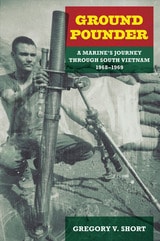
Ground Pounder
A Marine’s Journey through South Vietnam, 1968-1969Gregory V. Short
University of North Texas Press, 2012

Little Hawk and the Lone Wolf
A MemoirRaymond Kaquatosh
Wisconsin Historical Society Press, 2014
After his father’s death, eight-year-old Ray was sent to an Indian boarding school in Keshena. There he experienced isolation and despair, but also comfort and kindness. Upon his return home, Ray remained a lonely boy in a full house until he met and befriended a lone timber wolf. The unusual bond they formed would last through both their lifetimes. As Ray grew into a young man, he left the reservation more frequently. Yet whenever he returned—from school and work, from service in the Marines, and finally from postwar Wausau with his future wife—the wolf waited.
In this rare first-person narrative of a Menominee Indian’s coming of age, Raymond Kaquatosh shares a story that is wise and irreverent, often funny, and in the end, deeply moving.
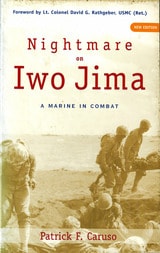
Nightmare on Iwo Jima
A Marine in CombatPatrick F. Caruso, with a foreword by David G. Rathgeber
University of Alabama Press, 2007

Phantom in the Sky
A Marine's Back Seat View of the Vietnam WarTerry L. Thorsen
University of North Texas Press, 2019

The Battle for Guadalcanal
Samuel B. Griffith II
University of Illinois Press, 1963
Launched on August 7, 1942, to protect Allied control of the strategic South Pacific islands, the Guadalcanal operation was the most costly American offensive of World War II in the history of the U.S. Navy up to that time. Griffith, who fought with Edson's Raiders on Guadalcanal, describes in gritty detail the vicious close-range fighting, the valiant defense of the Henderson Field airstrip, and the dramatic naval engagements that led, in February 1943, to an American victory.
Drawing on American and Japanese sources, Griffith delineates the strategic decisions that shaped the conflict as well as the determination and endurance of combatants on both sides. A breathtaking narrative of military action anchored by a historian's objectivity, The Battle for Guadalcanal is a story of raw courage, desperate measures, and ultimate triumph.
The Bridges of Vietnam
From the Journals of a U.S. Marine Intelligence OfficerFred L. Edwards Jr.
University of North Texas Press, 2000
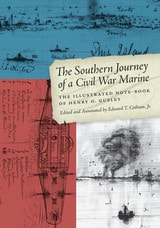
The Southern Journey of a Civil War Marine
The Illustrated Note-Book of Henry O. GusleyEdited and annotated by Edward T. Cotham, Jr.
University of Texas Press, 2006
On September 28, 1863, the Galveston Tri-Weekly News caught its readers' attention with an item headlined "A Yankee Note-Book." It was the first installment of a diary confiscated from U.S. Marine Henry O. Gusley, who had been captured at the Battle of Sabine Pass. Gusley's diary proved so popular with readers that they clamored for more, causing the newspaper to run each excerpt twice until the whole diary was published. For many in Gusley's Confederate readership, his diary provided a rare glimpse into the opinions and feelings of an ordinary Yankee—an enemy whom, they quickly discovered, it would be easy to regard as a friend.
This book contains the complete text of Henry Gusley's Civil War diary, expertly annotated and introduced by Edward Cotham. One of the few journals that have survived from U.S. Marines who served along the Gulf Coast, it records some of the most important naval campaigns of the Civil War, including the spectacular Union success at New Orleans and the embarrassing defeats at Galveston and Sabine Pass. It also offers an unmatched portrait of daily life aboard ship. Accompanying the diary entries are previously unpublished drawings by Daniel Nestell, a doctor who served in the same flotilla and eventually on the same ship as Gusley, which depict many of the locales and events that Gusley describes.
Together, Gusley's diary and Nestell's drawings are like picture postcards from the Civil War—vivid, literary, often moving dispatches from one of "Uncle Sam's nephews in the Gulf."
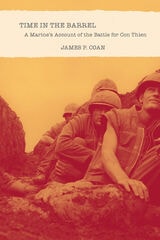
Time in the Barrel
A Marine's Account of the Battle for Con ThienJames P. Coan
University of Alabama Press, 2019
A Marine’s highly personal memoir reliving the hellish days of a pivotal conflict of the Vietnam War.
Con Thien, located only two miles from the demilitarized zone dividing North and South Vietnam, was a United States Marine Corps firebase that was the scene of fierce combat for months on end during 1967. Staving off attacks and ambushes while suffering from ineffectual leadership from Washington as well as media onslaughts, courageous American Marines protected this crucial piece of land at all costs. They would hold Con Thien, but many paid the ultimate price. By the end of the war, more than 1,400 Marines had died and more than 9,000 sustained injuries defending the “Hill of Angels.”
For eight months, James P. Coan’s five-tank platoon was assigned to Con Thien while attached to various Marine infantry battalions. A novice second lieutenant at the time, the author kept a diary recording the thoughts, fears, and frustrations that accompanied his life on “The Hill.” Time in the Barrel: A Marine’s Account of the Battle for Con Thien offers an authentic firsthand account of the daily nightmare that was Con Thien. An enticing and fascinating read featuring authentic depictions of combat, it allows readers to fully grasp the enormity of the fierce struggle for Con Thien.
The defenders of Con Thien were bombarded with hundreds of rounds of incoming rockets, mortars, and artillery that pounded the beleaguered outpost daily. Monsoon downpours turned the red laterite clay soil into a morass of oozing mud, flooded bunkers and trenches, and made Con Thien a living hell. .Being at Con Thien came to be ruefully referred to by the Marines stationed there as "time in the barrel” because they were targets as easy as fish in a barrel.
More than a retelling of military movements, Coan’s engrossing narratives focus on the sheer sacrifice and misery of one Marine’s experience in Vietnam. Through his eyes, we experience the abysmal conditions the Marines endured, from monsoon rainstorms to the constant threat of impending attack. Climatic moments in history are captured through the rare, personal perspective of one particularly astute and observant participant.
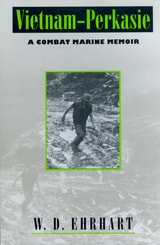
Vietnam-Perkasie
W. D. Ehrhart
University of Massachusetts Press, 1995
In 1982, John Newman, curator of the Vietnam War Literature Collection at Colorado State University, said of W.D. Ehrhart: “As a poet and editor, Bill Ehrhart is clearly one of the major figures in Vietnam War literature.” This autobiographical account of the war, the author's first extended prose work, demonstrates Ehrhart's abilities as a writer of prose as well. Vietnam–Perkasie is grim, comical, disturbing, and accurate. The presentation is novelistic—truly, a “page-turner”—but the events are all real, the atmosphere intensely evocative.
War in the Villages
The U.S. Marine Corps Combined Action PlatoonsTed Easterling
University of North Texas Press, 2021