Results by title
17 books match the query 'Universities'
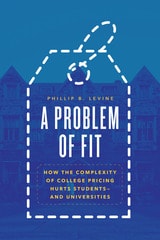
A Problem of Fit
How the Complexity of College Pricing Hurts Students—and UniversitiesPhillip B. Levine
University of Chicago Press, 2022
How much does it cost to attend college in the United States today? The answer is more complex than many realize. College websites advertise a sticker price, but uncovering the actual price—the one after incorporating financial aid—can be difficult for students and families. This inherent uncertainty leads some students to forgo applying to colleges that would be the best fit for them, or even not attend college at all. The result is that millions of promising young people may lose out on one of society’s greatest opportunities for social mobility. Colleges suffer too, losing prospective students and seeing lower enrollments and less socioeconomic diversity. If markets require prices to function well, then the American higher-education system—rife as it is with ambiguity in its pricing—amounts to a market failure.
In A Problem of Fit, economist Phillip B. Levine explains why institutions charge the prices they do and discusses the role of financial aid systems in facilitating—and discouraging—access to college. Affordability issues are real, but price transparency is also part of the problem. As Levine makes clear, our conversations around affordability and free tuition miss a larger truth: that the opacity of our current college-financing systems is a primary driver of inequities in education and society. In a clear-eyed assessment of educational access and aid in a post-COVID-19 economy, A Problem of Fit offers a trenchant new argument for educational reforms that are well within reach.
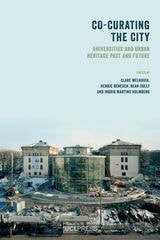
Co-Curating the City
Universities and Urban Heritage Past and FutureEdited by Clare Melhuish, Henric Benesch, Dean Sully, and Ingrid Martins Holmberg
University College London, 2022
Co-Curating the City explores the role of universities in the construction and mobilization of heritage discourses in urban development and regeneration processes, with a focus on six case study sites ranging from Sweden to Brazil. The book expands the field of critical heritage studies in the urban domain, arguing that universities should position themselves as significant institutions in the development of urban heritage narratives and heavily influence urban development. The case studies investigate how universities, as mixed communities of interest dispersed across buildings and urban sites, utilize strategies of engagement with local people and neighborhoods and ask how this could contribute to a reshaping of ideas, narratives, and lived experience of urban heritage in which universities have a distinctive agency.

Dethroning historical reputations
universities, museums and the commemoration of benefactorsEdited by Jill Pellew and Lawrence Goldman
University of London Press, 2018
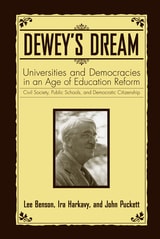
Dewey's Dream
Universities and Democracies in an Age of Education ReformLee Benson
Temple University Press, 2007
This timely, persuasive, and hopeful book reexamines John Dewey's idea of schools, specifically community schools, as the best places to grow a democratic society that is based on racial, social, and economic justice. The authors assert that American colleges and universities bear a responsibility for-and would benefit substantially from-working with schools to develop democratic schools and communities.
Dewey's Dream opens with a reappraisal of Dewey's philosophy and an argument for its continued relevance today. The authors-all well-known in education circles-use illustrations from over 20 years of experience working with public schools in the University of Pennsylvania's local ecological community of West Philadelphia, to demonstrate how their ideas can be put into action. By emphasizing problem-solving as the foundation of education, their work has awakened university students to their social responsibilities. And while the project is still young, it demonstrates that Dewey's "Utopian ends" of creating optimally participatory democratic societies can lead to practical, constructive school, higher education and community change, development, and improvement.
Embracing Queer Students’ Diverse Identities at Historically Black Colleges and Universities
A Primer for Presidents, Administrators, and FacultySteve D. Mobley Jr.
Rutgers University Press, 2025
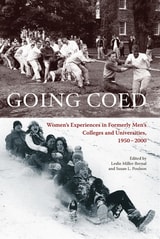
Going Coed
Women's Experiences in Formerly Men's Colleges and Universities, 1950-2000Leslie Miller-Bernal
Vanderbilt University Press, 2004

In Defense of Free Speech in Universities
A Study of Three JurisdictionsAmy Lai
University of Michigan Press, 2023
In this book, Amy Lai examines the current free speech crisis in Western universities. She studies the origin, history, and importance of freedom of speech in the university setting, and addresses the relevance and pitfalls of political correctness and microaggressions on campuses, where laws on harassment, discrimination, and hate speech are already in place, along with other concepts that have gained currency in the free speech debate, including deplatforming, trigger warning, and safe space. Looking at numerous free speech disputes in the United Kingdom, the United States, and Canada, the book argues for the equal application of the free speech principle to all expressions to facilitate respectful debates. All in all, it affirms that the right to free expression is a natural right essential to the pursuit of truth, democratic governance, and self-development, and this right is nowhere more important than in the university.
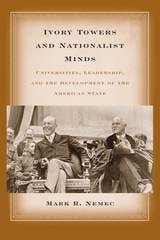
Ivory Towers and Nationalist Minds
Universities, Leadership, and the Development of the American StateMark R. Nemec
University of Michigan Press, 2006
"A wonderful, learned, and original work, full of present-day relevance. Essential reading for anyone interested in the history of higher education and its relation to professionalism and the growth of the modern state."
--Geoffrey Kabaservice, author of The Guardians: Kingman Brewster, His Circle, and the Rise of the Liberal Establishment
"Ivory Towers and Nationalist Minds contributes greatly to our understanding of the influence of the American university on public life, including the development of the modern American state. Nemec focuses on the universities working in concert to enhance their own influence and that of the state. This is not only a historical issue of interest-it has contemporary resonance. Institutions today compete intensely while cooperating regularly. And public universities like Michigan and California are expected, perhaps more than ever before, to contribute directly to the welfare of their states, especially in economic development."
--J. Douglas Toma, Associate Professor, Institute of Higher Education, University of Georgia
"Ivory Towers and Nationalist Minds fills an important void in the study of American political development and its relationship to the evolution of American higher education. Numerous historical case studies provide vivid evidence of how universities emerged as sources of national expertise and state-building at a critical juncture in our nation's history. Nemec demonstrates that such contributions were not historical inevitabilities, but the product of strategic actors seeking to simultaneously strengthen universities and serve a greater national purpose."
--Scott W. Allard, Brown University
Mark R. Nemec is a Vice President with Forrester Research in Cambridge, Massachusetts. He holds a BA from Yale, and both an MA in Education and a PhD in Political Science from the University of Michigan. He has served on the faculty of Davidson College and as a Senior Director of the Advisory Board Company in Washington, DC.
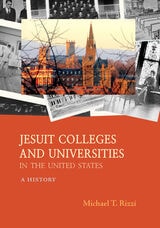
Jesuit Colleges and Universities in the United States
A HistoryMichael T. Rizzi
Catholic University of America Press, 2022

Schools and Universities on the Continent
The Complete Prose Works of Matthew ArnoldMatthew Arnold; Edited by R. H. Super
University of Michigan Press, 1964

The Assault on Universities
A Manifesto for ResistanceEdited by Michael Bailey and Des Freedman
Pluto Press, 2011
With funding cuts well under way and many institutions already promising to charge the maximum £9,000 yearly tuition fee, university education for the majority is under threat. This book exposes the true motives behind the government's programme and provides the analytical tools to fight it.
Widespread student protests and occupations, often supported by staff, unions and society at large, show the public's opposition to funding cuts and fee increases. The contributors to this sharp, well-written collection, many of whom are active participants in the anti-cuts movement, outline what's at stake and why it matters. They argue that university education is becoming increasingly skewed towards vocational degrees, which devalues the arts and social sciences – subjects that allow creativity and political inquiry to flourish.
Released at the beginning of the new academic year, this book will be at the heart of debates around the future of higher education in the UK and beyond, inspiring both new and seasoned activists in the fight for the soul of our universities.
Under New Management
Universities, Administrative Labor, and the Professional TurnAuthored by Randy Martin
Temple University Press, 2012
Faculty members who care about the institutions of higher education where they work are often at odds with university management. In his forceful book, Under New Management, Randy Martin takes a novel, evenhanded approach to this gulf between professors, who feel a loss of autonomy, and administrators.
Martin imagines a political future for academic labor based on a critical understanding of the administrative work that faculty already undertake. He considers the differences between self-rule and specialized expertise and provides a case study of a New York City public school to show how kids and families respond to the demands of managerial productivity that is part of preparing students for college. Under New Management also considers changes faced by students, faculty, and administrators in light of this reworked social compact of professionals.
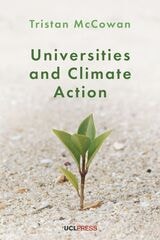
Universities and Climate Action
Tristan McCowan
University College London, 2025
As the climate crisis intensifies, universities stand at a crossroads—both as contributors to ecological challenges and as agents of change. Universities and Climate Action presents a novel framework for understanding how higher education institutions can engage meaningfully with climate issues across teaching, research, governance, and community outreach. Tristan McCowan investigates the tensions between academia’s historical complicity in environmental exploitation and its immense potential in driving sustainable transformation.
This work offers a holistic perspective on how universities influence climate change at local and global levels, underscoring both the barriers to action and the pathways to meaningful change. With examples from institutions worldwide, McCowan demonstrates how universities can embed climate responsibility into curricula, shift research priorities, and foster climate-conscious campus operations. By synthesizing diverse approaches and offering practical principles for reform, Universities and Climate Action is a vital blueprint for academics and university leaders seeking to reorient higher education toward a just and sustainable future.

Universities and Indian Country
Case Studies in Tribal-Driven ResearchEdited by Dennis K. Norman and Joseph P. Kalt
University of Arizona Press, 2015
Building on the Harvard Project on American Indian Economic Development’s experience with more than 120 nation-building projects over two decades, Universities and Indian Country posits that the tenets of nation building can provide a strategy for expanding and diversifying universities’ perspectives of knowledge in a multicultural world, while also producing results that are requested by and useful to Native communities.
This groundbreaking volume extends the dialogue begun by the Harvard project, providing another venue for the sharing of knowledge and information. The projects presented address a wide range of topics, including the regulation of genetic research, human resource development, tribal fund-raising, development of tribal museums, and freedom of the press in Indian Country.
Universities and Indian Country’s focus on the concerns and questions of Native communities themselves, provides insight not only into how projects came together, but also into what significance they have to the tribal partners. This compilation is a valuable resource for any student, professional, or community member concerned with issues of nation building and self-determination.
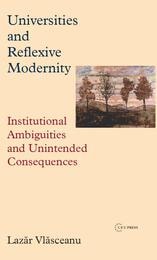
Universities and Reflexive Modernity
Institutional Ambiguities and Unintended ConsequencesLazar Vlasceanu
Central European University Press, 2010
A book about the challenges and uncertainties facing today's university, a chronicle of recent and current changes in higher education in the world. There are many questions today that are sufficiently open to doubt and profoundly related to new developments, to justify our starting new enquiries, here and now, by looking freshly and more closely at the actual configurations and at their historical grounds, for providing the new standard account of the university today.
Vlasceanu discusses the inherent contradiction between academia on the one hand, and expectations and regulations of the market on the other. Analyses demographic and other statistical characteristics of today's higher education. Examines the financial basis of universities in various countries, and describes current governance models. Finally the author sets up a new typology of universities.

Universities and the Future of America
Derek Bok
Duke University Press, 1990
“If universities are so important to society and if ours are so superior, one might have thought that America would be flourishing in comparison to other industrialized countries of the world. Yet this is plainly not the case. . . . Our economic position in the world has deteriorated [and] we have climbed to the top, or near the top, of all advanced countries in the percentage of population who live in poverty, commit crimes, become addicted to drugs, have illegitimate children, or are classified as functionally illiterate.” In light of these results, “it is fair to ask whether our universities are doing all they can and should to help America surmount the obstacles that sap our economic strength and blight the lives of millions of our people.”
Having posed this question, Derek Bok reviews what science can do to bring about greater productivity, what professional schools can do to improve the effectiveness of corporations, government, and public education, and what all parts of the university are doing to help students acquire higher levels of ethical and social responsibility. He concludes that Universities are contributing much less than the should to help the nation address its most urgent social problems. “A century after the death of Cardinal Newman, many university officials and faculty members continue to feel ambivalent about deliberate efforts to address practical problems of society. And though competition drives university leaders and their faculties to unremitting effort, what competition rewards is chiefly success in fields that command academic prestige rather than success in responding to important social needs.”
Bok urges academic leaders, trustees, foundations, and government agencies to work together to help universities realign their priorities “so that they will be ready to make their full contribution when the nation turns its attention again to the broad agenda of reform. . . . Observing our difficulties competing abroad, our millions of people in poverty, our drug-ridden communities, our disintegrating families, our ineffective schools, those who help to shape our universities have reason to ask whether they too have any time to lose.”
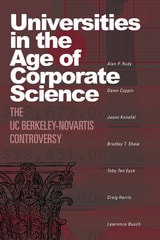
Universities in the Age of Corporate Science
The UC Berkeley-Novartis ControversyAlan P. Rudy, Dawn Coppin, Jason Konefal, Bradley T. Shaw, Toby Ten Eyck, Craig Harris and Lawrence Busch
Temple University Press, 2007