Results by title
10 books match the query 'Upper class'
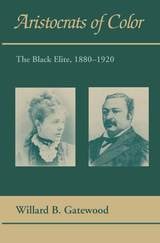
Aristocrats of Color
The Black Elite, 1880–1920Willard B. Gatewood
University of Arkansas Press, 2000
Every American city had a small, self-aware, and active black elite, who felt it was their duty to set the standard for the less fortunate members of their race and to lead their communities by example. Rank within this black upper class rested on such issues as the status of one’s forebears as either house servants or field hands, the darkness of one’s skin, and the level of one’s manners and education.
Professor Gatewood’s study examines this class of African Americans by looking at the genealogies and occupations of specific families and individuals throughout the United States and their roles in their various communities. The resulting narrative is a full and illuminating account of a most influential segment of the African-American population. It explores fully the distinctive background, prestige, attitudes, behavior, power, and culture of this class. The Black Community Studies series from the University of Arkansas Press, edited by Professor Gatewood, continues to examine many of the same themes first explored in this important study.
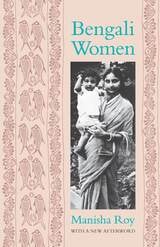
Bengali Women
Manisha Roy
University of Chicago Press, 1992
In a new Afterword, Roy discusses changes in Bengali society and culture over the last two decades which have direct bearings on women's lives: divorce and the breakup of the joint family, education, increasing Westernization via television and women's magazines, and the erosion of traditional religious practices.
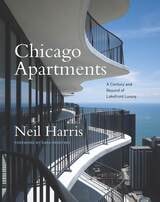
Chicago Apartments
A Century and Beyond of Lakefront LuxuryNeil Harris and Teri J. Edelstein
University of Chicago Press, 2020

Class Warfare
Class, Race, and College Admissions in Top-Tier Secondary SchoolsLois Weis, Kristin Cipollone, and Heather Jenkins
University of Chicago Press, 2014
Drawing on deep and sustained contact with students, parents, teachers, and administrators at three iconic secondary schools in the United States, the authors unveil a formidable process of class positioning at the heart of the college admissions process. They detail the ways students and parents exploit every opportunity and employ every bit of cultural, social, and economic capital they can in order to gain admission into a “Most Competitive” or “Highly Competitive Plus” university. Moreover, they show how admissions into these schools—with their attendant rankings—are used to lock in or improve class standing for the next generation. It’s a story of class warfare within a given class, the substrata of which—whether economically, racially, or socially determined—are fiercely negotiated through the college admissions process.
In a historic moment marked by deep economic uncertainty, anxieties over socioeconomic standing are at their highest. Class, as this book shows, must be won, and the collateral damage of this aggressive pursuit may just be education itself, flattened into a mere victory banner.
Just As We Were
A Narrow Slice of Texas WomanhoodBy Prudence Mackintosh
University of Texas Press, 1996
When a Texas debutante bows her forehead to the floor in the famous "Texas dip," society columnists all across the country speculate interminably over what it is that sets Texas women apart. But really, how could they know? Even women born and bred in Texas can't always answer that question.
Prudence Mackintosh comes very close to an answer, though, in this endlessly entertaining book. Writing with both a wry sense of humor and an insider's compassion, she offers us a fascinating look into the world of privileged, educated, well-married, well-connected, and mostly wealthy white Texas women.
What really sets these women apart, Ms. Mackintosh tells us, is the comfortable yet demanding path they follow from their idyllic girlhoods to prominent positions in society. In thirteen essays, some of which originally appeared in Texas Monthly magazine, she charts the way stations that mark this path: summer camps in the Texas Hill Country, exclusive private schools like Dallas' Hockaday, sorority membership, and acceptance into the Junior League.
Prudence Mackintosh has been both an outsider and an insider in this privileged world, and her observations are shot through with wit and real insight. Just As We Were may not be the final word on elite Texas women, but no other book has described their world with greater irony or accuracy.
Power & Persuasion Late Antiquity
Towards A Christian EmpirePeter Brown
University of Wisconsin Press, 1992
Splintered Sisterhood
Gender and Class in the Campaign against Woman SuffrageSusan E. Marshall
University of Wisconsin Press, 1997
When Tennessee became the thirty-sixth and final state needed to ratify the Nineteenth Amendment in August 1920, giving women the right to vote, one group of women expressed bitter disappointment and vowed to fight against “this feminist disease.” Why this fierce and extended opposition? In Splintered Sisterhood, Susan Marshall argues that the women of the antisuffrage movement mobilized not as threatened homemakers but as influential political strategists.
Drawing on surviving records of major antisuffrage organizations, Marshall makes clear that antisuffrage women organized to protect gendered class interests. She shows that many of the most vocal antisuffragists were wealthy, educated women who exercised considerable political influence through their personal ties to men in politics as well as by their own positions as leaders of social service committees. Under the guise of defending an ideal of “true womanhood,” these powerful women sought to keep the vote from lower-class women, fearing it would result in an increase in the “ignorant vote” and in their own displacement from positions of influence. This book reveals the increasingly militant style of antisuffrage protest as the conflict over female voting rights escalated. Splintered Sisterhood adds a missing piece to the history of women’s rights activism in the United States and illuminates current issues of antifeminism.
The Other Brahmins
Boston's Black Upper Class 1750-1950Adelaide Cromwell
University of Arkansas Press, 1995
Adelaide Cromwell’s pioneering work explores race and the social caste system in an atypical northern environment over a period of two centuries. Based on scholarly sources, interviews, and questionnaires, the study identifies those blacks in Boston who exercised political, economic, and social leadership from the end of the eighteenth century to the middle of the twentieth. The central focus is a comparison of black and white upper-class women in the 1940s.
This rare look at a black social microcosm not located in the South is seminal and timely. Because it concludes at a critical period in American history, The Other Brahmins paints a colorful backdrop for evaluating subsequent changes in urban sociology and stratification. In a groundbreaking study, Cromwell effectively challenges the simplistic notions of hierarchy as they pertain to race.
The Spirits of the Earth
Catherine Colomb
Seagull Books, 2016
The Spirits of the Earth is at heart a family drama, set at the Fraidaigue château, along the shores of Lake Geneva, and in the Maison d’en Haut country mansion, located in the hills above the lake. In these luxe locales, readers encounter upper-class characters with faltering incomes, parvenues, and even ghosts. Throughout, Colomb builds a psychologically penetrating and bold story in which the living and the dead intermingle and in which time itself is a mystery.
Women of the Upper Class
Susan A. Ostrander
Temple University Press, 1986
In the series Women in the Political Economy, edited by Ronnie J. Steinberg.