Results by title
10 books match the query 'Urban Life'
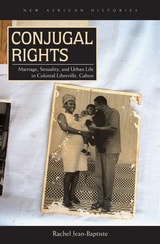
Conjugal Rights
Marriage, Sexuality, and Urban Life in Colonial Libreville, GabonRachel Jean-Baptiste
Ohio University Press, 2014
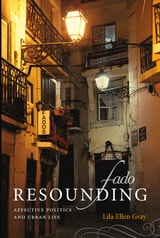
Fado Resounding
Affective Politics and Urban LifeLila Ellen Gray
Duke University Press, 2013
Global Decisions, Local Collisions
Urban Life In The New World OrderDavid Ranney
Temple University Press, 2002
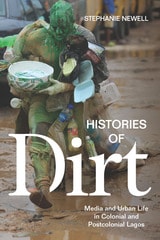
Histories of Dirt
Media and Urban Life in Colonial and Postcolonial LagosStephanie Newell
Duke University Press, 2020
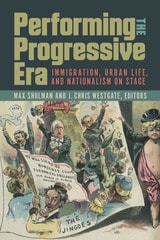
Performing the Progressive Era
Immigration, Urban Life, and Nationalism on StageMax Shulman and J. Chris Westgate
University of Iowa Press, 2019
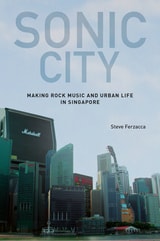
Sonic City
Making Rock Music and Urban Life in SingaporeSteve Ferzacca
National University of Singapore Press, 2020
Grounded in debates from sound studies, Ferzacca draws on Bruno Latour’s ideas of the social—continually emergent, constantly in-the-making, “associations of heterogeneous elements” of human and non-human “mediators and intermediaries”—to portray a community entangled in the confounding relations between vernacular and national heritage projects. Music shops, music gear, music genres, sound, urban space, neighborhoods, State presence, performance venues, practice spaces, regional travel, local, national, regional, and sonic histories afford expected and unexpected opportunities for work, play, and meaning, in the contemporary music scene in this Southeast Asian city-state. The emergent quality of this deep sound is fiercely cosmopolitan, yet entirely Singaporean. What emerges is a vernacular heritage drawing upon Singapore’s unique place in Southeast Asian and world history.
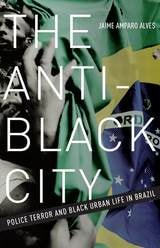
The Anti-Black City
Police Terror and Black Urban Life in BrazilJaime Amparo Alves
University of Minnesota Press, 2018
An important new ethnographic study of São Paulo’s favelas revealing the widespread use of race-based police repression in Brazil
While Black Lives Matter still resonates in the United States, the movement has also become a potent rallying call worldwide, with harsh police tactics and repressive state policies often breaking racial lines. In The Anti-Black City, Jaime Amparo Alves delves into the dynamics of racial violence in Brazil, where poverty, unemployment, residential segregation, and a biased criminal justice system create urban conditions of racial precarity.
The Anti-Black City provocatively offers race as a vital new lens through which to view violence and marginalization in the supposedly “raceless” São Paulo. Ironically, in a context in which racial ambiguity makes it difficult to identify who is black and who is white, racialized access to opportunities and violent police tactics establish hard racial boundaries through subjugation and death. Drawing on two years of ethnographic research in prisons and neighborhoods on the periphery of this mega-city, Alves documents the brutality of police tactics and the complexity of responses deployed by black residents, including self-help initiatives, public campaigns against police violence, ruthless gangs, and self-policing of communities.
The Anti-Black City reveals the violent and racist ideologies that underlie state fantasies of order and urban peace in modern Brazil. Illustrating how “governing through death” has become the dominant means for managing and controlling ethnic populations in the neoliberal state, Alves shows that these tactics only lead to more marginalization, criminality, and violence. Ultimately, Alves’s work points to a need for a new approach to an intractable problem: how to govern populations and territories historically seen as “ungovernable.”
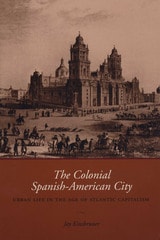
The Colonial Spanish-American City
Urban Life in the Age of Atlantic CapitalismBy Jay Kinsbruner
University of Texas Press, 2005
The colonial Spanish-American city, like its counterpart across the Atlantic, was an outgrowth of commercial enterprise. A center of entrepreneurial activity and wealth, it drew people seeking a better life, with more educational, occupational, commercial, bureaucratic, and marital possibilities than were available in the rural regions of the Spanish colonies. Indeed, the Spanish-American city represented hope and opportunity, although not for everyone.
In this authoritative work, Jay Kinsbruner draws on many sources to offer the first history and interpretation in English of the colonial Spanish-American city. After an overview of pre-Columbian cities, he devotes chapters to many important aspects of the colonial city, including its governance and administrative structure, physical form, economy, and social and family life. Kinsbruner's overarching thesis is that the Spanish-American city evolved as a circumstance of trans-Atlantic capitalism. Underpinning this thesis is his view that there were no plebeians in the colonial city. He calls for a class interpretation, with an emphasis on the lower-middle class. His study also explores the active roles of women, many of them heads of households, in the colonial Spanish-American city.
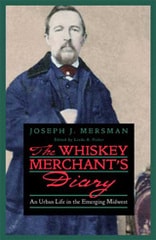
The Whiskey Merchant’s Diary
An Urban Life in the Emerging MidwestJoseph J. Mersman
Ohio University Press, 2007
Joseph J. Mersman was a liquor merchant, a German American immigrant who aspired—successfully—to become a self-made man. Hundreds of the residents of Mersman’s hometown in Germany immigrated to Cincinnati in the 1830s, joining many thousands of other German immigrants. In 1847, at the age of twenty-three, Mersman began recording his activities in a bound volume, small enough to fit into his coat pocket. His diary, filled with work and play, eating and drinking, flirting and dancing, provides a unique picture of everyday life, first in Cincinnati and then in St. Louis, the new urban centers of the emerging Midwest.
Outside of Gold Rush diaries and emigration journals, few narrative records of the antebellum period have been published. Illustrated with photographs, maps, and period advertisements, the diary reveals how a young man worked to establish himself during an era that was rich in opportunity.
As a whiskey rectifier, Mersman bought distilled spirits, redistilled or reprocessed them to remove contaminants or increase the alcohol content, and added various flavorings before selling his product to liquor retailers. In his diary, he describes scrambling for capital, marketing his wares, and arranging transportation by steamboat, omnibus, and train. Although the business that he sought to master was eliminated by the passage of the Pure Food Law of 1906, Mersman, like most rectifiers, was a reputable wholesaler. Merchants like him played an important role in distributing liquor in nineteenth-century America.
Mersman confronted serious disease, both as a sufferer from syphilis and as a witness to two devastating cholera epidemics. Unlike other residents of St. Louis, who fled the relative safety of the countryside, he remained in the city and saw the impact of the epidemics on the community.
Linda A. Fisher’s extensive, insightful, and highly readable annotations add a wealth of background information to Mersman’s story. Her professional training and career as a physician give her a particularly valuable perspective on the public health aspects of Mersman’s life and times.
Urban Life in Contemporary China
Martin King Whyte and William L. Parish
University of Chicago Press, 1984