Results by title
8 books match the query 'Urban Politics'
Boss Cox’s Cincinnati
Urban Politics in the Progressive EraZane L. Miller
The Ohio State University Press, 2000
In documenting the changes Cincinnati experienced during the Progressive Era, Zane L. Miller provides a clear perspective on the processes of urbanization that transformed the American city. His focus is political because politics provided continuity amid the diversity of city life. The most important aspect of political continuity in Cincinnati and in other cities was "bossism," often depicted as an example of corruption, but which was in many cities part of the quest for a new urban order. In Cincinnati, Boss George B. Cox's machine was a response to the disorder of the times; interestingly, the machine actually helped to control disorder, paving the way for later reforms. Miller carefully explores both the nature and the significance of bossism, showing how it and municipal reform were both essential components of the modern urban political system.
Originally published in 1968, Boss Cox's Cincinnati is considered a classic in the field of urban studies.
Cities Contested
Urban Politics, Heritage, and Social Movements in Italy and West Germany in the 1970sEdited by Martin Baumeister, Bruno Bonomo, and Dieter Schott
Campus Verlag, 2017
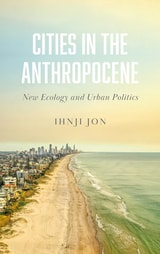
Cities in the Anthropocene
New Ecology and Urban PoliticsIhnji Jon
Pluto Press, 2021
Climate change is real, and extreme weather events are its physical manifestations. These extreme events affect how we live and work in cities, and subsequently the way we design, plan, and govern them. Taking action ‘for the environment’ is not only a moral imperative; instead, it is activated by our everyday experience in the city.
Based on the author’s site visits and interviews in Darwin (Australia), Tulsa (Oklahoma), Cleveland (Ohio), and Cape Town (South Africa), this book tells the story of how cities can lead a transformative pro-environment politics.
National governments often fail to make binding agreements that bring about radical actions for the environment. This book shows how cities, as local sites of mobilizing a collective, political agenda, can be frontiers for activating the kind of environmental politics that appreciates the role of ‘nature’ in the everyday functioning of our urban life.
City Trenches
Urban Politics and the Patterning of Class in the United StatesIra Katznelson
University of Chicago Press, 1982
Majoritarian Cities
Policy Making and Inequality in Urban PoliticsNeil Kraus
University of Michigan Press, 2013
Neil Kraus evaluates both the influence of public opinion on local policy-making and the extent to which public policy addresses economic and social inequalities. Drawing on several years of fieldwork and multiple sources of data, including surveys and polls; initiatives, referenda, and election results; government documents; focus groups; interviews; and a wide assortment of secondary sources, Kraus presents case studies of two Midwestern cities, Minneapolis, Minnesota, and Gary, Indiana. Specifically, he focuses on several major policy decisions in recent decades concerning education, law enforcement, and affordable housing in Minneapolis; and education and riverboat casino development in Gary.
Kraus finds that, on these issues, local officials frequently take action that reflects public opinion, yet the resulting policies often fail to meet the needs of the disadvantaged or ameliorate the effects of concentrated poverty. In light of citizens’ current attitudes, he concludes that if patterns of inequality are to be more effectively addressed, scholars and policymakers must transform the debate about the causes and effects of inequality in urban and metropolitan settings.
Race and Authority in Urban Politics
David J. Greenstone
Russell Sage Foundation, 1974
Race and Authority in Urban Politics
Community Relations and the War on PovertyDavid Greenstone and Paul E. Peterson
University of Chicago Press, 1976
In a series of lively chapters, Greenstone and Peterson show how the coalitions that formed around the community action question developed not out of electoral or organizational interests alone but were strongly influenced by prevailing conceptions of the nature of authority in America. The book stresses the way in which both machine and reform structures affected the ability of minority groups to organize effectively and to form alliances in urban politics. It considers the wide-ranging critiques made of the Community Action Program by conservative, liberal, and radical analysts and finds that all of them fail to appreciate the significance and intensity of the racial cleavage in American politics.