Results by title

6 books match the query 'Urban agriculture'
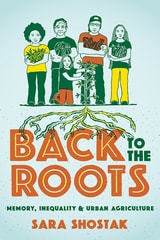
cover of Back to the Roots: Memory, Inequality, and Urban Agriculture

Back to the Roots

Memory, Inequality, and Urban Agriculture

Sara Shostak

Rutgers University Press, 2021
Across the Commonwealth of Massachusetts, urban farmers and gardeners are reclaiming cultural traditions linked to food, farming, and health; challenging systemic racism and injustice in the food system; demanding greater community control of resources in marginalized neighborhoods; and moving towards their visions of more equitable urban futures. As part of this urgent work, urban farmers and gardeners encounter and reckon with both the cultural meanings and material legacies of the past. Drawing on their narratives, Back to the Roots demonstrates that urban agriculture is a critical domain for explorations of, and challenges to, the long standing inequalities that shape both the materiality of cities and the bodies of their inhabitants.
 
[more]
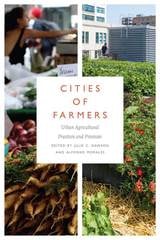
cover of Cities of Farmers: Urban Agricultural Practices and Processes

Cities of Farmers

Urban Agricultural Practices and Processes

Julie C. Dawson and Alfonso Morales

University of Iowa Press, 2016

Full-scale food production in cities: is it an impossibility? Or is it a panacea for all that ails urban communities? Today, it’s a reality, but many people still don’t know how much of an impact this emerging food system is having on cities and their residents. This book showcases the work of the farmers, activists, urban planners, and city officials in the United States and Canada who are advancing food production. They have realized that, when it’s done right, farming in cities can enhance the local ecology, foster cohesive communities, and improve the quality of life for urban residents.

Implementing urban agriculture often requires change in the physical, political, and social-organizational landscape. Beginning with a look at how and why city people grew their own food in the early twentieth century, the contributors to Cities of Farmers examine the role of local and regional regulations and politics, especially the creation of food policy councils, in making cities into fertile ground for farming. The authors describe how food is produced and distributed in cities via institutions as diverse as commercial farms, community gardens, farmers’ markets, and regional food hubs. Growing food in vacant lots and on rooftops affects labor, capital investment, and human capital formation, and as a result urban agriculture intersects with land values and efforts to build affordable housing. It also can contribute to cultural renewal and improved health.

This book enables readers to understand and contribute to their local food system, whether they are raising vegetables in a community garden, setting up a farmers’ market, or formulating regulations for farming and composting within city limits.

CONTRIBUTORS
Catherine Brinkley, Benjamin W. Chrisinger, Nevin Cohen, Michèle Companion, Lindsey Day-Farnsworth, Janine de la Salle, Luke Drake, Sheila Golden, Randel D. Hanson, Megan Horst, Nurgul Fitzgerald, Becca B. R. Jablonski, Laura Lawson, Kara Martin, Nathan McClintock, Alfonso Morales, Jayson Otto, Anne Pfeiffer, Anne Roubal, Todd M. Schmit, Erin Silva, Michael Simpson, Lauren Suerth, Dory Thrasher, Katinka Wijsman

 
[more]
cover of Cultivating the City: The Long Struggle to Put Land to Use

Cultivating the City

The Long Struggle to Put Land to Use

Nate Ela

University of Chicago Press, 2027

A story of law and social policy in a place you might not expect: community gardens and urban farms. 

Though Chicago is a city of legendary skyscrapers and dense apartment blocks, it is also a city of wide-open tracts of land. This surprising juxtaposition can be viewed as an opportunity, in that available land can become a food source for urban dwellers, especially those experiencing poverty or limited access to grocery stores. But most empty land in Chicago remains empty — why? In Cultivating the City, sociologist and legal scholar Nate Ela examines the history of Chicago’s urban farms and gardens, their promotion as a tool to support the poor and unemployed, and their repeated failure to take root as a permanent part of Chicago’s landscape. 

Ela’s fresh take on contemporary urban agriculture features a new perspective on social policy and urban governance. For hundreds of years, social reformers have worked to address poverty and unemployment by letting people use land to grow food. Reformers experimented with the possibilities of property use, including deals to match gardeners with public or private land, proposals to let growers use land without owners’ permission, and the transformation of private land into municipal gardens. By exposing the dynamics of this longstanding but long-overlooked form of social policy in Chicago, Ela offers a new strategy for cultivating cities that are productive, resilient, and just. 
[more]
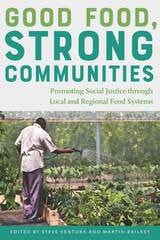
cover of Good Food, Strong Communities: Promoting Social Justice through Local and Regional Food Systems

Good Food, Strong Communities

Promoting Social Justice through Local and Regional Food Systems

Steve Ventura and Martin Bailkey

University of Iowa Press, 2017

Many Americans are hungry, while others struggle to find healthy foods. What are communities doing to address this problem, and what should they be doing? Good Food, Strong Communities shares ideas and stories about efforts to improve food security in large urban areas of the United States by strengthening community food systems. It draws on five years of collaboration between a research team comprised of the University of Wisconsin, Growing Power, and the Michael Fields Agricultural Institute, and more than thirty organizations on the front lines of this work in Boston, Chicago, Detroit, Milwaukee, Minnesota, Los Angeles, Madison, and Cedar Rapids. Here, activists and scholars talk about what’s working and what still needs to be done to ensure that everyone has access to readily available, affordable, appropriate, and acceptable food.

The approach begins by laying out the basic principles of food security and food justice in light of the diversity of food system practices and innovations in America’s cities. The contributing authors address land access for urban agriculture, debates over city farming, new possibilities in food processing, and the marketing of healthy food. They put these basic elements—land, production, processing, and marketing—in the context of municipal policy, education, and food justice and sovereignty, particularly for people of color. While the path of a food product from its producer to its consumer may seem straightforward on the surface, the apparent simplicity hides the complex logistical—and value-laden—factors that create and maintain a food system. This book helps readers understand how a food system functions and how individual and community initiatives can lessen the problems associated with an industrialized food system. 
[more]
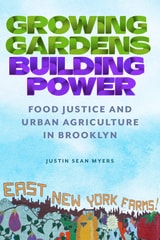
cover of Growing Gardens, Building Power: Food Justice and Urban Agriculture in Brooklyn

Growing Gardens, Building Power

Food Justice and Urban Agriculture in Brooklyn

Justin Sean Myers

Rutgers University Press, 2023
Across the United States marginalized communities are organizing to address social, economic, and environmental inequities through building community food systems rooted in the principles of social justice.  But how exactly are communities doing this work, why are residents tackling these issues through food, what are their successes, and what barriers are they encountering?  This book dives into the heart of the food justice movement through an exploration of East New York Farms! (ENYF!), one of the oldest food justice organizations in Brooklyn, and one that emerged from a bottom-up asset-oriented development model.  It details the food inequities the community faces and what produced them, how and why residents mobilized to turn vacant land into community gardens, and the struggles the organization has encountered as they worked to feed residents through urban farms and farmers markets.  This book also discusses how through the politics of food justice, ENYF! has challenged the growth-oriented development politics of City Hall, opposed the neoliberalization of food politics, navigated the funding constraints of philanthropy and the welfare state, and opposed the entrance of a Walmart into their community.  Through telling this story, Growing Gardens, Building Power offers insights into how the food justice movement is challenging the major structures and institutions that seek to curtail the transformative power of the food justice movement and its efforts to build a more just and sustainable world.
 
[more]
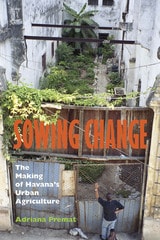
cover of Sowing Change: The Making of Havana's Urban Agriculture

Sowing Change

The Making of Havana's Urban Agriculture

Adriana Premat

Vanderbilt University Press, 2012

Following the dissolution of the Soviet bloc, Cuba found itself struggling to find its place in a new geopolitical context, while dealing with an unprecedented agricultural and food crisis that experts feel foreshadows the future of many countries across the globe. Sowing Change traces the evolution of the officially endorsed urban agriculture movement in the capital city of Havana, considering its political significance for the Cuban government and its import for transnational actors in the field of sustainable development. But the analysis does not stop at official understandings and representations of this movement. Rather, it brings into focus the perspectives of small-scale urban farmers--real men and women who live at the conceptual margins of the Cuban economy and struggle to balance personal needs and dreams with political ideals and government expectations, in a context where those very ideals and expectations continually shift. Sowing Change is a timely reflection on the changing agricultural, urban, and power landscapes of post-Soviet Cuba that, finally, queries common presumptions about this socialist nation and its now famous urban agriculture experience.
[more]