73 books match the query 'Urban policy' and 5 start with a
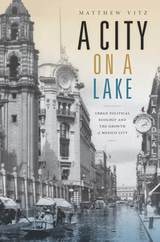
cover of A City on a Lake: Urban Political Ecology and the Growth of Mexico City

A City on a Lake

Urban Political Ecology and the Growth of Mexico City

Matthew Vitz

Duke University Press, 2018
In A City on a Lake Matthew Vitz tracks the environmental and political history of Mexico City and explains its transformation from a forested, water-rich environment into a smog-infested megacity plagued by environmental problems and social inequality. Vitz shows how Mexico City's unequal urbanization and environmental decline stemmed from numerous scientific and social disputes over water policy, housing, forestry, and sanitary engineering. From the prerevolutionary efforts to create a hygienic city supportive of capitalist growth, through revolutionary demands for a more democratic distribution of resources, to the mid-twentieth-century emergence of a technocratic bureaucracy that served the interests of urban elites, Mexico City's environmental history helps us better understand how urban power has been exercised, reproduced, and challenged throughout Latin America.
[more]
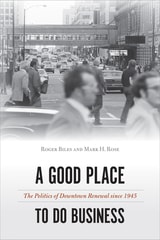
cover of A Good Place to Do Business: The Politics of Downtown Renewal since 1945

A Good Place to Do Business

The Politics of Downtown Renewal since 1945

Roger Biles and Mark H. Rose

Temple University Press, 2022

The “Pittsburgh Renaissance,” an urban renewal effort launched in the late 1940s, transformed the smoky rust belt city’s downtown. Working-class residents and people of color saw their neighborhoods cleared and replaced with upscale, white residents and with large corporations housed in massive skyscrapers. Pittsburgh’s Renaissance’s apparent success quickly became a model for several struggling industrial cities, including St. Louis, Cleveland, Detroit, Chicago, and Philadelphia. 

In A Good Place to Do Business, Roger Biles and Mark Rose chronicle these urban “makeovers” which promised increased tourism and fashionable shopping as well as the development of sports stadiums, convention centers, downtown parks, and more. They examine the politics of these government-funded redevelopment programs and show how city politics (and policymakers) often dictated the level of success. 

As city officials and business elites determined to reorganize their downtowns, a deeply racialized politics sacrificed neighborhoods and the livelihoods of those pushed out. Yet, as A Good Place to Do Business demonstrates, more often than not, costly efforts to bring about the hoped-for improvements failed to revitalize those cities, or even their downtowns.

[more]
cover of Abstract Barrios: The Crises of Latinx Visibility in Cities

Abstract Barrios

The Crises of Latinx Visibility in Cities

Johana Londoño

Duke University Press, 2020
In Abstract Barrios Johana Londoño examines how Latinized urban landscapes are made palatable for white Americans. Such Latinized urban landscapes, she observes, especially appear when whites feel threatened by concentrations of Latinx populations, commonly known as barrios. Drawing on archival research, interviews, and visual analysis of barrio built environments, Londoño shows how over the past seventy years urban planners, architects, designers, policy makers, business owners, and other brokers took abstracted elements from barrio design—such as spatial layouts or bright colors—to safely “Latinize” cities and manage a long-standing urban crisis of Latinx belonging. The built environments that resulted ranged from idealized notions of authentic Puerto Rican culture in the interior design of New York City’s public housing in the 1950s, which sought to diminish concerns over Puerto Rican settlement, to the Fiesta Marketplace in downtown Santa Ana, California, built to counteract white flight in the 1980s. Ultimately, Londoño demonstrates that abstracted barrio culture and aesthetics sustain the economic and cultural viability of normalized, white, and middle-class urban spaces.
[more]
cover of African Underclass: Urbanization, Crime & Colonial Order in Dar es Salaam 1919-61

African Underclass

Urbanization, Crime & Colonial Order in Dar es Salaam 1919-61

Andrew Burton

Ohio University Press, 2005
African Underclass examines the social, political, and administrative repercussions of rapid urbanization in colonial Dar es Salaam, and the evolution of official policy that viewed urbanization as inextricably linked with social disorder. This policy marginalized numbers of young Africans entering the town---and thus, paradoxically, the policy itself subverted the colonial order. "Well researched and sharply written---one of the best and most stimulating accounts of urbanization in Eastern Africa to have been produced in recent years."---John McCracken, emeritus professor of history, University of StirlingAndrew Burton is assistant director of the British Institute in Eastern Africa.
[more]
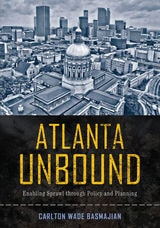
cover of Atlanta Unbound: Enabling Sprawl through Policy and Planning

Atlanta Unbound

Enabling Sprawl through Policy and Planning

Carlton Wade Basmajian

Temple University Press, 2015

Looking at Atlanta, Georgia, one might conclude that the city’s notorious sprawl, degraded air quality, and tenuous water supply is a result of a lack of planning—particularly an absence of coordination at the regional level. In Atlanta Unbound, Carlton Wade Basmajian shows that Atlanta’s low-density urban form and its associated problems have been both highly coordinated and regionally planned.
 
Basmajian’s shrewd analysis shows how regional policies spanned political boundaries and   framed local debates over several decades. He examines the role of the Atlanta Regional Commission’s planning deliberations that appear to have contributed to the urban sprawl that they were designed to control. Basmajian explores four cases—regional land development plans, water supply strategies, growth management policies, and transportation infrastructure programs—to provide a detailed account of the interactions between citizens, planners, regional commissions, state government, and federal agencies.
 
In the process, Atlanta Unbound answers the question: Toward what end and for whom is Atlanta’s regional planning process working?
 
In the series Urban Life, Landscape, and Policy, edited by Zane L. Miller, David Stradling, and Larry Bennett
[more]