Results by title
14 books match the query 'Urban schools'
An Unexpected Minority
White Kids in an Urban SchoolMorris, Edward
Rutgers University Press, 2005
In An Unexpected Minority, sociologist Edward Morris addresses these far-reaching questions by exploring attitudes about white identity in a Texas middle school composed predominantly of African Americans, Latinos, and Asians. Based on his ethnographic research, Morris argues that lower-income white students in urban schools do not necessarily maintain the sort of white privilege documented in other settings. Within the student body, African American students were more frequently the "cool" kids, and white students adopted elements of black culture-including dress, hairstyle, and language-to gain acceptance. Morris observes, however, that racial inequalities were not always reversed. Stereotypes that cast white students as better behaved and more academically gifted were often reinforced, even by African American teachers.
Providing a new and timely perspective to the significant role that non-whites play in the construction of attitudes about whiteness, this book takes an important step in advancing the discussion of racial inequality and its future in this country.

Classrooms and Clinics
Urban Schools and the Protection and Promotion of Child Health, 1870-1930Meckel, Richard A
Rutgers University Press, 2013
Classrooms and Clinics is the first book-length assessment of the development of public school health policies from the late nineteenth century through the early years of the Great Depression. Richard A. Meckel examines the efforts of early twentieth-century child health care advocates and reformers to utilize urban schools to deliver health care services to socioeconomically disadvantaged and medically underserved children in the primary grades. Their goal, Meckel shows, was to improve the children’s health and thereby improve their academic performance.
Meckel situates these efforts within a larger late nineteenth- and early twentieth-century public discourse relating schools and schooling, especially in cities and towns, to child health. He describes and explains how that discourse and the school hygiene movement it inspired served as critical sites for the constructive negotiation of the nature and extent of the public school’s—and by extension the state’s—responsibility for protecting and promoting the physical and mental health of the children for whom it was providing a compulsory education.
Tracing the evolution of that negotiation through four overlapping stages, Meckel shows how, why, and by whom the health of schoolchildren was discursively constructed as a sociomedical problem and charts and explains the changes that construction underwent over time. He also connects the changes in problem construction to the design and implementation of various interventions and services and evaluates how that design and implementation were affected by the response of the civic, parental, professional, educational, public health, and social welfare groups that considered themselves stakeholders and took part in the discourse. And, most significantly, he examines the responses called forth by the question at the heart of the negotiations: what services are necessitated by the state’s and school’s taking responsibility for protecting and promoting the health and physical and mental development of schoolchildren. He concludes that the negotiations resulted both in the partial medicalization of American primary education and in the articulation and adoption of a school health policy that accepted the school’s responsibility for protecting and promoting the health of its students while largely limiting the services called for to the preventive and educational.
Digital Tools in Urban Schools
Mediating a Remix of LearningJabari Mahiri
University of Michigan Press, 2011
"Today there is massive interest in how digital tools and popular culture are transforming learning out of school and lots of dismay at how digitally lost our schools are. Jabari Mahiri works his usual magic and here shows us how to cross this divide in a solidly grounded and beautifully written book."
---James Paul Gee, Fulton Presidential Professor of Literacy Studies, Arizona State University
"Digital Tools in Urban Schools is a profoundly sobering yet inspiring depiction of the potential for committed educators to change the lives of urban youth, with the assistance of a new set of technical capabilities."
---Mimi Ito, Professor in Residence and MacArthur Foundation Chair in Digital Media and Learning, Departments of Informatics and Anthropology, University of California, Irvine
"An uplifting book that addresses a critical gap in existing literature by providing rich and important insights into ways teachers, administrators, and members of the wider community can work together with students previously alienated---even excluded---from formal education to enhance classroom learning with appropriate digital tools and achieve inspiring results under challenging circumstances."
---Colin Lankshear, James Cook University, and Michele Knobel, Montclair State University
Digital Tools in Urban Schools demonstrates significant ways in which high school teachers in the complex educational setting of an urban public high school in northern California extended their own professional learning to revitalize learning in their classrooms. Through a novel research collaboration between a university and this public school, these teachers were supported and guided in developing the skills necessary to take greater advantage of new media and new information sources to increase student learning while making connections to their relevant experiences and interests. Jabari Mahiri draws on extensive qualitative data---including blogs, podcasts, and other digital media---to document, describe, and analyze how the learning of both students and teachers was dramatically transformed as they utilized digital media in their classrooms. Digital Tools in Urban Schools will interest instructional leaders and participants in teacher preparation and professional development programs, education and social science researchers and scholars, graduate and undergraduate programs and classes emphasizing literacy and learning, and those focused on urban education issues and conditions.
Empowering Science and Mathematics Education in Urban Schools
Edna Tan and Angela Calabrese Barton with Erin Turner and Maura Varley Gutiérrez
University of Chicago Press, 2012
Latina/o/x Education in Chicago
Roots, Resistance, and TransformationEdited by Isaura Pulido, Angelica Rivera, and Ann M. Aviles
University of Illinois Press, 2022
Insightful and enlightening, Latina/o/x Education in Chicago brings to light the ongoing struggle for educational equity in the Chicago Public Schools.
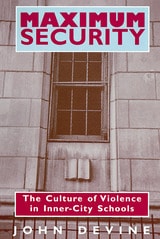
Maximum Security
The Culture of Violence in Inner-City SchoolsJohn Devine
University of Chicago Press, 1996
Based on years of frontline experience in New York's inner-city schools, Maximum Security demonstrates that such policing strategies are not only ineffectual, they divorce students and teachers from their ethical and behavioral responsibilities. Exploring the culture of violence from within, John Devine argues that the security system, with its uniformed officers and invasive high-tech surveillance, has assumed presumptive authority over students' bodies and behavior, negating the traditional roles of teachers as guardians and agents of moral instruction. The teacher is reduced to an information bureaucrat, a purveyor of technical knowledge, while the student's physical well-being and ethical actions are left to the suspect scrutiny of electronic devices and security specialists with no pedagogical mission, training, or interest. The result is not a security system at all, but an insidious institutional disengagement from the caring supervision of the student body.
With uncompromising honesty, Devine provides a powerful portrayal of an educational system in crisis and bold new insight into the malignant culture of school violence.
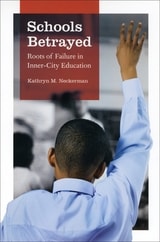
Schools Betrayed
Roots of Failure in Inner-City EducationKathryn M. Neckerman
University of Chicago Press, 2007
The problems commonly associated with inner-city schools were not nearly as pervasive a century ago, when black children in most northern cities attended school alongside white children. In Schools Betrayed, her innovative history of race and urban education, Kathryn M. Neckerman tells the story of how and why these schools came to serve black children so much worse than their white counterparts.
Focusing on Chicago public schools between 1900 and 1960, Neckerman compares the circumstances of blacks and white immigrants, groups that had similarly little wealth and status yet came to gain vastly different benefits from their education. Their divergent educational outcomes, she contends, stemmed from Chicago officials’ decision to deal with rising African American migration by segregating schools and denying black students equal resources. And it deepened, she shows, because of techniques for managing academic failure that only reinforced inequality. Ultimately, these tactics eroded the legitimacy of the schools in Chicago’s black community, leaving educators unable to help their most disadvantaged students.
Schools Betrayed will be required reading for anyone who cares about urban education.

Teaching in the Terrordome
Two Years in West Baltimore with Teach for AmericaHeather Kirn Lanier
University of Missouri Press, 2012
The Grit and the Grind
Building High-Performing Education Systems in an Era of PolarizationJoshua L. Glazer, Cori Egan, William R. Berry, and Amar Fattal
University of Chicago Press, 2026
Offers a much-needed perspective on the connections between community, policymaking, and the improvement of underperforming schools.
School reform remains a fraught issue in the United States as educators, policymakers, and communities strive to improve outcomes for all students. In The Grit and the Grind, Joshua L. Glazer, Cori Egan, William R. Berry, and Amar Fattal examine two ambitious efforts to improve the lowest-performing schools in Memphis, Tennessee. The book offers a rare inside look at the political, organizational, and educational challenges of improving schools at scale.
The two initiatives, the Achievement School District (ASD) and the Shelby County Innovation Zone (iZone), shared a common goal but pursued it through fundamentally different approaches. The ASD was a state-run turnaround district that removed schools from local control and placed them under the management of charter organizations. By contrast, the iZone operated through existing district institutions, relying on local educators and leaders to drive improvement. Despite common goals and substantial resources, the reforms developed in strikingly different ways. Drawing on years of research in Memphis, the authors move beyond familiar debates about charter schools and district reform to explore a deeper question: What does it take to improve schools in complex, pluralistic, and contested democratic societies? Their analysis reveals that educational improvement is simultaneously professional, organizational, and political. Efforts to enhance educational opportunities depend not only on curriculum, leadership, and expertise, but also on the legitimacy, trust, and community support that allow educational systems to learn from experience and sustain improvement.
At once a study of reform, organizations, and politics, The Grit and the Grind challenges simple explanations of success and failure, showing that meaningful improvement is forged through the slow, uncertain work of building systems capable of earning community trust while continuously strengthening teaching and learning.
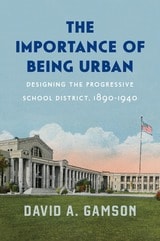
The Importance of Being Urban
Designing the Progressive School District, 1890-1940David A. Gamson
University of Chicago Press, 2019
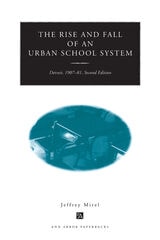
The Rise and Fall of an Urban School System
Detroit, 1907-81, Second EditionJeffrey Mirel
University of Michigan Press, 1999
Detroit's public school system, lauded as a model for the nation in the 1920s and 1930s, has become one of the city's most conspicuous failures. Jeffrey Mirel draws on Detroit's experience to offer a new interpretation of urban educational decline in the twentieth century, suggesting specific answers to what ails America's public schools and how public education can be improved.
Jeffrey Mirel has won two prestigious book awards for The Rise and Fall of an Urban School System. Stanford University and the American Educational Research Association awarded the book the 1994-95 "Outstanding Book Award" stating, "Mirel's documentation and interpretations serve as valuable and refreshing commentary on the current status of urban education, and by extension, all American education and society. . . . The book is admirably written with touches of drama, pathos, and hope." The American Educational Studies Association awarded Mirel the 1994 "Critics' Choice Award" for his outstanding contribution to Educational Studies.
This paperback edition includes a comprehensive epilogue focusing on recent events in Detroit educational reform. Detailing the formation and rapid collapse of a campaign in the late 1980s and early 1990s to radically restructure the Detroit public schools, Mirel's new analysis of this experiment illuminates both the persistence of historical trends in the school district and the possibilities for change.
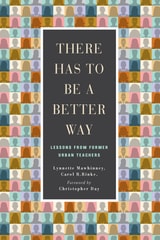
There Has to Be a Better Way
Lessons from Former Urban TeachersMawhinney, Lynnette
Rutgers University Press, 2019
Teacher attrition has long been a significant challenge within the field of education. It is a commonly-cited statistic that almost fifty percent of beginning teachers leave the field within their first five years, to the detriment of schools, students, and their own career development. There Has to be a Better Way offers an essential voice in understanding the dynamics of teacher attrition from the perspective of the teachers themselves. Drawing upon in-depth qualitative research with former teachers from urban schools in multiple regions of the United States, Lynnette Mawhinney and Carol R. Rinke identify several themes that uncover the rarely-spoken reasons why teachers so often willingly leave the classroom. The authors go further to provide concrete recommendations for how school administrators can better support their practicing teachers, as well as how teacher educators might enhance preparation for the next generation of educators. Complete with suggested readings and discussion questions, this book serves as an indispensable resource in understanding and building an effective and productive educational workforce for our nation’s students.
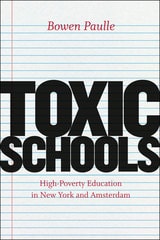
Toxic Schools
High-Poverty Education in New York and AmsterdamBowen Paulle
University of Chicago Press, 2013
When Bowen Paulle speaks of toxicity, he speaks of educational worlds dominated by intimidation and anxiety, by ambivalence, degradation, and shame. Based on six years of teaching and research in the South Bronx and in Southeast Amsterdam, Toxic Schools is the first fully participatory ethnographic study of its kind and a searing examination of daily life in two radically different settings. What these schools have in common, however, are not the predictable ideas about race and educational achievement but the tragically similar habituated stress responses of students forced to endure the experience of constant vulnerability. From both sides of the Atlantic Ocean, Paulle paints an intimate portrait of how students and teachers actually cope, in real time, with the chronic stress, peer group dynamics, and subtle power politics of urban educational spaces in the perpetual shadow of aggression.
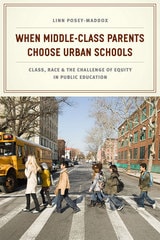
When Middle-Class Parents Choose Urban Schools
Class, Race, and the Challenge of Equity in Public EducationLinn Posey-Maddox
University of Chicago Press, 2014
Drawing on in-depth research at an urban elementary school, Posey-Maddox examines parents’ efforts to support the school through their outreach, marketing, and volunteerism. She shows that when middle-class parents engage in urban school communities, they can bring a host of positive benefits, including new educational opportunities and greater diversity. But their involvement can also unintentionally marginalize less-affluent parents and diminish low-income students’ access to the improving schools. In response, Posey-Maddox argues that school reform efforts, which usually equate improvement with rising test scores and increased enrollment, need to have more equity-focused policies in place to ensure that low-income families also benefit from—and participate in—school change.