Results by title
2 books match the query 'Urban wildlife management'
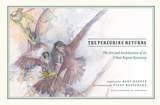
The Peregrine Returns
The Art and Architecture of an Urban Raptor RecoveryMary Hennen with Peggy Macnamara
University of Chicago Press, 2017
In The Peregrine Returns, Mary Hennen gives wings to this extraordinary conservation success story. Drawing on the beautiful watercolors of Field Museum artist-in-residence Peggy Macnamara and photos by Field Museum research assistant Stephanie Ware, as well as her own decades of work with peregrines, Hennen uses a program in Chicago as a case study for the peregrines’ journey from their devastating decline to the discovery of its cause (a thinning of eggshells caused by a by-product of DDT), through to recovery, revealing how the urban landscape has played an essential role in enabling falcons to return to the wild—and how people are now learning to live in close proximity to these captivating raptors.
Both a model for conservation programs across the country and an eye-opening look at the many creatures with which we share our homes, this richly illustrated story is an inspiring example of how urban architecture can serve not only our cities’ human inhabitants, but also their wild ones.

Urban Wildlife Habitats
A Landscape PerspectiveLowell W. Adams
University of Minnesota Press, 1994
Urban Wildlife Habitats was first published in 1994. Minnesota Archive Editions uses digital technology to make long-unavailable books once again accessible, and are published unaltered from the original University of Minnesota Press editions.
In cities, towns, and villages, between buildings and parking lots, streets and sidewalks, and polluted streams and rivers, there is ever less space for the "natural," the plants and animals that once were at home across North America. In this first book-length study of the subject, Lowell W. Adams reviews the impact of urban and suburban growth on natural plant and animal communities and reveals how, with appropriate landscape planning and urban development, cities and towns can be made more accommodating for a wide diversity of species, including our own.
Soils and ground surface, air, water, and noise pollution, space and demographics are among the urban characteristics Adams considers in relation to wildlife. He describes changes in the composition and structure of vegetation, as native species are replaced by exotic ones, and shows how, with spreading urbanization of natural habitats, the diversity of species of plants and animals almost always declines, although the density of a few species increases. Adams contends, however, that it is possible for a wide variety of species to coexist in the metropolitan environment, and he cites a growing interest in the practice of "natural landscaping," which emphasizes the use of native species and considers the structure, pattern, and species composition of vegetation as it relates to wildlife needs. Urban habitats vary from small city parks in densely built downtowns to suburbs with large yards and considerable open space. Adams discusses the opportunities these areas—along with school yards, hospital grounds, cemeteries, individual residences, and vacant lots—provide for judicious wildlife management and for the salutary interaction of people with nature.Lowell W. Adams is vice president of the National Institute for Urban Wildlife in Columbia, Maryland.