Results by title
11 books match the query 'Urban-rural migration'
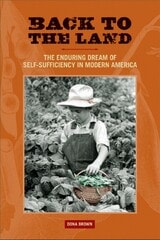
Back to the Land
The Enduring Dream of Self-Sufficiency in Modern AmericaDona Brown
University of Wisconsin Press, 2011
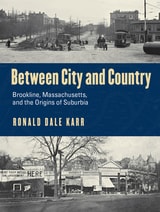
Between City and Country
Brookline, Massachusetts, and the Origins of SuburbiaRonald Dale Karr
University of Massachusetts Press, 2018
Already a fashionable retreat for wealthy Bostonians, Brookline began to suburbanize in the 1840s with the arrival of hundreds of commuter families—and significant numbers of Irish Catholic immigrants drawn by opportunities to work as laborers and servants. In Brookline the poor were segregated but not excluded altogether, as they would be from twentieth-century elite suburbs. A half century later, a distinct suburban way of life developed that combined rural activities with urban pastimes, and a political consensus emerged that sought efficient government and large expenditures on education and public works. Brookline had created the template for the concept of suburbia, not just in wealthy communities but in the less affluent communities of postwar America.
Going to the Countryside
The Rural in the Modern Chinese Cultural Imagination, 1915-1965Yu Zhang
University of Michigan Press, 2020
Since the beginning of the twentieth century, modern Chinese intellectuals, reformers, revolutionaries, leftist journalists, and idealistic youth had often crossed the increasing gap between the city and the countryside, which made the act of “going to the countryside” a distinctively modern experience and a continuous practice in China. Such a spatial crossing eventually culminated in the socialist state program of “down to the villages” movements during the 1960s and 1970s. What, then, was the special significance of “going to the countryside” before that era? Going to the Countryside deals with the cultural representations and practices of this practice between 1915 and 1965, focusing on individual homecoming, rural reconstruction, revolutionary journeys to Yan’an, the revolutionary “going down to the people” as well as going to the frontiers and rural hometowns for socialist construction. As part of the larger discourses of enlightenment, revolution, and socialist industrialization, “going to the countryside” entailed new ways of looking at the world and ordinary people, brought about new experiences of space and time, initiated new means of human communication and interaction, generated new forms of cultural production, revealed a fundamental epistemic shift in modern China, and ultimately created a new aesthetic, social, and political landscape.
As a critical response to the “urban turn” in the past few decades, this book brings the rural back to the central concern of Chinese cultural studies and aims to bridge the city and the countryside as two types of important geographical entities, which have often remained as disparate scholarly subjects of inquiry in the current state of China studies. Chinese modernity has been characterized by a dual process that created problems from the vast gap between the city and the countryside but simultaneously initiated constant efforts to cope with the gap personally, collectively, and institutionally. The process of “crossing” two distinct geographical spaces was often presented as continuous explorations of various ways of establishing the connectivity, interaction, and relationship of these two imagined geographical entities. Going to the Countryside argues that this new body of cultural productions did not merely turn the rural into a constantly changing representational space; most importantly, the rural has been constructed as a distinct modern experiential and aesthetic realm characterized by revolutionary changes in human conceptions and sentiments.
Hipbillies
Deep Revolution in the Arkansas OzarksJared M. Phillips
University of Arkansas Press, 2019
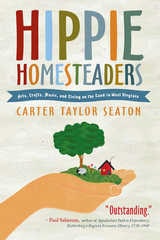
Hippie Homesteaders
Arts, Crafts, Music and Living on the Land in West VirginiaCarter Taylor Seaton
West Virginia University Press, 2014
It’s the 1960s. The Vietnam War is raging and protests are erupting across the United States. In many quarters, young people are dropping out of society, leaving their urban homes behind in an attempt to find a safe place to live on their own terms, to grow their own food, and to avoid a war they passionately decry. During this time, West Virginia becomes a haven for thousands of these homesteaders—or back-to-the-landers, as they are termed by some. Others call them hippies.
When the going got rough, many left. But a significant number remain to this day. Some were artisans when they arrived, while others adopted a craft that provided them with the cash necessary to survive. Hippie Homesteaders tells the story of this movement from the viewpoint of forty artisans and musicians who came to the state, lived on the land, and created successful careers with their craft. There’s the couple that made baskets coveted by the Smithsonian Institution’s Renwick Gallery. There’s the draft-dodger that fled to Canada and then became a premier furniture maker. There’s the Boston-born VISTA worker who started a quilting cooperative. And, there’s the immigrant Chinese potter who lived on a commune.
Along with these stories, Hippie Homesteaders examines the serendipitous timing of this influx and the community and economic support these crafters received from residents and state agencies in West Virginia. Without these young transplants, it’s possible there would be no Tamarack: The Best of West Virginia, the first statewide collection of fine arts and handcrafts in the nation, and no Mountain Stage, the weekly live musical program broadcast worldwide on National Public Radio since 1983. Forget what you know about West Virginia.
Hippie Homesteaders isn’t about coal or hillbillies or moonshine or poverty. It is the story of why West Virginia was—and still is—a kind of heaven to so many.

Hot Towns
The Future of the Fastest Growing Communities in AmericaWolf, Peter
Rutgers University Press, 1999
Hot Towns is about the vast, current national relocation of one million Americans a year. Successful, accomplished, and well-financed people of all ages are moving to communities they view as choice—places distinguished by fine climate, physical beauty, abundant natural recreation resources, and minimal social problems and low crime. Towns in this elite roster include Santa Fe, Aspen, Boulder, Bozeman, Chapel Hill, East Hampton, and many others.
These American boom towns, Peter Wolf writes, have grown in jobs and population at two to three times the national average. But warning signs of deterioration are already evident: overbuilding, failing natural resources, rising taxes, and traffic congestion are all taking a toll on these communities. Rapid migration can enhance or swamp America’s fastest growing and most desirable communities
Wolf examines the choices that people in these areas can make to both effectively accommodate growth and yet ensure their economic futures. A wise town undergoing growth will realize that what must be preserved is not the growth in-and-for itself, but the qualities which attract people in the first place. Wolf demonstrates how it is possible—even during a town’s rapid expansion—to enhance the quality of residents’ lives, to incorporate aesthetics and design into town evolution, to protect what is precious in nature, and to preserve the best that has already been built.
Wolf concludes with a practical checklist for the residents of hot towns, allowing them to evaluate how their communities are coping with growth.
Newcomers to Old Towns
Suburbanization of the HeartlandSonya Salamon
University of Chicago Press, 2003
Although the death of the small town has been predicted for decades, during the 1990s the population of rural America actually increased by more than three million people. In this book, Sonya Salamon explores these rural newcomers and the impact they have on the social relationships, public spaces, and community resources of small town America.
Salamon draws on richly detailed ethnographic studies of six small towns in central Illinois, including a town with upscale subdivisions that lured wealthy professionals as well as towns whose agribusinesses drew working-class Mexicano migrants and immigrants. She finds that regardless of the class or ethnicity of the newcomers, if their social status differs relative to that of oldtimers, their effect on a town has been the same: suburbanization that erodes the close-knit small town community, with especially severe consequences for small town youth. To successfully combat the homogenization of the heartland, Salamon argues, newcomers must work with oldtimers so that together they sustain the vital aspects of community life and identity that first drew them to small towns.
An illustration of the recent revitalization of interest in the small town, Salamon's work provides a significant addition to the growing literature on the subject. Social scientists, sociologists, policymakers, and urban planners will appreciate this important contribution to the ongoing discussion of social capital and the transformation in the study and definition of communities.
Return from the World
Economic Growth and Reverse Migration in BrazilGregory Duff Morton
University of Chicago Press, 2024
In Return from the World, anthropologist Gregory Duff Morton traces the migrations of Brazilian workers who leave a thriving labor market and return to their home villages to become peasant farmers. Morton seeks to understand what it means to turn one’s back deliberately on the promise of economic growth.
Giving up their positions in factories, at construction sites, and as domestic workers, these migrants travel thousands of miles back to villages without running water or dependable power. There, many take up subsistence farming. Some become activists with the MST, Brazil’s militant movement of landless peasants. Bringing their stories vividly to life, Morton dives into the dreams and disputes at play in finding freedom in the shared rejection of growth.
The Village Is Like a Wheel
Rethinking Cargos, Family, and Ethnicity in Highland MexicoRoger Magazine
University of Arizona Press, 2012
According to Magazine, where Western anthropologists often assume that persons are individuals capable of acting on their own to produce things, rural highland Mexicans see persons as inherently interdependent and in need of others even to act. He utilizes the term “active subjectivity” to denote the fact that what they produce in others is not simply action but also a subjective state or attitude of willingness to perform the action.
The author’s goals are to improve understandings of rural highland Mexicans’ lives and to contribute to a broader disciplinary effort aimed at revealing the cultural specificity or ethnocentricity of our supposedly universally applicable concepts and theories.
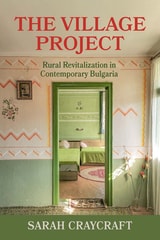
The Village Project
Rural Revitalization in Contemporary BulgariaSarah Craycraft
University of Wisconsin Press, 2026
Since the collapse of socialism, Bulgaria’s population has been on the move—out of rural regions and into cities, or out of the country altogether. Yet today there is a countermovement of young, urban Bulgarians, born around 1989, seeking to repopulate rural villages and reclaim traditional Bulgarian folklife. Though many of these young Bulgarians have no direct experience with a rural lifestyle nor memories of thriving village life, their actions and movements are inspired by a nostalgic vision of the past. And so, beyond a spatial return, this rural revitalization movement speaks to visions of an alternate future, one sparked by dismay with the conditions of contemporary life.
Using ethnographic and folkloristic methods, Sarah Craycraft paints a complex, detailed picture of responses to Europeanization, carried out through neoliberal folklife projects as they collide with ongoing efforts to build a revitalized rural Bulgaria in the ruins of the past. Contextualized within a particular Southeast European nation, the study speaks to broader questions of rural revival, public-facing culture work, intergenerational folklore, and the imbrication of folklore with politics and culture.
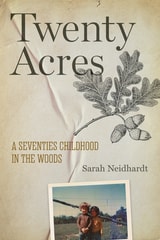
Twenty Acres
A Seventies Childhood in the WoodsSarah Neidhardt
University of Arkansas Press, 2023
"A memoir infused with both empathy and inquiry."
—Wendy J. Fox, Electric Literature
“Twenty Acres is an engaging, thoughtful memoir of growing up in an off-the-grid cabin as part of the 1970s back-to-the-land movement. Sarah Neidhardt captures her subject beautifully and offers a compelling portrait of a highly specific, historically significant time and place.”
—Kate Daloz, author of We Are As Gods: Back to the Land in the 1970s on the Quest for a New America
Sarah Neidhardt grew up in the woods. When she was an infant, her parents left behind comfortable, urbane lives to take part in the back-to-the-land movement. They moved their young family to an isolated piece of land deep in the Arkansas Ozarks where they built a cabin, grew crops, and strove for eight years to live self-sufficiently.
In this vivid memoir Neidhardt explores her childhood in wider familial and social contexts. Drawing upon a trove of family letters and other archival material, she follows her parents’ journey from privilege to food stamps—from their formative youths, to their embrace of pioneer homemaking and rural poverty, to their sudden and wrenching return to conventional society—and explores the back-to-the-land movement of the 1970s as it was, and as she lived it.
A story of strangers in a strange land, of class, marriage, and family in a changing world, Twenty Acres: A Seventies Childhood in the Woods is part childhood idyll, part cautionary tale. Sarah Neidhardt reveals the treasures and tolls of unconventional, pastoral lives, and her insightful reflections offer a fresh perspective on what it means to aspire to pre-industrial lifestyles in a modern world.