97 books match the query 'Urbanization' and 7 start with a
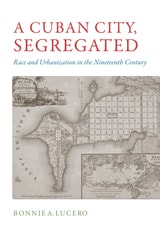
cover of A Cuban City, Segregated: Race and Urbanization in the Nineteenth Century

A Cuban City, Segregated

Race and Urbanization in the Nineteenth Century

Bonnie A. Lucero

University of Alabama Press, 2019

A microhistory of racial segregation in Cienfuegos, a central Cuban port city

Founded as a white colony in 1819, Cienfuegos, Cuba, quickly became  home to people of African descent, both free and enslaved, and later a small community of Chinese and other immigrants. Despite the racial, ethnic, and cultural diversity that defined the city’s population, the  urban landscape was characterized by distinctive racial boundaries,  separating the white city center from the heterogeneous peripheries. A Cuban City, Segregated: Race and Urbanization in the Nineteenth Century explores how the de facto racial segregation was constructed  and perpetuated in a society devoid of explicitly racial laws.

Drawing on the insights of intersectional feminism, Bonnie A. Lucero shows that the key to understanding racial segregation in Cuba is recognizing the often unspoken ways specifically classed notions and practices of gender shaped the historical production of race and  racial inequality. In the context of nineteenth-century Cienfuegos, gender,  race, and class converged in the concept of urban order, a complex and  historically contingent nexus of ideas about the appropriate and desired social hierarchy among urban residents, often embodied spatially in particular relationships to the urban landscape.

As Cienfuegos evolved subtly over time, the internal logic of urban  order was driven by the construction and defense of a legible, developed,  aesthetically pleasing, and, most importantly, white city center. Local authorities produced policies that reduced access to the city center along class and gendered lines, for example, by imposing expensive building codes on centric lands, criminalizing poor peoples’ leisure activities, regulating prostitution, and quashing organized labor. Although none of these policies mentioned race outright, this new scholarship demonstrates that the policies were instrumental in producing and perpetuating the geographic marginality and discursive  erasure of people of color from the historic center of Cienfuegos  during its first century of existence.
[more]
cover of A Little More Freedom: African Americans Enter the Urban Midwest, 1860–1930

A Little More Freedom

African Americans Enter the Urban Midwest, 1860–1930

Jack S. Blocker

The Ohio State University Press, 2008
Why did African Americans move from the rural South to the metropolitan North? Scholars have shown that African Americans took part in the urbanization of American society between the Civil War and the Great Depression, but the racial dimensions of their migration have remained unclear. A Little More Freedom is the first study to trace African American locational choices during the crucial period when migrants created pathways that would shape mobility through the twentieth century and beyond.This book identifies an "age of the village" for black Midwesterners, when Civil War and postwar migrants distributed themselves evenly across the urban hierarchies of the region. Using four case studies of Washington Court House, Ohio; Springfield, Ohio; Springfield, Illinois; and Muncie, Indiana, Blocker shows what life was like for African Americans in small towns and small cities, thus illuminating the reasons why most blacks ultimately chose to leave such places in favor of metropolitan centers such as Chicago, Indianapolis, and Cleveland. Previous scholars have emphasized the role of racist white violence as the catalyst, but A Little More Freedom takes a more nuanced approach.Emphasis upon racist violence and Jim Crow has inadvertently tended to portray African Americans as victims and their migrations as flight from danger and oppression. While not downplaying white racism, A Little More Freedom tries to recreate the threats and opportunities in urban places of different sizes as seen through the eyes of migrants. 
[more]
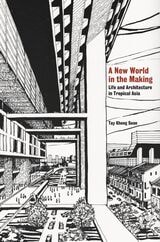
cover of A New World in the Making: Life and Architecture in Tropical Asia

A New World in the Making

Life and Architecture in Tropical Asia

Tay Kheng Soon

National University of Singapore Press, 2023

A memoir and collection of essays on architecture and urbanism from one of the most interesting figures in Singapore’s cultural landscape.

According to architect Tay Kheng Soon, the time has come to change and build a new world. The feeling has impelled him to write this book, bringing together memoir and writings on identity, landscape and belonging, and on architecture and urbanism. Born in British-ruled Singapore, Soon was deeply engaged in the debates about building a new world that attended the end of colonialism. His focus, but far from his only concern, was Singapore's built environment—and its spiritual one—since the early 1960s. A New World in the Making is a must-read reflection on tropical Asia, on architecture and urbanism, and on looking ahead to the always urgent task of building a new world.
 
[more]
cover of African Underclass: Urbanization, Crime & Colonial Order in Dar es Salaam 1919-61

African Underclass

Urbanization, Crime & Colonial Order in Dar es Salaam 1919-61

Andrew Burton

Ohio University Press, 2005
African Underclass examines the social, political, and administrative repercussions of rapid urbanization in colonial Dar es Salaam, and the evolution of official policy that viewed urbanization as inextricably linked with social disorder. This policy marginalized numbers of young Africans entering the town---and thus, paradoxically, the policy itself subverted the colonial order. "Well researched and sharply written---one of the best and most stimulating accounts of urbanization in Eastern Africa to have been produced in recent years."---John McCracken, emeritus professor of history, University of StirlingAndrew Burton is assistant director of the British Institute in Eastern Africa.
[more]
cover of Archaeology of Southern Urban Landscapes

Archaeology of Southern Urban Landscapes

Amy L Young

University of Alabama Press, 2000

Groundbreaking essays in urban archaeology highlight the impact of towns and cities on the southern landscape.

The rapid growth and development of urban areas in the South have resulted in an increase in the number of urban archaeology projects required by federal and state agencies. These projects provide opportunities not only to investigate marginal areas between the town and countryside but also to recover information long buried beneath the earliest urban structures. Such projects have also created a need for a one-volume update on archaeology as it is practiced in the urban areas of the southeastern United States.

Archaeology of Southern Urban Landscapes will assist practitioners and scholars in the burgeoning fields of urban and landscape archaeology by treating the South as a distinctive social, geographic, and material entity and by focusing on the urban South rather than the stereotypical South of rural plantations. The case studies in this volume span the entire southeastern United States, from Annapolis to New Orleans and from colonial times to the 19th century. The authors address questions involving the function of cities, interregional diversity, the evolution of the urban landscape, and the impact of the urban landscape on southern culture. By identifying the relationship between southern culture and the South's urban landscapes, this book will help us understand the built landscape of the past and predict future growth in the region.
 

[more]
cover of Architecture and Development: Israeli Construction in Sub-Saharan Africa and the Settler Colonial Imagination, 1958-1973

Architecture and Development

Israeli Construction in Sub-Saharan Africa and the Settler Colonial Imagination, 1958-1973

Ayala Levin

Duke University Press, 2022
In Architecture and Development Ayala Levin charts the settler colonial imagination and practices that undergirded Israeli architectural development aid in Africa. Focusing on the “golden age” of Israel’s diplomatic relations in and throughout the continent from 1958 to 1973, Levin finds that Israel positioned itself as a developing-nation alternative in the competition over aid and influence between global North and global South. In analyses of the design and construction of prestigious governmental projects in Nigeria, Sierra Leone, and Ethiopia, Levin details how architects, planners, and a trade union--owned construction company staged Israel as a new center of nonaligned expertise. These actors and professionals paradoxically capitalized on their settler colonial experience in Palestine, refashioning it as an alternative to Western colonial expertise. Levin traces how Israel became involved in the modernization of governance, education, and agriculture in Africa, as well as how African leaders chose to work with Israel to forge new South-South connections. In so doing, she offers new ways of understanding the role of architecture as a vehicle of postcolonial development and in the mobilization of development resources.
[more]
cover of Atlanta Unbound: Enabling Sprawl through Policy and Planning

Atlanta Unbound

Enabling Sprawl through Policy and Planning

Carlton Wade Basmajian

Temple University Press, 2015

Looking at Atlanta, Georgia, one might conclude that the city’s notorious sprawl, degraded air quality, and tenuous water supply is a result of a lack of planning—particularly an absence of coordination at the regional level. In Atlanta Unbound, Carlton Wade Basmajian shows that Atlanta’s low-density urban form and its associated problems have been both highly coordinated and regionally planned.
 
Basmajian’s shrewd analysis shows how regional policies spanned political boundaries and   framed local debates over several decades. He examines the role of the Atlanta Regional Commission’s planning deliberations that appear to have contributed to the urban sprawl that they were designed to control. Basmajian explores four cases—regional land development plans, water supply strategies, growth management policies, and transportation infrastructure programs—to provide a detailed account of the interactions between citizens, planners, regional commissions, state government, and federal agencies.
 
In the process, Atlanta Unbound answers the question: Toward what end and for whom is Atlanta’s regional planning process working?
 
In the series Urban Life, Landscape, and Policy, edited by Zane L. Miller, David Stradling, and Larry Bennett
[more]