Results by title
8 books match the query 'User-generated content'
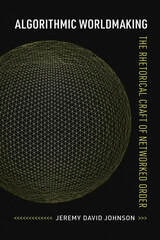
Algorithmic Worldmaking
The Rhetorical Craft of Networked OrderJeremy David Johnson
University of Alabama Press, 2025
Illuminates how algorithms, intertwined with human biases, damage political discourse and civic engagement.
Algorithmic Worldmaking is an urgent exploration of the dynamic relationship between algorithms that encode their human creators’ assumptions and the humans whose choices are shaped by these algorithms in search engines, social media, and other digital spaces. Transcending discussions of one or the other, Jeremy David Johnson traces the corrupting political and social influences that arise from their mutual interaction.
Johnson uses the concept of kosmos in its sense of a dynamic order to frame the interplay between algorithms, humans, and their environments. He first shows how algorithms, far from being objective or unbiased, perpetuate human errors. Johnson then suggests a framework of four parts—navigation, exploration, maintenance, and monetization—to map the variety of political consequences to a society influenced by these four factors.
Citing controversies at major platforms such as Google, YouTube, and Facebook, Johnson demonstrates how algorithms limit and shape human thought. He makes several persuasive arguments. First, algorithms and humans share agency but humans have exceptional responsibility. Second, the algorithmic kosmos mirrors and shapes social oppression. Third, algorithms incentivize capitalist exploitation. Last, these influences damage democratic deliberation.
This landmark study is essential for scholars and students of political science, media studies, and those interested in the perilous implications of algorithmic systems on civic and political life.

Gurus, Hucksters, Entertainers
How Influencers Reshaped Social MediaAngèle Christin
University of Chicago Press, 2026
An illuminating investigation of the complex work of social media content creators—their lives, conflicts, and controversies.
In this eye-opening book, digital studies scholar Angèle Christin demystifies the content creator economy, explaining its long history and the pitfalls of its professionalization. Drawing on in-depth fieldwork with digital creators as varied as vegan YouTubers, dads of Instagram, and self-described drama commentators, Christin shows how individuals enter social media creation, how they make money, and how their online environments shape their content.
Aspiring creators often dream of a better life in social media careers. Yet these dreams soon turn into exhaustion as influencers try to meet the contradictory demands of platforms, brands, and audiences. Over time, Christin shows, creators cluster into three types: hucksters, who work on behalf of brands; entertainers, who chase virality and platform payments; and gurus, who monetize the loyalty of their fans. Platform dynamics push entertainers and gurus to create extreme and incendiary content to maintain audience engagement, while brands and marketers nudge hucksters toward repetitive, staid commercial performances. Concerns about algorithmic manipulation and conflicts between creators further lead to reputation-damaging, harassment-laden scandals. Christin reveals how platform labor repeatedly—and structurally—fosters precarity and inequality, destructive drama, and inflammatory content online.
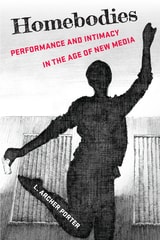
Homebodies
Performance and Intimacy in the Age of New MediaL. Archer Porter
University of Michigan Press, 2026
Homebodies: Performance and Intimacy in the Age of New Media sheds light on a fascinating yet often overlooked phenomenon: how ordinary people transform their private lives into captivating performances for the digital stage. Focusing on home dance videos shared on Instagram from 2010 to 2020, the book explores the delicate art of "intimaesthetics"—the aestheticization of intimacy through the interplay of body, space, and media—and the paradox of the homebody. These seemingly spontaneous performances reveal how users craft images of closeness and authenticity, drawing audiences into a curated version of their domestic lives. Yet, Porter argues, these intimate portrayals exist within a larger system of platform control, algorithmic surveillance, and the commodification of personal expression.
Porter utilizes hand-drawn illustrations in place of screenshots, which reflects their commitment to critiquing the exploitative dynamics of digital visibility while respecting the personal nature of the media studied. By examining the intersection of personal agency, algorithmic control, and the commodification of authenticity, Homebodies provides a nuanced understanding of how technology redefines intimacy, identity, and creativity in the twenty-first century.
Manifesting Violence
White Terrorism, Digital Culture, and the Rhetoric of ReplacementCasey Ryan Kelly and William Joseph Sipe
University of Alabama Press, 2025
When communication becomes the engine of white supremacist violence.
Manifesting Violence: White Terrorism, Digital Culture, and the Rhetoric of Replacement by Casey Ryan Kelly and William Joseph Sipe is a compelling exploration of how the digital world has become a fertile ground for white supremacist ideology. Through an in-depth analysis of white supremacist manifestos, online rhetoric, and the myth of “white genocide,” Kelly and Sipe uncover the disturbing ways in which digital culture facilitates the spread of racist ideology and the radicalization of individuals. By examining the language of white nationalism—calls to defend the white race, family, and children—Kelly and Sipe reveal how these messages, often disguised as entertainment or humor, gradually transform passive consumers into active participants in a dangerous ideology.
Manifesting Violence sheds light on the alarming shift from organized white supremacist groups to a decentralized digital arena where hate speech is disguised as humor and online conversations foster a culture of violence. Kelly and Sipe’s thorough investigation of this growing digital ecosystem offers a chilling glimpse into the dark underbelly of online extremism. A must-read for anyone seeking to understand the growing threat of hate-motivated violence and the urgent need to address its roots in digital culture, Kelly and Sipe offer rich insights to readers, researchers, academics, and policymakers concerned about extremism, online radicalization, and white supremacy.
The Afterlife of Data
What Happens to Your Information When You Die and Why You Should CareCarl Öhman
University of Chicago Press, 2024
A short, thought-provoking book about what happens to our online identities after we die.
These days, so much of our lives takes place online—but what about our afterlives? Thanks to the digital trails that we leave behind, our identities can now be reconstructed after our death. In fact, AI technology is already enabling us to “interact” with the departed. Sooner than we think, the dead will outnumber the living on Facebook. In this thought-provoking book, Carl Öhman explores the increasingly urgent question of what we should do with all this data and whether our digital afterlives are really our own—and if not, who should have the right to decide what happens to our data.
The stakes could hardly be higher. In the next thirty years alone, about two billion people will die. Those of us who remain will inherit the digital remains of an entire generation of humanity—the first digital citizens. Whoever ends up controlling these archives will also effectively control future access to our collective digital past, and this power will have vast political consequences. The fate of our digital remains should be of concern to everyone—past, present, and future. Rising to these challenges, Öhman explains, will require a collective reshaping of our economic and technical systems to reflect more than just the monetary value of digital remains.
As we stand before a period of deep civilizational change, The Afterlife of Data will be an essential guide to understanding why and how we as a human race must gain control of our collective digital past—before it is too late.

Turntables and Tropes
A Rhetoric of RemixScott Haden Church
Michigan State University Press, 2022
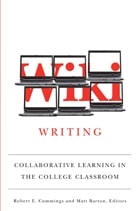
Wiki Writing
Collaborative Learning in the College ClassroomRobert E. Cummings and Matt Barton, Editors
University of Michigan Press, 2008
When most people think of wikis, the first---and usually the only---thing that comes to mind is Wikipedia. The editors of Wiki Writing: Collaborative Learning in the College Classroom, Robert E. Cummings and Matt Barton, have assembled a collection of essays that challenges this common misconception, providing an engaging and helpful array of perspectives on the many pressing theoretical and practical issues that wikis raise. Written in an engaging and accessible manner that will appeal to specialists and novices alike, Wiki Writing draws on a wealth of practical classroom experiences with wikis to offer a series of richly detailed and concrete suggestions to help educators realize the potential of these new writing environments.
Robert E. Cummings began work at Columbus State University in August 2006 as Assistant Professor of English and Director of First-Year Composition. Currently he also serves as the Writing Specialist for CSU's Quality Enhancement Plan, assisting teachers across campus in their efforts to maximize student writing in their curriculum. He recently concluded a three-year research study with the Inter/National Coalition for Electronic Portfolio Research and continues to research in the fields of computers and writing, writing across the curriculum, writing in the disciplines, and curricular reform in higher education.
Matt Barton is Assistant Professor, St. Cloud State University, Department of English-Rhetoric and Applied Writing Program. His research interests are rhetoric, new media, and computers and writing. He is the author of Dungeons and Desktops: A History of Computer Role-Playing Games and has published in the journals Text and Technology, Computers and Composition, Game Studies, and Kairos. He is currently serving as Associate Editor of Kairosnews and Managing Editor of Armchair Arcade.
"Wiki Writing will quickly become the standard resource for using wikis in the classroom."
---Jim Kalmbach, Illinois State University
digitalculturebooks is an imprint of the University of Michigan Press and the Scholarly Publishing Office of the University of Michigan Library dedicated to publishing innovative and accessible work exploring new media and their impact on society, culture, and scholarly communication. Visit the website at www.digitalculture.org.
Wikipedia and the Politics of Openness
Nathaniel Tkacz
University of Chicago Press, 2014
But what does openness mean, and what would a political theory of openness look like? With Wikipedia and the Politics of Openness, Nathaniel Tkacz uses Wikipedia, the most prominent product of open organization, to analyze the theory and politics of openness in practice—and to break its spell. Through discussions of edit wars, article deletion policies, user access levels, and more, Tkacz enables us to see how the key concepts of openness—including collaboration, ad-hocracy, and the splitting of contested projects through “forking”—play out in reality.
The resulting book is the richest critical analysis of openness to date, one that roots media theory in messy reality and thereby helps us move beyond the vaporware promises of digital utopians and take the first steps toward truly understanding what openness does, and does not, have to offer.