Results by title
4 books match the query 'Vaccines'
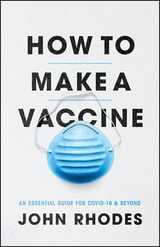
How to Make a Vaccine
An Essential Guide for COVID-19 and BeyondJohn Rhodes
University of Chicago Press, 2021
As the COVID-19 pandemic has affected every corner of the world, changing our relationship to our communities, to our jobs, and to each other, the most pressing question has been—when will it end? Researchers around the globe are urgently trying to answer this question by racing to test and distribute a vaccine that could end the greatest public health threat of our time. In How to Make a Vaccine, an expert who has firsthand experience developing vaccines tells an optimistic story of how three hundred years of vaccine discovery and a century and a half of immunology research have come together at this powerful moment—and will lead to multiple COVID-19 vaccines.
Dr. John Rhodes draws on his experience as an immunologist, including working alongside a young Anthony Fauci, to unravel the mystery of how vaccines are designed, tested, and produced at scale for global deployment. Concise and accessible, this book describes in everyday language how the immune system evolved to combat infection, how viruses responded by evolving ways to evade our defenses, and how vaccines do their work. That history, and the pace of current research developments, make Rhodes hopeful that multiple vaccines will protect us. Today the complex workings of the immune system are well understood. The tools needed by biomedical scientists stand ready to be used, and more than 160 vaccine candidates have already been produced. But defeating COVID-19 won’t be the end of the story: Rhodes describes how discoveries today are also empowering scientists to combat future threats to global health, including a recent breakthrough in the development of genetic vaccines, which have never before been used in humans.
As the world prepares for a vaccine, Rhodes offers a current and informative look at the science and strategies that deliver solutions to the crisis.
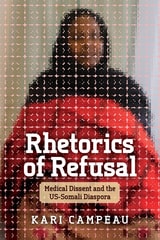
Rhetorics of Refusal
Medical Dissent and the US-Somali DiasporaKari Campeau
The Ohio State University Press, 2025
Rhetorics of Refusal focuses on a recent public health crisis—Minnesota’s 2017 measles outbreak—to recast vaccine refusals less as products of poor health literacy or disinformation and more as strategic and generative acts of noncompliance. The outbreak, which primarily affected unvaccinated Somali children, occurred at the nexus of declining vaccination rates, spiking autism concerns, antivaccination predation, and a fraying public health infrastructure. However, during a year-long ethnographic study at a Somali health center, Kari Campeau found that personal stories from parents offered a much different picture of vaccine refusal than the one painted by news media. Tracking refusals across four sites, Campeau argues for the importance of approaching refusals as rhetorical and participatory strategies that hold institutions accountable, press for change, and practice care within emergent biosocial communities. Moreover, she views refusal as necessary and potentially transformative in situations where refusers have little access to power or platform. By contextualizing refusals in longer cultural and political histories, Campeau unsettles traditional narratives of medical dissent while offering new entry points into discussions on racialized biopolitics, care, disability, and public health.
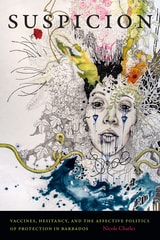
Suspicion
Vaccines, Hesitancy, and the Affective Politics of Protection in BarbadosNicole Charles
Duke University Press, 2021
Duke University Press Scholars of Color First Book Award recipient
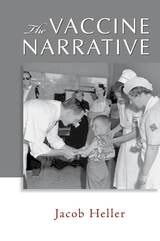
The Vaccine Narrative
Jacob Heller
Vanderbilt University Press, 2008
The author examines four cases that span the twentieth century--diphtheria, rubella, pertussis, and HIV/AIDS. Each case challenges the reader to examine how the values we attribute to vaccines influence their use. Diphtheria vaccination brought laboratory science into an existing narrative based on earlier vaccines. With rubella vaccine, researchers efficiently responded to an epidemic of birth defects while subtly changing the relationship between vaccination recipients and beneficiaries. Opposition to pertussis vaccine from average Americans created a narrative crisis, in which faith in vaccination as a whole seemed to be at risk. With more recent vaccines, including a hoped-for HIV/AIDS vaccine, the persistent cultural narrative continues to encourage vaccine development and use.