Results by title
4 books match the query 'Variation (Biology)'
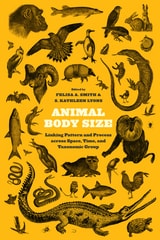
Animal Body Size
Linking Pattern and Process across Space, Time, and Taxonomic GroupEdited by Felisa A. Smith and S. Kathleen Lyons
University of Chicago Press, 2013
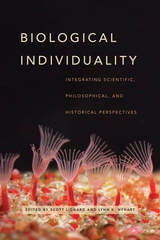
Biological Individuality
Integrating Scientific, Philosophical, and Historical PerspectivesEdited by Scott Lidgard and Lynn K. Nyhart
University of Chicago Press, 2017
Bringing together biologists, historians, and philosophers, this book provides a multifaceted exploration of biological individuality that identifies leading and less familiar perceptions of individuality both past and present, what they are good for, and in what contexts. Biological practice and theory recognize individuals at myriad levels of organization, from genes to organisms to symbiotic systems. We depend on these notions of individuality to address theoretical questions about multilevel natural selection and Darwinian fitness; to illuminate empirical questions about development, function, and ecology; to ground philosophical questions about the nature of organisms and causation; and to probe historical and cultural circumstances that resonate with parallel questions about the nature of society. Charting an interdisciplinary research agenda that broadens the frameworks in which biological individuality is discussed, this book makes clear that in the realm of the individual, there is not and should not be a direct path from biological paradigms based on model organisms through to philosophical generalization and historical reification.
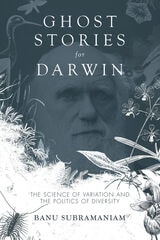
Ghost Stories for Darwin
The Science of Variation and the Politics of DiversityBanu Subramaniam
University of Illinois Press, 2014
Subramaniam reveals the histories of eugenics and genetics and their impact on the metaphorical understandings of difference and diversity that permeate common understandings of differences among people exist in contexts that seem distant from the so-called objective hard sciences. Journeying into interdisciplinary areas that range from the social history of plants to speculative fiction, Subramaniam uncovers key relationships between the life sciences, women's studies, evolutionary and invasive biology, and the history of ecology, and how ideas of diversity and difference emerged and persist in each field.
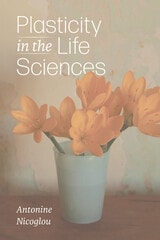
Plasticity in the Life Sciences
Antonine Nicoglou
University of Chicago Press, 2024
Plasticity has become an important topic in biology, with some even wondering if it has now acquired the theoretical importance in biology that the concept of the gene enjoyed at the beginning of the last century. In this historical and epistemological study, philosopher Antonine Nicoglou shows how the recurrence of the general idea of plasticity—throughout the history of the life sciences—indicates its essential role in the way we think about life processes. Although plasticity has become a key element in new evolutionary thinking, she argues, its role in contemporary biology is also not insignificant. Rather, as mobilized in contemporary biology, plasticity most often seeks to account for the specific nature of living systems.
The book is divided into two parts. The first takes up the history of plasticity from Aristotle to contemporary biology; the second part offers an original way of distinguishing between different phenomena described by “plasticity.” In the process, the author explores what has led some biologists to speak of plasticity as a way of overcoming genetic determinism.