Results by title
11 books match the query 'Varieties'
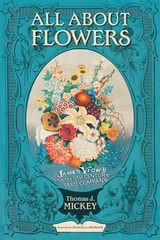
All about Flowers
James Vick's Nineteenth-Century Seed CompanyThomas J. Mickey
Ohio University Press, 2021
A nineteenth-century entrepreneur’s bold, innovative marketing helped transform flower gardens into one of America’s favorite hobbies.
“There is much that is hard and productive of sorrow in this sin-plagued world of ours; and, had we no flowers, I believe existence would be hard to be borne.” So states a customer’s 1881 letter—one of thousands James Vick regularly received. Vick’s business, selling flower seeds through the mail, wasn’t unique, but it was wildly successful because he understood better than his rivals how to engage customers’ emotions. He sold the love of flowers along with the flower seeds.
Vick was genuinely passionate about floriculture, but he also pioneered what we now describe as integrated marketing. He spent a mind-boggling $100,000 per year on advertising (mostly to women, his target demographic); he courted newspaper editors for free publicity; his educational guides presaged today’s content marketing; he recruited social influencers to popularize neighborhood gardening clubs; and he developed a visually rich communication and branding strategy to build customer loyalty and inflect their purchasing needs with purchasing desire.
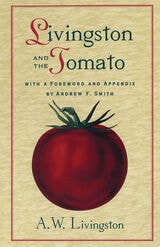
LIVINGSTON AND THE TOMATO
A.W. Livingston
The Ohio State University Press, 1998
Livingston's pioneering work; his entrepreneurial sons, who transformed his efforts into a successful business concern; the application of scientific principles to agricultural practices; and the tremendous growth of the canning and preserving industries are all reflections of the spirit of Ohio and America on the cusp of the twentieth century.
Seeking the Best Master
State Ownership in the Varieties of CapitalismMiklós Szanyi
Central European University Press, 2020

Studies in Josephus and the Varieties of Ancient Judaism
Louis H. Feldman Jubilee VolumeShaye J. D. Cohen
SBL Press, 2016
Now in paperback!
Former students, colleagues and friends of the eminent classicist and historian Louis H. Feldman are pleased to honor him with a Jubilee volume. While Feldman has long been considered an outstanding scholar of Josephus, his scholarly interests and research interests pertain to almost all aspects of the ancient world and Jews.
Features:
- Paperback format of an essential Brill resource
- Articles cover topics such as biblical interpretation, Judaism and Hellenism, Jews and Gentiles, history of the Mishnah and Talmud periods, and Jerusalem
- Contributors include the most prominent international scholars

The Master Cheesemakers of Wisconsin
James Norton and Becca Dilley
University of Wisconsin Press, 2009
Certification as a Master Cheesemaker typically takes almost fifteen years. An applicant must hold a cheesemaking license for at least ten years, create one or two chosen varieties of cheese for at least five years, take more than two years of university courses, consent to constant testing of their cheese and evaluation of their plant, and pass grueling oral and written exams to be awarded the prestigious title.
James Norton and Becca Dilley interviewed these dairy artisans, listened to their stories, tasted their cheeses, and explored the plants where they work. They offer here profiles of forty-three active Master Cheesemakers of Wisconsin, as well as a glossary of cheesemaking terms, suggestions of operations that welcome visitors for tours, tasting notes and suggested food pairings, and tasty nuggets (shall we say curds?) of information on everything to do with cheese.

The Varieties of Atheism
Connecting Religion and Its CriticsEdited by David Newheiser
University of Chicago Press, 2022
The Varieties of Atheism reveals the diverse nonreligious experiences obscured by the combative intellectualism of Sam Harris, Richard Dawkins, and Christopher Hitchens. In fact, contributors contend that narrowly defining atheism as the belief that there is no god misunderstands religious and nonreligious persons altogether. The essays show that, just as religion exceeds doctrine, atheism also encompasses every dimension of human life: from imagination and feeling to community and ethics. Contributors offer new, expansive perspectives on atheism’s diverse history and possible futures. By recovering lines of affinity and tension between particular atheists and particular religious traditions, this book paves the way for fruitful conversation between religious and non-religious people in our secular age.
Varieties of Civic Innovation
Deliberative, Collaborative, Network, and Narrative ApproachesJennifer Girouard
Vanderbilt University Press, 2014

Varieties of Innovation Systems
The Governance of Knowledge Transfer in EuropeMichael Ortiz
Campus Verlag, 2013
Varieties of Liberalism in Central America
Nation-States as Works in ProgressBy Forrest D. Colburn and Arturo Cruz S.
University of Texas Press, 2007
Why do some countries progress while others stagnate? Why does adversity strengthen some countries and weaken others? Indeed, in this era of unprecedented movement of people, goods, and ideas, just what constitutes a nation-state? Forrest Colburn and Arturo Cruz suggest how fundamental these questions are through an exploration of the evolution of Guatemala, El Salvador, Honduras, Nicaragua, and Costa Rica over the last quarter of a century, a period of intriguing, often confounding, paradoxes in Central America's development.
Offering an elegant defense of empiricism, Colburn and Cruz explore the roles of geography and political choice in constructing nations and states. Countries are shown to be unique: there are a daunting number of variables. There is causality, but not the kind that can be revealed in the laboratory or on the blackboard. Liberalism—today defined as democracy and unfettered markets—may be in vogue, but it has no inherent determinants. Democracy and market economies, when welded to the messy realities of individual countries, are compatible with many different outcomes. The world is more pluralistic in both causes and effects than either academic theories or political rhetoric suggest.
Varieties of Muslim Experience
Encounters with Arab Political and Cultural LifeLawrence Rosen
University of Chicago Press, 2008
In Varieties of Muslim Experience, anthropologist Lawrence Rosen explores aspects of Arab Muslim life that are, at first glance, perplexing to Westerners. He ranges over such diverse topics as why Arabs eschew portraiture, why a Muslim scientist might be attracted to fundamentalism, and why the Prophet must be protected from blasphemous cartoons. What connects these seemingly disparate features of Arab social, political, and cultural life? Rosen argues that the common thread is the importance Arabs place on the negotiation of interpersonal relationships—a link that helps to explain actions as seemingly unfathomable as suicide bombing and as elusive as Quranic interpretation.
Written with eloquence and a deep knowledge of the entire spectrum of Muslim experience, Rosen’s book will interest not only anthropologists and Islamicists but anyone invested in better understanding the Arab world.
Varieties of Social Imagination
Barbara Celarent
University of Chicago Press, 2017
Sociologist and AJS editor Andrew Abbott edited the Celarent essays, and in Varieties of Social Imagination, he brings the work together for the first time. Previously available only in the journal, the thirty-six meditations found here allow readers not only to engage more deeply with a diversity of thinkers from the past, but to imagine more fully a sociology—and a broader social science—for the future.