Results by title
9 books match the query 'Vegetables'
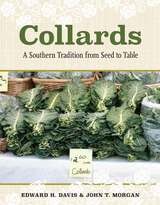
Collards
A Southern Tradition from Seed to TableEdward H. Davis and John T. Morgan
University of Alabama Press, 2015
The definitive survey of collards, an iconic southern food.
Food is essential to southern culture, and collard greens play a central role in the South’s culinary traditions. A feast to the famished, a reward to the strong, and a comfort to the weary, collards have long been held dear in the food-loving southern heart. In Collards: A Southern Tradition from Seed to Table, Edward H. Davis and John T. Morgan provide this emblematic and beloved vegetable the full-length survey its fascinating and complex history merits.
The book begins with collards’ obscure origins. Like a good detective story, the search for collards’ home country leads the authors both to Europe and West Africa, where they unravel a tale as surprising and complex as that of southern people themselves. Crossing back over the Atlantic, the authors traverse miles of American back roads, from Arkansas to Florida and from Virginia to Louisiana. They vividly recount visits to homes, gardens, grocers, farms, and restaurants where the many varieties of collards are honored, from the familiar green collards to the yellow cabbage collard and rare purple cultivars.
In uncovering the secrets of growing collards, the authors locate prize-winning patches of the plant, interview “seed savers,” and provide useful tips for kitchen gardeners. They also describe how collards made the leap from kitchen garden staple to highly valued commercial crop.
Collards captures the tastes, smells, and prize-winning recipes from the South’s premier collards festivals. They find collards at the homes of farmers, jazz musicians, governors, and steel workers. Kin to cabbage and broccoli but superior to both in nutritional value, collard greens transcend human divisions of black and white, rich and poor, sophisticated and rustic, and urban and rural.
Food trends may come and go, but collards are a tradition that southerners return to again and again. Richly illustrated in color, Collards demonstrates the abiding centrality of this green leafy vegetable to the foodways of the American South. In it, readers will rediscover an old friend.
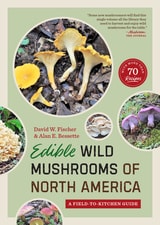
Edible Wild Mushrooms of North America
A Field-to-kitchen GuideBy David W. Fischer and Alan E. Bessette
University of Texas Press, 1992
Unusual shapes and colors make many mushrooms alluring to the eye, while the exotic flavors and textures of edible mushrooms are a gourmet delicacy for the palate. Yet many people never venture beyond the supermarket offerings, fearing that all other mushrooms are poisonous.
With amateur mushroom hunters especially in mind, David Fischer and Alan Bessette have prepared Edible Wild Mushrooms of North America. This field guide presents more than 100 species of the most delicious mushrooms, along with detailed information on how to find, gather, store, and prepare them for the table. More than 70 savory recipes, ranging from soups and salads to casseroles, canapes, quiches, and even a dessert, are included.
Throughout, the authors constantly emphasize the need for correct identification of species for safe eating. Each species is described in detailed, nontechnical language, accompanied by a list of key identifying characteristics that reliably rule out all but the target species. Superb color photographs also aid in identification. Poisonous "lookalikes" are described and illustrated, and the authors also assess the risks of allergic or idiosyncratic reactions to edible species and the possibilities of chemical or bacterial contamination.
Food Systems in an Unequal World
Pesticides, Vegetables, and Agrarian Capitalism in Costa RicaRyan E. Galt
University of Arizona Press, 2014
Food Systems in an Unequal World examines the agrochemical-dependent agriculture of Costa Rica and how its uneven regulation in export versus domestic markets affects Costa Rican vegetable farmers. Examining pesticide-dependent vegetable production within two food systems, the author shows that pesticide use is shaped by three main forces: agrarian capitalism, the governance of food systems throughout the commodity chain, and ecological dynamics driving local food production. Those processes produce unequal outcomes that disadvantage less powerful producers who have more limited choices than larger farmers, who usually have access to better growing environments and thereby can reduce pesticide use and production costs.
Garden Wisdom
Lessons Learned from 60 Years of GardeningJerry Apps
Wisconsin Historical Society Press, 2012
Step into the garden with writer and rural historian Jerry Apps. In this treasure trove of tips, recollections, and recipes, Jerry combines his hard-earned advice for garden success with a discussion of how tending a garden leads to a deeper understanding of nature and the land. From planning and planting to fending off critters and weeds, he walks us through the gardening year, imbuing his story with humor and passion and once again reminding us that working even a small piece of land provides many rewards.

My Vegetable Love
A Journal of a Growing SeasonCarl H. Klaus
University of Iowa Press, 2000
My Vegetable Love offers a detailed daily record of gardenng, loving, and living during a single growing season—from the first outdoor planting in early spring to the final fall harvest shortly after Thanksgiving. Yet Klaus describes far more than the toils and triumphs of tending vegetables, as his observations encompass the day-to-day changes in weather and wildlife as well as the life changes in his pets, his wife, and himself. As Patricia Hampl wrote, “Beneath the simplicity of this beguiling gardener's journal lies the captivating story of good life and true love. In the spirit of M. F. K. Fisher's writing about food and drink, Carl Klaus has found in his garden a model of the enduring passions of life and death.”
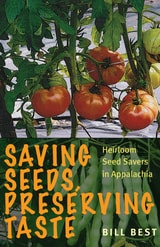
Saving Seeds, Preserving Taste
Heirloom Seed Savers in AppalachiaBill Best
Ohio University Press, 2013
The Brown Goose, the White Case Knife, Ora’s Speckled Bean, Radiator Charlie’s Mortgage Lifter—these are just a few of the heirloom fruits and vegetables you’ll encounter in Bill Best’s remarkable history of seed saving and the people who preserve both unique flavors and the Appalachian culture associated with them. As one of the people at the forefront of seed saving and trading for over fifty years, Best has helped preserve numerous varieties of beans, tomatoes, corn, squashes, and other fruits and vegetables, along with the family stories and experiences that are a fundamental part of this world. While corporate agriculture privileges a few flavorless but hardy varieties of daily vegetables, seed savers have worked tirelessly to preserve genetic diversity and the flavors rooted in the Southern Appalachian Mountains—referred to by plant scientists as one of the vegetative wonders of the world.
Saving Seeds, Preserving Taste will introduce readers to the cultural traditions associated with seed saving, as well as the remarkable people who have used grafting practices and hand-by-hand trading to keep alive varieties that would otherwise have been lost. As local efforts to preserve heirloom seeds have become part of a growing national food movement, Appalachian seed savers play a crucial role in providing alternatives to large-scale agriculture and corporate food culture. Part flavor guide, part people’s history, Saving Seeds, Preserving Taste will introduce you to a world you’ve never known—or perhaps remind you of one you remember well from your childhood.
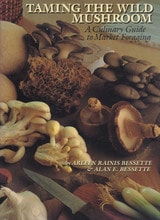
Taming the Wild Mushroom
A Culinary Guide to Market ForagingBy Arleen Rainis Bessette and Alan E. Bessette
University of Texas Press, 1993
Many mushroom hunters prefer to do their foraging in the marketplace, where all the mushrooms are clearly labeled and safely edible. With this fact in mind, Arleen and Alan Bessette have written Taming the Wild Mushroom, one of the first cooking guides devoted exclusively to choosing and preparing the mushroom species now available in many grocery stores, supermarkets, and natural and whole foods markets.
A dozen wild and cultivated species are covered in the book, including White Button, King Bolete, Oyster, Chanterelle, Morel, Paddy Straw, Wood Ear, Shiitake, Enokitake, White Matsutake, Black Truffle, and Wine-cap Stropharia. Easy-to-understand descriptions and excellent color photographs of each species help market foragers choose mushrooms in peak condition. Fifty-seven original, species-specific recipes, from appetizers, soups, and salads to meat and vegetarian entrees to sauces and accompaniments, offer dozens of ways to savor the familiar and exotic flavors of these mushrooms. A mouth-watering photograph accompanies each recipe.
Vegetables for the Gourmet Gardener
A Practical Resource from the Garden to the TableSimon Akeroyd
University of Chicago Press, 2014
A feast for the eyes and the table, this user-friendly resource traverses the realms of both the garden and the kitchen, addressing the cultivation, storage, and preparation of nearly seventy useful vegetables. Practical growing tips, fascinating histories, nutritional information, and classic recipes appear alongside botanical illustrations drawn from the Royal Horticultural Society’s cherished collection. With both familiar varieties and novel options, Vegetables for the Gourmet Gardener will inspire you to create a world of new shapes, colors, and tastes.
Vegetables
A BiographyEvelyne Bloch-Dano
University of Chicago Press, 2012
From Michael Pollan to locavores, Whole Foods to farmers' markets, today cooks and foodies alike are paying more attention than ever before to the history of the food they bring into their kitchens—and especially to vegetables. Whether it’s an heirloom tomato, curled cabbage, or succulent squash, from a farmers' market or a backyard plot, the humble vegetable offers more than just nutrition—it also represents a link with long tradition of farming and gardening, nurturing and breeding.
In this charming new book, those veggies finally get their due. In capsule biographies of eleven different vegetables—artichokes, beans, chard, cabbage, cardoons, carrots, chili peppers, Jerusalem artichokes, peas, pumpkins, and tomatoes—Evelyne Bloch-Dano explores the world of vegetables in all its facets, from science and agriculture to history, culture, and, of course, cooking. From the importance of peppers in early international trade to the most recent findings in genetics, from the cultural cachet of cabbage to Proust’s devotion to beef-and-carrot stew, to the surprising array of vegetables that preceded the pumpkin as the avatar of All Hallow’s Eve, Bloch-Dano takes readers on a dazzling tour of the fascinating stories behind our daily repasts.
Spicing her cornucopia with an eye for anecdote and a ready wit, Bloch-Dano has created a feast that’s sure to satisfy gardeners, chefs, and eaters alike.