Results by title
6 books match the query 'Vegetarianism'
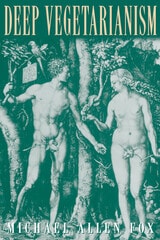
Deep Vegetarianism
Michael Fox
Temple University Press, 1999
Challenging the basic assumptions of a meat-eating society, Deep Vegetarianism is a spirited and compelling defense of a vegetarian lifestyle. Considering all of the major arguments both for and against vegetarianism and the habits of meat-eaters, vegetarians, and vegans alike, Michael Allen Fox addresses vegetarianism's cultural, historical, and philosophical background; details vegetarianism's impact on one's living and thinking; and relates vegetarianism to classical and recent defenses of the moral status of animals.
Demonstrating how a vegetarian diet is related to our awareness of the world and our ethical outlook on life, Fox looks at the different kinds of vegetarian commitments people make and their reasons for making them. In chapters that address such issues as the experiences, emotions, and grounds that are part of choosing vegetarianism, Fox discusses not only good health, animal suffering, and the environmental impacts of meat production, but such issues as the meaning of food, world hunger, religion and spirituality, and, significantly, the links share between vegetarianism and other human rights movements and ideologies, particularly feminism. In an extensive chapter that addresses arguments made by advocates of meat-eating, Fox speaks to claims of humans as natural carnivores, animals as replaceable, and vegetarians as anti-feminist. He also addresses arguments surrounding the eating habits of indigenous peoples, eating free-range animals, and carnivorous behavior among animals. The most complete examination of the vegetarian outlook to date, Deep Vegetarianism reveals the broad range of philosophical views that contribute to such a choice. It recognizes, and calls for, a conscious awareness of -- and an individual responsibility to -- the issues that exist in the moral, political, and social spheres of our existence.
With its lively and controversial discussion, Deep Vegetarianism promises to appeal to anyone looking to explore the relationship between dietary choice, lifestyle, the treatment of animals and the environment, and personal ethical responsibility. It will also be particularly useful for students and teachers of moral philosophy, ethics, religion, comparative cultures, ecology, and feminism.
[more]
Everyone Is NOT Doing It
Abstinence and Personal IdentityJamie L. Mullaney
University of Chicago Press, 2005
Labels like vegan, virgin, or nonsmoker get thrown around to identify forms of abstinence, but for many abstainers such labels are also proud declarations of who they are. Setting aside the moral debates and psychological assessments surrounding abstinence, Jamie L. Mullaney here asks why it is that the act of not doing something plays such a crucial role in the formation of our personal identities.
Based on interviews with individuals who abstain from habits as diverse as sex, cigarettes, sugar, and technology, Everyone Is NOT Doing It identifies four different types of abstainers: quitters; those who have never done something and never will; those who haven't done something yet, but might in the future; and those who are not doing something temporarily. Mullaney assesses the commonalities that bind abstainers, as well as how perceptions of abstinence change according to social context, age, and historical era. In contrast to such earlier forms of abstinence as social protest, entertainment, or an instrument of social stratification, not doing something now gives people a more secure sense of self by offering a more affordable and manageable identity in a world of ever-expanding options.
Based on interviews with individuals who abstain from habits as diverse as sex, cigarettes, sugar, and technology, Everyone Is NOT Doing It identifies four different types of abstainers: quitters; those who have never done something and never will; those who haven't done something yet, but might in the future; and those who are not doing something temporarily. Mullaney assesses the commonalities that bind abstainers, as well as how perceptions of abstinence change according to social context, age, and historical era. In contrast to such earlier forms of abstinence as social protest, entertainment, or an instrument of social stratification, not doing something now gives people a more secure sense of self by offering a more affordable and manageable identity in a world of ever-expanding options.
[more]
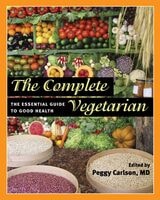
The Complete Vegetarian
The Essential Guide to Good HealthEdited by Peggy Carlson M.D.
University of Illinois Press, 2009
The Complete Vegetarian makes important scientific connections between good health and vegetarianism after citing health concerns as the number one reason many people adopt a vegetarian diet. Peggy Carlson examines the vegetarian diet’s impact on chronic diseases and serves as a nutritional guide and meal-planning resource for many health professionals and regular consumers. Vegetarian nutritionists’ and medical doctors’ cutting-edge research find that an absence of meat is the only factor that accounts for the health effects of a vegetarian diet, but also a lower saturated fat and more fiber, antioxidants, and unsaturated fat count than other diets.
Essential and in-depth The Complete Vegetarian is an invaluable guide for health professionals and the growing number of people who have adopted or want to adopt a vegetarian lifestyle.
[more]
The Philosophy of Vegetarianism
Daniel A. Dombrowski
University of Massachusetts Press, 1984
The idea that it is morally wrong to eat animals held sway for about one thousand years among some of the most prominent ancient Greek philosophers, including Pythagoras, Empedocles, Theophrastus, Plotinus, Plutarch, Porphyry, and, perhaps, Plato. The idea then died out for almost seventeen-hundred years. Since the 1970s, however, there has been a resurgence of interest in vegetarianism, marked by lively debates and the emergence of a substantial literature in the form of scholarly books and articles.
Daniel A. Dombrowski uses the tools and insights of these contemporary debates in order to better understand the strengths and weaknesses of ancient philosophical vegetarianism. He also uses the wisdom of the Greek vegetarians as an Archimedean point from which to critique both the opponents and the defenders of contemporary philosophical vegetarianism. The book includes an annotated bibliography of the current debates in this burgeoning field of scholarship.
Daniel A. Dombrowski uses the tools and insights of these contemporary debates in order to better understand the strengths and weaknesses of ancient philosophical vegetarianism. He also uses the wisdom of the Greek vegetarians as an Archimedean point from which to critique both the opponents and the defenders of contemporary philosophical vegetarianism. The book includes an annotated bibliography of the current debates in this burgeoning field of scholarship.
[more]
Through a Vegan Studies Lens
Textual Ethics and Lived ActivismLaura Wright
University of Nevada Press, 2019
Interest in the vegan studies field continues to grow as veganism has become increasingly visible via celebrity endorsements and universally acknowledged health benefits, and veganism and vegan characters are increasingly present in works of art and literature. Through a Vegan Studies Lens broadens the scope of vegan studies by engaging in the mainstream discourse found in a wide variety of contemporary works of literature, popular cultural representations, advertising, and news media.
Veganism is a practice that allows for environmentally responsible consumer choices that are viewed, particularly in the West, as oppositional to an economy that is largely dependent upon big agriculture. This groundbreaking collection exposes this disruption, critiques it, and offers a new roadmap for navigating and reimaging popular culture representations on veganism. These essays engage a wide variety of political, historical, and cultural issues, including contemporary political and social circumstances, emergent veganism in Eastern Europe, climate change, and the Syrian refugee crisis, among other topics.
Through a Vegan Studies Lens significantly furthers the conversation of what a vegan studies perspective can be and illustrates why it should be an integral part of cultural studies and critical theory. Vegan studies is inclusive, refusing to ignore the displacement, abuse, and mistreatment of nonhuman animals. It also looks to ignite conversations about cultural oppression.
[more]
Vegetarianism
Movement Or Moment: Promoting A Lifestyle For Cult ChangeDonna Maurer
Temple University Press, 2002
Vegetarianism seems to be increasing in popularity and acceptance in the United States and Canada, yet, quite surprisingly, the percentage of the population practicing vegetarian diets has not changed dramatically over the past 30 years. People typically view vegetarianism as a personal habit or food choice, even though organizations in North America have been promoting vegetarianism as a movement since the 1850s. This book examines the organizational aspects of vegetarianism and tries to explain why the predominant movement strategies have not successfully attracted more people to adopt a vegetarian identity.Vegetarianism: Movement or Moment? is the first book to consider the movement on a broad scale from a social science perspective. While this book takes into account the unique history of North American vegetarianism and the various reasons why people adopt vegetarian diets, it focuses on how movement leaders' beliefs regarding the dynamics of social change contributes to the selection of particular strategies for attracting people to vegetarianism. In the context of this focus, this book highlights several controversies about vegetarianism that have emerged in nutrition and popular media over the past 30 years.
[more]