Results by title
3 books match the query 'Veracruz (Veracruz-Llave, Mexico)'
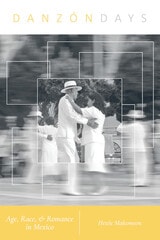
Danzón Days
Age, Race, and Romance in MexicoHettie Malcomson
University of Illinois Press, 2023
Winner of the 2024 BFE Book Prize (British Forum for Ethnomusicology)
Older people negotiating dance routines, intimacy, and racialized differences provide a focal point for an ethnography of danzón in Veracruz, the Mexican city closely associated with the music-dance genre. Hettie Malcomson draws upon on-site research with semi-professional musicians and amateur dancers to reveal how danzón connects, and does not connect, to blackness, joyousness, nostalgia, ageing, and romance. Challenging pervasive utopian views of danzón, Malcomson uses the idea of ambivalence to explore the frictions and opportunities created by seemingly contrary sentiments, ideas, sensations, and impulses. Interspersed with experimental ethnographic vignettes, her account takes readers into black and mestizo elements of local identity in Veracruz, nostalgic and newer styles of music and dance, and the friendships, romances, and rivalries at the heart of regular danzón performance and its complex social world.
Fine-grained and evocative, Danzón Days journeys to one of the genre’s essential cities to provide new perspectives on aging and romance and new explorations of nostalgia and ambivalence.
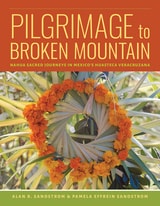
Pilgrimage to Broken Mountain
Nahua Sacred Journeys in Mexico's Huasteca Veracruzanaby Alan R. Sandstrom & Pamela Effrein Sandstrom illustrated by Michael K. Aakhus, Ana Laura Ávila-Myers & Michael A. Sandstrom
University Press of Colorado, 2022
Pilgrimage to Broken Mountain contains richly detailed descriptions and analyses of ritual procedures as well as translations from the Nahuatl of core myths, chants performed before decorated altars, and statements from participants. Particular emphasis is placed on analyzing the role of sacred paper figures that are produced by the thousands for each pilgrimage. The work contains drawings of these cuttings of spirit entities along with hundreds of color photographs illustrating how they are used throughout the pilgrimages. The analysis reveals the monist philosophy that underlies Nahua religious practice in which altars, dancing, chanting, and the paper figures themselves provide direct access to the sacred.
In the context of their pilgrimage traditions, the ritual practices of Nahua religion show one way that people interact effectively with the forces responsible for not only their own prosperity but also the very survival of humanity. A magnum opus with respect to Nahua religion and religious practice, Pilgrimage to Broken Mountain is a significant contribution to several fields, including but not limited to anthropology, Indigenous literatures of Mesoamerica, Nahuatl studies, Latinx and Chicanx studies, and religious studies.
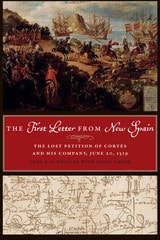
The First Letter from New Spain
The Lost Petition of Cortés and His Company, June 20, 1519By John Schwaller and Helen Nader
University of Texas Press, 2014
The founding of la Villa Rica de la Veracruz (the rich town of the True Cross) is prominently mentioned in histories of the conquest of Mexico, but scant primary documentation of the provocative act exists. During a research session at the Spanish archives, when John Schwaller discovered an early-sixteenth-century letter from Veracruz signed by the members of Cortés’s company, he knew he had found a trove of historical details. Providing an accessible, accurate translation of this pivotal correspondence, along with in-depth examinations of its context and significance, The First Letter from New Spain gives all readers access to the first document written from the mainland of North America by any European, and the only surviving original document from the first months of the conquest.
The timing of Cortés’s Good Friday landing, immediately before the initial assault on the Aztec Empire, enhances the significance of this work. Though the expedition was conducted under the authority of Diego Velázquez, governor of Cuba, the letter reflects an attempt to break ties with Velázquez and form a strategic alliance with Carlos V, the Holy Roman Emperor and King of Spain. Brimming with details about the events surrounding Veracruz’s inception and accompanied by mini-biographies of 318 signers of the document—socially competitive men who risked charges of treason by renouncing Velázquez—The First Letter from New Spain gives evidence of entrepreneurship and other overlooked traits that fueled the conquest.