Results by title

26 books match the query 'Vermont'

cover of A Matter of Life and Death: Hunting in Contemporary Vermont

A Matter of Life and Death

Hunting in Contemporary Vermont

Marc Boglioli

University of Massachusetts Press, 2009

American hunters occupy a remarkably complex place in this country's cultural and political landscape. On the one hand, they are cast as perpetrators of an anachronistic and unnecessary assault on innocent wildlife. On the other hand, they are lauded as exemplars of no-nonsense American rugged individualism. Yet despite the passion that surrounds the subject, we rarely hear the unfiltered voices of actual hunters in discussions of hunting.

In A Matter of Life and Death, anthropologist Marc Boglioli puts a human face on a group widely regarded as morally suspect, one that currently stands in the crossfire of America's so-called culture wars. Drawing on extensive ethnographic fieldwork in Addison County, Vermont, which took him from hunting camps and sporting goods stores to local bars and kitchen tables, Boglioli focuses on how contemporary hunters, women as well as men, understand their relationship to their prey. He shows how hunters' attitudes toward animals flow directly from the rural lifeways they have continued to maintain in the face of encroaching urban sensibilities. The result is a rare glimpse into a culture that experiences wild animals in a way that is at once violent, consumptive, and respectful, and that regards hunting as an enduring link to a vanishing past. It is a book that will challenge readers—hunters, non-hunters, and anti-hunters alike—to reconsider what constitutes a morally appropriate relationship with the non-human residents of this planet.
[more]
cover of Ballykilcline Rising: From Famine Ireland to Immigrant America

Ballykilcline Rising

From Famine Ireland to Immigrant America

Mary Lee Dunn Maguire

University of Massachusetts Press, 2008

In 1847, in the third year of Ireland's Great Famine and the thirteenth year of their rent strike against the Crown, hundreds of tenant farmers in Ballykilcline, County Roscommon, were evicted by the Queen's agents and shipped to New York. Mary Lee Dunn tells their story in this meticulously researched book. Using numerous Irish and U.S. sources and with descendants' help, she traces dozens of the evictees to Rutland, Vermont, as railroads and marble quarries transformed the local economy. She follows the immigrants up to 1870 and learns not only what happened to them but also what light American experience and records cast on their Irish “rebellion.”

Dunn begins with Ireland's pre-Famine social and political landscape as context for the Ballykilcline strike. The tenants had rented earlier from the Mahons of Strokestown, whose former property now houses Ireland's Famine Museum. In 1847, landlord Denis Mahon evicted and sent nearly a thousand tenants to Quebec, where half died before or just after reaching the Grosse Ile quarantine station. Mahon was gunned down months later. His murder provoked an international controversy involving the Vatican. An early suspect in the case was a man from Ballykilcline.

In the United States, many of the immigrants resettled in clusters in several locations, including Vermont, Illinois, Iowa, Maryland, and New York. In Vermont they found jobs in the marble quarries, but some of them lost their homes again in quarry labor actions after 1859. Others prospered in their new lives. A number of Ballykilcline families who stopped in Rutland later moved west; one had a son kidnapped by Indians in Minnesota. Readers who have Irish Famine roots will gain a sense of their own “back story” from this account of Ireland and the native Irish, and scholars in the field of immigration studies will find it particularly useful.

[more]
cover of Bernie Sanders and the Boundaries of Reform: Socialism in Burlington

Bernie Sanders and the Boundaries of Reform

Socialism in Burlington

W. J. Conroy

Temple University Press, 2016

Today, Bernie Sanders is a household name, a wildly popular presidential candidate and an icon for progressive Democrats in the United States. But back in the 1980s, this “democratic socialist”—though some folks would prefer the term “social democrat”—was mayor of Burlington, Vermont, where his administration attempted radical reforms. Some efforts were successful, but when a waterfront deal failed, it was not due to Sanders' efforts; he would rather compromise and have a net gain than be an ideological purist.
 
In his preface to this reissue of the 1990 book, Challenging the Boundaries of Reform, W. J. Conroy reflects on the recent legacy of Sanders, his Agenda for America, and his appeal to young voters. His book then looks back to identify Sanders’ experience in Burlington by examining several case studies that unfolded amidst a conservative trend nationally, an unsympathetic state government, and a hostile city council.
 
Ultimately, Conroy asks what lessons can be drawn from the case of Burlington that would aid the American left in its struggle to capture both government and civil society? 

 
[more]
cover of Beyond Adversary Democracy

Beyond Adversary Democracy

Jane J. Mansbridge

University of Chicago Press, 1983

"Beyond Adversary Democracy should be read by everyone concerned with democratic theory and practice."—Carol Pateman, Politics

"Sociologists recurrently complain about how seldom it is that we produce books that combine serious theorizing about important issues of public policy with original and sensitive field research. Several rounds of enthusiastic applause, then, are due Jane Mansbridge . . . for having produced a dense and well written book whose subject is nothing less ambitious than the theory of democracy and its problems of equality, solidarity, and consensus. Beyond Adversary Democracy, however, is not simply a work of political theory; Mansbridge explores her abstract subject matter by close studies (using ethnographic, documentary, and questionnaire methods) of two small actual democracies operating at their most elemental American levels (1) a New England town meeting ("Selby," Vermont) and (2) an urban crisis center ("Helpline"), whose 41 employees shared a New Left-Counterculture belief in participatory democracy and consensual decision-making. [Mansbridge] is a force to contend with. It is in our common interest that she be widely read."—Bennett M. Berger, Contemporary Sociology

[more]
cover of Daisy Turner's Kin: An African American Family Saga

Daisy Turner's Kin

An African American Family Saga

Jane C. Beck

University of Illinois Press, 2015

A daughter of freed African American slaves, Daisy Turner became a living repository of history. The family narrative entrusted to her--"a well-polished artifact, an heirloom that had been carefully preserved"--began among the Yoruba in West Africa and continued with her own century and more of life.
 
In 1983, folklorist Jane Beck began a series of interviews with Turner, then one hundred years old and still relating four generations of oral history. Beck uses Turner's storytelling to build the Turner family saga, using at its foundation the oft-repeated touchstone stories at the heart of their experiences: the abduction into slavery of Turner's African ancestors; Daisy's father Alec Turner learning to read; his return as a soldier to his former plantation to kill his former overseer; and Daisy's childhood stand against racism. Other stories re-create enslavement and her father's life in Vermont--in short, the range of life events large and small, transmitted by means so alive as to include voice inflections. Beck, at the same time, weaves in historical research and offers a folklorist's perspective on oral history and the hazards--and uses--of memory.

Publication of this book is supported by grants from the Andrew W. Mellon Foundation and the L. J. and Mary C. Skaggs Folklore Fund.

[more]
cover of Deluge: Tropical Storm Irene, Vermont’s Flash Floods, and How One Small State Saved Itself

Deluge

Tropical Storm Irene, Vermont’s Flash Floods, and How One Small State Saved Itself

Peggy Shinn

University Press of New England, 2013

On August 28, 2011, after pounding the Caribbean and the U.S. Eastern seaboard for more than a week, Hurricane Irene finally made landfall in New Jersey. As the storm headed into New England, it was quickly downgraded to a tropical storm. And by Sunday afternoon, national news outlets were giving postmortems on the damage. Except for some flooding in low-lying areas, New York City—Irene’s biggest target—had escaped its worst-case scenario. Story over. But the story wasn’t over. As Irene’s eye drifted north, its bands of heavy rains twisted westward over Vermont’s Green Mountains. The mountains forced these bands upward, wringing the rain out of them like water from a sponge. Streams and rivers were transformed into torrents of brown water and debris, gouging mountainsides, reshaping valleys, washing out roads, pulling apart bridges, and carrying away homes, livestock, and automobiles. For weeks, mountain towns were isolated, with no way in or out, and thousands of people were left homeless. In the immediate aftermath of the disaster, it fell on the shoulders of ordinary Vermonters to help victims and rebuild the state. Deluge is the complete story of the floods, the rescue, and the recovery, as seen through the eyes of the people who lived through them: Wilmington’s Lisa Sullivan, whose bookstore was flooded, and town clerk Susie Haughwout, who saved the town records; Tracy Payne, who lost her home in Jamaica—everything in it, and the land on which it sat; Geo Honigford in South Royalton, who lost his crops, but put his own mess on hold to help others in the town; the men who put U.S. Route 4 back together at breakneck speed; and the entire village of Pittsfield, completely isolated after the storm, and its inspirational story of real community.
[more]
cover of From Vermont to Michigan: Correspondence of James Burrill Angell: 1869-1871

From Vermont to Michigan

Correspondence of James Burrill Angell: 1869-1871

Edited by Wilfred B. Shaw

University of Michigan Press, 1936
From Vermont to Michigan: Correspondence of James Burrill Angell 1869-1871 is a collection of letters edited by Wilfred B. Shaw and published by the University of Michigan Press in 1936. The book provides a detailed account of James Burrill Angell's decision-making process before accepting the presidency of the University of Michigan. It includes correspondence with various individuals, including insights from his son James Rowland Angell in a foreword, capturing Angell's qualities, the consideration of educational standards, and the influence of the New England perspective on the Western frontier. The letters reveal the intricate process and diverse opinions surrounding Angell's eventual acceptance, as well as the initial hesitations and the search for the right candidate. Illustrated and meticulously edited, this compilation serves as a significant historical document, shedding light on the educational landscape of the time and Angell's pivotal role in shaping the future of the University of Michigan.
[more]
cover of Going Up the Country: When the Hippies, Dreamers, Freaks, and Radicals Moved to Vermont

Going Up the Country

When the Hippies, Dreamers, Freaks, and Radicals Moved to Vermont

Yvonne Daley

University Press of New England, 2018
Going Up the Country is part oral history, part nostalgia-tinged narrative, and part clear-eyed analysis of the multifaceted phenomena collectively referred to as the counterculture movement in Vermont. This is the story of how young migrants, largely from the cities and suburbs of New York and Massachusetts, turned their backs on the establishment of the 1950s and moved to the backwoods of rural Vermont, spawning a revolution in lifestyle, politics, sexuality, and business practices that would have a profound impact on both the state and the nation. The movement brought hippies, back-to-the-landers, political radicals, sexual libertines, and utopians to a previously conservative state and led us to today’s farm to table way of life, environmental consciousness, and progressive politics as championed by Bernie Sanders.
[more]
cover of Hill Farms: Surviving Modern Times in Early Twentieth-Century Vermont

Hill Farms

Surviving Modern Times in Early Twentieth-Century Vermont

Dona Brown

University of Massachusetts Press, 2025

There is a stubborn myth that has persisted for almost two centuries: the narrative of the abandoned farm in the rural American northeast. In Hill Farms, historian Dona Brown confronts this myth of rural decline with a focus on Jamaica, Vermont, a small town in the hills west of Brattleboro. Through this town’s history, she reveals a more complex economic and environmental narrative, a story of the continued use of traditional farm methods despite the growing power of modernization and demands for increased efficiencies. 

Brown examines the records of a 1930 study by the University of Vermont’s now infamous Eugenics Survey, part of a flood of problematic investigations of Vermont rural life at the time, wherein eugenicists interviewed residents in every Jamaica household about crops, incomes, and housing conditions. These researchers from various disciplines saw in Jamaica and towns like it poverty and ignorance rather than a commitment to farming as a modest but sustainable way of life. Extensive handwritten notes from the Eugenics Survey provide a remarkable glimpse into the daily lives and practices of these upland farmers, revealing the value in maintaining older, less intensive farming practices and shedding new light on the social and environmental history of the time. As debates around farming and rural life intensified during the Great Depression, advocates beyond Vermont rose to the defense of traditional farms. Though industrialized agriculture ultimately prevailed, the old farming strategies cultivated by these upcountry residents continue to attract adherents in the face of new challenges to traditional farming in our own times. 
[more]
cover of Inventing Ethan Allen

Inventing Ethan Allen

John J. Duffy and H. Nicholas Muller

University Press of New England, 2014
Since 1969, Ethan Allen has been the subject of three biographical studies, all of which indulge in sustaining and revitalizing the image of Allen as a physically imposing Vermont yeoman, a defender of the rights of Americans, an eloquent military hero, and a master of many guises, from rough frontiersman to gentleman philosopher. Seeking the authentic Ethan Allen, the authors of this volume ask: How did that Ethan Allen secure his place in popular culture? As they observe, this spectacular persona leaves little room for a more accurate assessment of Allen as a self-interested land speculator, rebellious mob leader, inexperienced militia officer, and truth-challenged man who would steer Vermont into the British Empire. Drawing extensively from the correspondence in Ethan Allen and his Kin and a wide range of historical, political, and cultural sources, Duffy and Muller analyze the factors that led to Ethan Allen’s two-hundred-year-old status as the most famous figure in Vermont’s past. Placing facts against myths, the authors reveal how Allen acquired and retained his iconic image, how the much-repeated legends composed after his death coincide with his life, why recollections of him are synonymous with the story of Vermont, and why some Vermonters still assign to Allen their own cherished and idealized values.
[more]
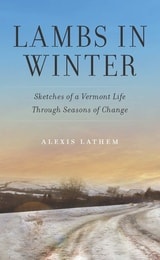
cover of Lambs in Winter: Sketches of a Vermont Life Through Seasons of Change

Lambs in Winter

Sketches of a Vermont Life Through Seasons of Change

Alexis Lathem

University of Massachusetts Press, 2025

Finding hope in a small farm, an engaged community, and an age-old connection to the earth

After half a lifetime spent moving from place to place, Alexis Lathem at last settled down with her husband on a small farm near Vermont’s largest city. The lyric essays of Lambs in Winter take readers through the seasonal cycles of raising sheep and hens and growing fruits and vegetables while confronting the challenges of winter storms, summer floods, invasive weeds, and pests and diseases.

Ever conscious of her place in a historically colonized and ecologically degraded landscape, Lathem wrestles with ethical questions that come to many rural dwellers who—following Thoreau—set out to “live deliberately,” in a time of climate crisis, persistent racial inequity, and growing economic inequality. Likewise, she grapples with the moral complexities of small-scale animal husbandry. Through her efforts at self-provisioning, without holding illusions of the self-reliant individual, Lathem finds herself deeply embedded in the community and reliant on others, especially as her region deals with repeated catastrophic flooding brought on by climate change.

Through elegant prose and insightful investigations into pressing contemporary issues, Lathem evokes the world of her farm and the surrounding countryside with a spiritual awareness of the human journey on this earth. Living in place, attuned to the unfolding changes in the world around her, gives her much to grieve, but the pages of Lambs in Winter are luminous with moments of joy and beauty.

[more]
cover of Legalizing Gay Marriage: Vermont And The National Debate

Legalizing Gay Marriage

Vermont And The National Debate

Michael Mello, foreword by David Chambers

Temple University Press, 2004

Every day seems to bring news of legal challenges to existing marriage laws and the constitutionality of any form of union for same-sex partners. In this timely and accessible book, Michael Mello argues that the public debates and political battles that have divided Vermont and Massachusetts will be repeated across the country as state after state confronts the issue of legalizing gay marriage.Michael Mello examines recent landmark decisions in state and federal high courts granting civil rights protections to homosexuals. In Vermont, the Supreme Court's recommendation that legislators recognize the "common humanity" that links all individuals irrespective of sexual identity and consider the question of same-sex marriage resulted in the first state legislation to establish civil union. In Massachusetts, the court's ruling that gay marriage is a right protected by the state constitution has plunged the legislature into a contentious debate about a constitutional amendment. In both states, as in California and New York, public discussion of equal civil protections for gays and lesbians soon become mired in contending views of morality, religion, social mores, and the sanctity of heterosexual marriage.Mello regards the widespread and virulent opposition to any form of same-sex unions as proof that in Vermont, as elsewhere, homosexuals are indeed a "despised minority" in need of the law's protection. Thus, civil union laws represent only a partial victory because they create a separate and inherently unequal category of relationships for gay people. Mello's analysis of the issues provides an invaluable guide to the battles being waged in state legislatures and by politicians at the national level.
[more]
cover of Marie Blythe

Marie Blythe

Howard Frank Mosher

University Press of New England, 2012
Howard Frank Mosher is one of the best-loved writers of northern New England, one who has “created a literary landscape as textured as anything produced by the U. S. Geological Survey,” according to USA Today. His “greatest gift,” says the Washington Post, is “his talent for creating lively, living characters.” One of his most vivid and memorable characters is Marie Blythe. At the dawn of the twentieth century, a young girl with a felicitous name immigrates to Vermont from French Canada. She grows up confronting the grim realities of life with an indomitable spirit—nursing victims of a tuberculosis epidemic, enduring a miscarriage alone in the wilderness, and coping with the uncertainties of love. In Marie Blythe, Mosher has created a strong-minded, passionate, and truly memorable heroine.
[more]
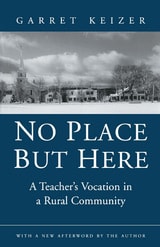
cover of No Place But Here: A Teacher’s Vocation in a Rural Community

No Place But Here

A Teacher’s Vocation in a Rural Community

Garret Keizer

University Press of New England, 1996
Weaving anecdotal narrative with trenchant reflections on his profession, Garret Keizer offers one teacher's answer to the hue and cry over the crisis in education. An English teacher in rural Vermont, he writes of the opposing realities he faces every day: the promise and energy of the young and the oppressive effect of their economic disadvantages; the beauty of the countryside and its people and the harsh, sometimes ugly edge of life there; the need for discipline and the importance of rebellion. In exploring the demands peculiar to his own community, Keizer movingly depicts the difficulties-some triumphantly overcome, some overwhelming-that form the heart of teaching anywhere.
[more]
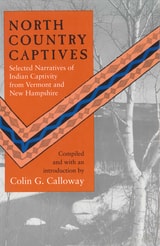
cover of North Country Captives: Selected Narratives of Indian Captivity from Vermont and New Hampshire

North Country Captives

Selected Narratives of Indian Captivity from Vermont and New Hampshire

Edited by Colin G. Calloway

University Press of New England, 1992

Revealing firsthand narratives of Indian captivity from eighteenth-century New Hampshire and Vermont. Narratives of Europeans who experienced Indian captivity represent one of the oldest genres of American literature. They are often credited with establishing the stereotype of Indians as cruel and bloodthirsty. While early southern New England accounts were heavily influenced by a dominant Puritan interpretation which had little room for individual and cultural distinctions, later northern New England narratives show growing independence from this influence. The eight narratives selected for this book challenge old stereotypes and provide a clearer understanding of the nature of captive taking. Indians used captives to replace losses in their tribes and families, and also to participate in the French and British ransom market. These stories portray Indian captors as individuals with a unique culture and offer glimpses of daily life in frontier communities. Calloway complements them with valuable historical background material. His book will appeal especially to readers interested in Native American peoples and life on the north country frontier of Vermont and New Hampshire.
[more]
cover of Playing God in the Meadow: How I Learned to Admire My Weeds

Playing God in the Meadow

How I Learned to Admire My Weeds

Martha Leb Molnar

University of Massachusetts Press, 2022

After decades of fantasizing and saving, of working multiple jobs and embracing frugality in the midst of Manhattan, Martha Leb Molnar and her husband had found their parcel of land. Determined to turn an overgrown and unproductive Vermont apple orchard into a thriving and beautiful landscape, they decided to restore this patch of land to a pristine meadow and build a safe haven for their family and nearby wildlife.

Once they cleared the gnarled and dying trees away, Molnar was forced to wage war on the invasive species that had sprung up around the property. Propelled by the heated debates surrounding non-native species and her own complicated family history and migration, she was driven to research the Vermont landscape, turning to scientific literature, experts in botany and environmental science, and locals who have long tended the land in search of answers. At turns funny, thoughtful, and conversational, Playing God in the Meadow follows this big city transplant as she learns to make peace with rural life and an evolving landscape that she cannot entirely control.

[more]
cover of Roxana's Children: The Biography of a Nineteenth-Century Vermont Family

Roxana's Children

The Biography of a Nineteenth-Century Vermont Family

Lynn A. Bonfield

University of Massachusetts Press, 1995

Roxana's Children is a well-researched and well written biography of Roxana Brown Walbridge Watts (1802-62) and her descendants. The book is constructed from the descendants' 300 preserved letters, 30 diaries, and photographs from the family's village life during 19th-century Vermont. Bonfield and Morrison use these sources to discuss social change and movement in American life.
[more]
cover of Senator Leahy: A Life in Scenes

Senator Leahy

A Life in Scenes

Philip Baruth

University Press of New England, 2017

Having vaulted to a position in the United States Senate at the tender age of thirty-four, Patrick Leahy now claims the longest tenure of any member of that institution still serving—and he was third in line for the presidency when the Democrats held control. Few recent American lawmakers have watched history unfold so at such close range; fewer still have influenced it so powerfully. Philip Baruth brings a thriller-like intensity to the most spectacular of those scenes: the 9/11 attack on the US capital, the contentious drafting of the Patriot Act, the ensuing anthrax attacks, and the dramatic 2014 opening of diplomatic ties with Cuba. Throughout, the biography focuses in on Leahy’s meticulous image making, his cultivation of a “Top Cop” persona both in the media and at the ballot box. It is an approach that culminates in simultaneous roles for the lawmaker as chair of the Senate Judiciary Committee and as the tough-talking “distinguished gentleman” in Christopher Nolan’s acclaimed Dark Knight trilogy of Batman films. Leahy’s improbable success, Philip Baruth argues, in the end lies in his ability both to be and to play the top cop not only in post-Watergate Vermont, but in a post-9/11 America viciously divided between the red states and the blue.
[more]
cover of States at War, Volume 1: A Reference Guide for Connecticut, Maine, Massachusetts, New Hampshire, Rhode Island, and Vermont in the Civil War

States at War, Volume 1

A Reference Guide for Connecticut, Maine, Massachusetts, New Hampshire, Rhode Island, and Vermont in the Civil War

Edited by Richard F. Miller

University Press of New England, 2013
While many Civil War reference books exist, there is no single compendium that contains important details about the combatant states (and territories) that Civil War researchers can readily access for their work. People looking for information about the organization, activities, economies, demographics, and prominent personalities of Civil War states and state governments must assemble data from a variety of sources, and many key sources remain unavailable online. This volume, the first of six, provides a crucial reference book for Civil War scholars and historians, professional or amateur, seeking information about individual states or groups of states. Its principal sources include the Official Records, state adjutant-general reports, legislative journals, state and federal legislation, federal and state executive speeches and proclamations, and the general and special orders issued by the military authorities of both governments. Designed and organized for easy use, this book can be read in two ways: by individual state, with each chapter offering a stand-alone skeletal history of an individual state’s war years, or across states, comparing reactions to the same event or solutions to the same problems.
[more]
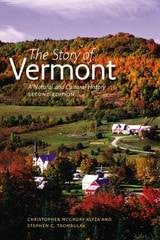
cover of The Story of Vermont: A Natural and Cultural History, Second Edition

The Story of Vermont

A Natural and Cultural History, Second Edition

Christopher McGrory Klyza and Stephen C. Trombulak

University Press of New England, 2015

In this second edition of their classic text, Klyza and Trombulak use the lens of interconnectedness to examine the geological, ecological, and cultural forces that came together to produce contemporary Vermont. They assess the changing landscape and its inhabitants from its pre-human evolution up to the present, with special focus on forests, open terrestrial habitats, and the aquatic environment. This edition features a new chapter covering from 1995 to 2013 and a thoroughly revised chapter on the futures of Vermont, which include discussions of Tropical Storm Irene, climate change, eco-regional planning, and the resurgence of interest in local food and energy production. Integrating key themes of ecological change into a historical narrative, this book imparts specific information about Vermont, speculates on its future, and fosters an appreciation of the complex synergy of forces that shaped this region. This volume will interest scholars, students, and Vermonters intrigued by the state’s long-term natural and human history.
[more]
cover of Timber Rattlesnakes in Vermont & New York: Biology, History, and the Fate of an Endangered Species

Timber Rattlesnakes in Vermont & New York

Biology, History, and the Fate of an Endangered Species

Jon Furman

University Press of New England, 2007

Today, small populations of timber rattlesnakes (Crotalus horridus) quietly inhabit parts of Rutland County in Vermont, and Warren, Washington, and Essex counties in New York. Because the species is endangered, the exact locations of established dens in this area are a closely guarded secret. Insider, naturalist, and author Jon Furman has devoted years to the study of the snake’s past and present range, its habitat and biology, the period in Vermont and upstate New York history during which timber rattlesnakes were ruthlessly hunted for a bounty, and the outlook for this severely threatened species in both states. Soundly anchored in the latest scientific data, Furman proffers an accessible and engaging account of contemporary fieldwork and first-person interviews with herpetologists and old-time bounty hunters. For expert and lay readers interested in snakes and reptiles, northeastern fauna and natural history, conservation, and endangered species, this volume clearly explicates the timber rattlesnake’s biology as well as what happens and what to do when one bites. It also explores the troubling decline of the northeastern population caused by bounty hunting between the 1890s and the early 1970s, other past and present threats to the species’ survival, and what measures are being taken—and additional ones that must be taken—to ensure that timber rattlesnakes survive and thrive in the northeast. Historical and contemporary illustrations bring these reptiles and their world to life. Timber Rattlesnakes in Vermont & New York shines a new light on a maligned and misunderstood species.
[more]
cover of Trail Running Southern Vermont

Trail Running Southern Vermont

Ben Kimball

University of Massachusetts Press, 2024

The wild and rural landscape of southern Vermont offers a true bounty of great trail-running opportunities, from out­-and-­back (or point­to­point) runs on popular long-distance routes, such as segments of the Long Trail or Appalachian Trail, to quiet, little-known loops hidden away in the woods. This helpful guide is just the resource needed for trip planning or for a spontaneous run in a beautiful place.

Local expert trail runner Ben Kimball offers a range of suggested route options, sometimes even several at the same site, for runners of all skill levels. He also provides important practical information, such as the full distance of the suggested route; a difficulty rating; the trail style and type; the total ascent; and directions, along with a detailed description of the trail itself. There are also scannable codes for downloading trail maps to your smartphone. The trails included vary in difficulty and terrain type, and range from low elevations in the Connecticut River Valley to as high as 4,000 feet at Killington Peak in the Green Mountains. This indispensable book is the perfect companion for adventurous runners and hikers interested in exploring southern Vermont.
[more]
cover of Twin States, Different Paths: The Politics of New Hampshire and Vermont

Twin States, Different Paths

The Politics of New Hampshire and Vermont

Brian L. Porto

University of Massachusetts Press, 2026

A cultural and policy history that explains why two neighboring states developed divergent attitudes toward government and culture

At first glance, New Hampshire and Vermont seem like mirror images. Separated only by the Connecticut River, the oft-termed “Twin States” share a common history, relatively small populations, and heavily mountainous and forested landscapes dotted with small towns. Yet despite their similarities, they have evolved strikingly different political cultures, with Vermont prizing cooperation and community and New Hampshire celebrating independence and freedom from government. Perhaps nowhere is this divergence in political visions more pronounced than in their respective state mottos: Vermont’s communal "Freedom and Unity" and New Hampshire’s libertarian “Live Free or Die.”

Twin States, Different Paths explores these contrasting political cultures. Brian Porto traces these differences back to the land itself: to the geology and geography that shaped early settlement, patterns of land use, and the distinct ways people built their communities. From these origins emerged two enduring civic philosophies—New Hampshire’s devotion to low taxes and limited government, and Vermont’s emphasis on equality and shared responsibility. Bringing historical and cultural analysis together with contemporary case studies, Porto examines how these traditions influence each state’s approach to today’s policy challenges, including affordable housing and public-school funding. The result is a clear, balanced portrait of how deeply rooted attitudes toward freedom, unity, and governance continue to shape public life in both states.

Written with scholarly rigor yet in an engaging and accessible style, Twin States, Different Paths fills a notable gap in the study of New England politics. It offers insights not only for scholars and students of political culture, history, and public policy, but also for general readers, policymakers, and residents who wish to understand how two neighbors—so similar in geography and spirit—continue to follow such different paths in defining the role of government and community.

[more]
cover of Two Vermonts: Geography and Identity, 1865-1910

Two Vermonts

Geography and Identity, 1865-1910

Paul Searls

University of New Hampshire Press, 2006

Two Vermonts establishes a little-known fact about Vermont: that the state's fascination with tourism as a savior for a suffering economy is more than a century old, and that this interest in tourism has always been dogged by controversy. Through this lens, the book is poised to take its place as the standard work on Vermont in the Gilded Age and the Progressive Era. Searls examines the origins of Vermont's contemporary identity and some reasons why that identity ("Who is a Vermonter?") is to this day so hotly contested.

Searls divides nineteenth-century Vermonters into conceptually “uphill,” or rural/parochial, and “downhill,” or urban/cosmopolitan, elements. These two groups, he says, negotiated modernity in distinct and contrary ways. The dissonance between their opposing tactical approaches to progress and change belied the pastoral ideal that contemporary urban Americans had come to associate with the romantic notion of “Vermont.” Downhill Vermonters, espousing a vision of a mutually reinforcing relationship between tradition and progress, unilaterally endeavored to foster the pastoral ideal as a means of stimulating economic development. The hostile uphill resistance to this strategy engendered intense social conflict over issues including education, religion, and prohibition in the late nineteenth and early twentieth centuries. The story of Vermont's vigorous nineteenth-century quest for a unified identity bears witness to the stirring and convoluted forging of today's “Vermont.” 

Searls's engaging exploration of this period of Vermont's history advances our understanding of the political, economic, and cultural transformation of all of rural America as industrial capitalism and modernity revolutionized the United States between 1865 and 1910. By the late Progressive Era, Vermont's reputation was rooted in the national yearning to keep society civil, personal, and meaningful in a world growing more informal, bureaucratic, and difficult to navigate. The fundamental ideological differences among Vermont communities are indicative of how elusive and frustrating efforts to balance progress and tradition were in the context of effectively negotiating capitalist transformation in contemporary America.

[more]
cover of Understood Betsy

Understood Betsy

Dorothy Canfield Fisher

Brandeis University Press, 1999
Thanks to her loving but over-protective guardian aunts, Betsy is a fearful, self-absorbed, nine-year-old hypochondriac. One of the most terrible items on her long list of fears is the horrid cousins her aunts never mention without shuddering. When her aunts are suddenly no longer able to care for her, Betsy is, incredibly, sent to live with those very relatives. Arriving in Vermont alone and full of trepidation, Betsy is immediately invited by her Uncle Henry to drive the carriage. Steering the fearful horses is just the beginning of her adventures in New England -- and independence. By the novel's end, Betsy has become very fond of the rough but affectionate relatives who eat in the kitchen and expect her to wash her own dishes. When she gets a letter from the aunts inviting her to come home, Betsy must make a difficult choice. Understood Betsy has been published in numerous editions worldwide since its 1917 debut, and continues to charm readers with its delightful and surprisingly liberated characters.
[more]
cover of Where the Rivers Flow North

Where the Rivers Flow North

Howard Frank Mosher

University Press of New England, 2004

The stories of Where the Rivers Flow North are “superior work, rich in texture and character,” says the Wall Street Journal; “the novella is brilliantly done.” That novella, the title story of the collection, was also made into a feature film starring Rip Torn and Michael J. Fox. These six stories, available again in this new edition, continue Mosher’s career-long exploration of Kingdom County, Vermont. “Within the borders of his fictional kingdom,” the Providence Journal has noted, “Mosher has created mountains and rivers, timber forests and crossroads villages, history and language. And he has peopled the landscape with some of the truest, most memorable characters in contemporary literature.”
[more]