Results by title

5 books match the query 'Virginia City'
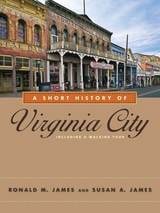
cover of A Short History of Virginia City

A Short History of Virginia City

Ronald M. James

University of Nevada Press, 2014

Founded in 1859, Virginia City quickly became world famous for its extraordinary prosperity. Over the next two decades, the mines of “the Richest City on Earth” yielded millions in gold and silver. The newly wealthy built mansions and churches, opera houses and schools, with furniture, fashions, and entertainment imported from Europe and the Far East. Here young Samuel Clemens, reporting for the Territorial Enterprise in 1863, first called himself Mark Twain. At its height Virginia City was a magnet for immigrants and the world leader in technological innovations in mining.
 
The city’s story did not end when the Comstock Lode played out. Beginning in the 1930s, bohemian artists, literati, and tourists were intrigued by this remnant of the Old West. The leader of Manhattan’s café society, Lucius Beebe, moved here and relaunched the Territorial Enterprise in 1950. Television’s most popular western from 1959 to 1973, Bonanza, located its fictional Ponderosa Ranch nearby. In the summer of 1965, a handful of Bay Area musicians, including Big Brother and the Holding Company, performed at the Red Dog Saloon and launched psychedelic rock, part of the inspiration for a defining decade of youth culture. Today it is both a National Historic Landmark District and a living community. Visitors come to enjoy its saloons and restaurants, admire its architecture, and learn from its museums and exhibits. A Short History of Virginia City will enhance their experience and will also be enjoyed by anyone interested in the history of Nevada, mining, and the Old West.

• Includes an illustrated walking tour describing more than thirty buildings and sites
[more]
cover of Boomtown Saloons: Archaeology And History In Virginia City

Boomtown Saloons

Archaeology And History In Virginia City

Kelly J. Dixon

University of Nevada Press, 2006

The image of Old West saloons as sites of violence and raucous entertainment has been perpetuated by film and legend, but the true story of such establishments is far more complex. In Boomtown Saloons, archaeologist Kelly J. Dixon recounts the excavation of four historic saloon sites in Nevada’s Virginia City, one of the West’s most important boomtowns, and shows how the physical traces of this handful of disparate drinking places offer a new perspective on authentic life in the mining West. During the second half of the nineteenth century, the Comstock Lode’s mineral wealth attracted people from all over the world. At its peak, Virginia City had a cosmopolitan population of over 20,000 people. Like people everywhere, they sought to pass their leisure time in congenial company, often in one or another of the four saloons studied here. Dixon’s account of the role these four establishments played in the social and economic life of Virginia City offers keen insight into the businesses and people who made up the backdrop of a mining boomtown. The saloons in this study were quieter than legend would have us believe; they served relatively distinct groups and offered their customers a place of refuge, solidarity, and social contact with peers in a city where few people had longtime ties or initially any close contacts. Boomtown Saloons also offers an equally vivid portrait of the modern historical archaeologist who combines time-honored digging, reconstruction, and analysis methods with such cutting-edge technology as DNA analysis of saliva traces on a 150-year-old pipestem and chemical analysis of the residue in discarded condiment bottles. The book is illustrated with historical photographs and maps, as well as photographs of artifacts uncovered during the excavations of the four sites. Dixon’s sparkling text and thoughtful interpretation of evidence reveal an unknown aspect of daily life in one of the West’s most storied boomtowns and demonstrate that, contrary to legend, the traditional western saloon served an vital and complex social role in its community. Available in hardcover and paperback.
[more]
cover of Comstock Women: The Making Of A Mining Community

Comstock Women

The Making Of A Mining Community

Ronald M. James

University of Nevada Press, 1997
When it comes to Nevada history, men get most of the ink. Comstock Women is a collection of 14 historical studies that helps to rectify that reality. The authors of these essays, who include some of Nevada’s most prominent historians, demographers, and archaeologists, explore such topics as women and politics, jobs, and ethnic groups. Their work goes far in refuting the exaggerated popular images of women in early mining towns as dance hall girls or prostitutes. Relying primarily on newspapers, court decisions, census records, as well as sparse personal diaries and records left by the woman, the essayists have resurrected the lives of the women who lived on the Comstock during the boom years.
[more]
cover of Gold Diggers and Silver Miners: Prostitution and Social Life on the Comstock Lode

Gold Diggers and Silver Miners

Prostitution and Social Life on the Comstock Lode

Marion S. Goldman

University of Michigan Press, 1981
In 1859 high grade silver bullion was discovered on the Comstock Lode. In a twinkling, Virginia City was transformed into a brawling boom town perched on a mountain of silver. Twenty years later it virtually disappeared, leaving behind played-out mines, tumbled-down shanties, and memories of those who sought their fortunes on the lode. The fortune seekers were many: miners and madams, confidence men and dance hall girls. The fast life was as stratified as any proper community, ranging from expensively kept women to prostitutes living in cribs. Laura Fair, an elite member of the demimonde, shot her protector and, after a spectacular trial, retired to live modestly in San Francisco. Jessie Lester made a small fortune as a madam while middle rank prostitutes such as Julia Bulette died in debt. At the lowest end of scale were "celestial damsels," nameless slave women brought from China to minister to the needs of Chinese workers. Chronicling it all was the cynical and lascivious pen of Alf Doten, writer, editor, and bon vivant. In Gold Diggers and Silver Miners, sociologist Marion S. Goldman provides a detailed account of prostitution on the Comstock Lode. By considering sexual commerce in a community limited in space and time, she explores general relationships between prostitution and society, shedding light on sociological questions of importance today.
[more]
cover of The Roar and the Silence: A History of Virginia City and the Comstock Lode

The Roar and the Silence

A History of Virginia City and the Comstock Lode

Ronald M. James

University of Nevada Press, 1998

Nevada’s Comstock Mining District has been the focus of legend since it first burst into international prominence in the late 1850s, and its principal settlement, Virginia City, endures in the popular mind as the West’s quintessential mining camp. But the authentic history of the Comstock is far more complex and interesting than its colorful image. Contrary to legend, Virginia City spent only its first few years as a ramshackle mining camp. The mining boom quickly turned it into a thriving urban center, at its peak one of the largest cities west of the Mississippi, replete with most of the amenities of any large city of its time.
The lure of the area’s fabulous wealth attracted a remarkably heterogenous population from around the world and offered employment to dozens of trades and thousands of people, both men and women, representing every one of the region’s diverse ethnic groups.
Ronald James’s brilliant account of the Comstock’s long and eventful history—the first comprehensive study of the subject in over a century—examines every aspect of the region and employs information gleaned from hundreds of written sources, interviews, archeological research, computer analysis, folklore, gender studies, physical geography, and architectural and art history, as well as over fifty rare photographs, many of them previously unpublished.
[more]