Results by title
20 books match the query 'Volume 13'
A Dictatorship of Relativism ?
Symposium in Response to Cardinal Ratzinger’s Last Homily, Volume 13Jeffrey M. Perl, ed.
Duke University Press, 0
One essay relates the arguments of Ratzinger to those of two other German scholars—the conservative political theorist Ernst Wolfgang Böckenförde and the liberal philosopher and sociologist Jürgen Habermas—since all three men assume that social order depends on the existence of doctrinal authority (divine or otherwise). The contributors here argue for an intellectual and social life free of the desire for an “infantilizing” authority. One proposes that the Christian god is a relativist who prefers limitation and ambiguity; another, initially in agreement with Ratzinger about the danger relativism poses to faith and morals, then argues that this danger is what makes relativism valuable. The issue closes with the first English translation of an extract from a book on Catholic-Jewish relations by Cardinal Carlo Maria Martini, one of the Catholic Church’s most progressive figures.
Contributors. David Bloor, Daniel Boyarin, Mary Baine Campbell, Lorraine Daston, Arnold I. Davidson, John Forrester, Kenneth J. Gergen, Simon Goldhill, Jeffrey F. Hamburger, Julia Kristeva, Carlo Maria Cardinal Martini, Christopher Norris, Joseph Cardinal Ratzinger, Richard Shusterman, Barbara Herrnstein Smith, Jeffrey Stout, Gianni Vattimo

Adolescent Psychiatry, Volume 13
Developmental and Clinical StudiesEdited by Sherman C. Feinstein, Max Sugar, Aaron H. Esman, John G. Looney, Allan
University of Chicago Press, 1986
Against Preemptive War, Volume 13
Tani E. Barlow, Yukiko Hanawa, Thomas LaMarre, and Donald Lowe, eds.
Duke University Press, 0
Gathering material from politically active scholars, artists, and authors from Europe, Asia, and North America, this collection reflects on the likely fallout from the corruptive U.S. strategy of preemption. In the introduction, the editors criticize the American press for being, with few exceptions, easily if not willingly deceived by the Bush administration’s propaganda regarding weapons of mass destruction. One contributor redefines fascism as a situation in which contradictions are evident but blatantly ignored, one which creates a false sense of cohesion between events. Another argues that U.S. military bases around the world are now maintained not for military defense and quick mobilization but to create a culture of American militarism, noting that troops were sent from the U.S. for the invasion of Iraq rather than from closer bases around the world. Finally, the issue raises a formidable question: how do we end war waged against what might come to pass rather than what actually is?
Contributors. Tani Barlow, Jim Bonk, Josh Brown, Bei Dao, Carolyn Eisenberg, Lawrence Ferlinghetti, Matthew Fryslie, Sue Golding (as johnny de philo), Freda Guttman, Yukiko Hanawa, Harry Harootunian, Sharon Hayashi, Reynaldo C. Ileto, Joy Kogawa, Thomas LaMarre, The Liberal Islam Network, Sumit K. Mandal, Edoarda Masi, Brian Massumi, Anne McKnight, Carel Moiseiwitsch, Alberto Moreiras, Claudia Pozzana, Alessandro Russo, Ukai Satoshi, Laurie Sears, Kuang Xinnian, Marilyn Young
Bach Perspectives, Volume 13
Bach ReworkedEdited by Laura Buch
University of Illinois Press, 2020
An insightful look at how composers build on each other's work, Bach Reworked reveals how nuanced understandings of parody procedures can fuel both musical innovation and historically informed performance.
Contributors: Stephen A. Crist, Ellen Exner, Moira Leanne Hill, Erinn E. Knyt, and Markus Zepf
Correspondence of Jeremy Bentham, Volume 13
July 1828 to June 1832Edited by Philip Schofield, Tim Causer, and Chris Riley
University College London, 2024
The Correspondence of Jeremy Bentham, Volume 13 contains authoritative and fully annotated texts of all known and publishable letters sent both to and from Bentham between 1st July 1828 and his death on 6th June 1832. In addition to 474 letters, the volume contains three memorandums concerning Bentham’s health shortly before his death, his last will and testament, and extracts from both the autobiography and the manuscript diaries of Bentham’s nephew George. Among the letters that have already been published, most are drawn from the edition of The Works of Jeremy Bentham, prepared under the superintendence of Bentham’s literary executor John Bowring. A small number of letters have been reproduced from newspapers and periodicals.
This volume publishes, for the first time, the entire extant correspondence between Bentham and Daniel O’Connell, the Irish Liberator. Other new acquaintances include the barrister and law reformer, Charles Sinclair Cullen, and the Real Property Commissioner, John Tyrrell. Throughout the period, Bentham maintained regular contact with old friends and connections, but he also engaged in sporadic correspondence with such leading figures in government as the Duke of Wellington, Robert Peel, and Henry Brougham. Further afield, Bentham corresponded, amongst others, with the Marquis de La Fayette in France, Edward Livingston in the United States of America, and José Del Valle in Guatemala.
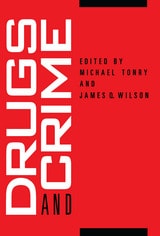
Crime and Justice, Volume 13
Drugs and CrimeEdited by Michael Tonry and James Q. Wilson
University of Chicago Press Journals, 1991

Handbook of Middle American Indians, Volume 13
Guide to Ethnohistorical Sources, Part TwoRobert Wauchope, series editor; Howard F. Cline, volume editor,; John B. Glass, assoc vol. ed.
University of Texas Press, 1973
Volume 13 of the Handbook of Middle American Indians, published in cooperation with the Middle American Research Institute of Tulane University under the general editorship of Robert Wauchope (1909–1979), constitutes Part 2 of the Guide to Ethnohistorical Sources. The Guide has been assembled under the volume editorship of the late Howard F. Cline, Director of the Hispanic Foundation in the Library of Congress, with Charles Gibson, John B. Glass, and H. B. Nicholson as associate volume editors. It covers geography and ethnogeography (Volume 12); sources in the European tradition (Volume 13); and sources in the native tradition (Volumes 14 and 15).
The present volume contains the following studies on sources in the European tradition:
- “Published Collections of Documents Relating
- to Middle American Ethnohistory,” by Charles Gibson
- “An Introductory Survey of Secular Writings in the European Tradition on Colonial Middle America, 1503–1818,” by J. Benedict Warren
- “Religious Chroniclers and Historians: A Summary with Annotated Bibliography,” by Ernest J.
- Burrus, S.J.
- “Bernardino de Sahagún,” by Luis Nicolau d’Olwer, Howard F. Cline, and H. B. Nicholson
- “Antonio de Herrera,” by Manuel Ballesteros Gaibrois
- “Juan de Torquemada,” by José Alcina Franch
- “Francisco Javier Clavigero,” by Charles E. Ronan, S.J.
- “Charles Etienne Brasseur de Bourbourg,” by Carroll Edward Mace
- “Hubert Howe Bancroft,” by Howard F. Cline
- “Eduard Georg Seler,” by H. B. Nicholson
- “Selected
The Handbook of Middle American Indians was assembled and edited at the Middle American Research Institute of Tulane University with the assistance of grants from the National Science Foundation and under the sponsorship of the National Research Council Committee on Latin American Anthropology.
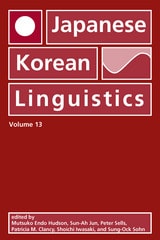
Japanese/Korean Linguistics, Volume 13
M. Endo Hudson, Peter Sells, and Sun-Ah Jun
CSLI, 2008
Japanese and Korean are typologically quite similar languages, and the linguistic phenomena of the former often hve counterparts in the latter. These collections from the annual Japanese/Korean linguistics conference include essays on the phonology, morphology, syntax, semantics, historical linguistics, discourse analysis, prosody, and psycholinguistics of both languages. Such comparative studies deepen our understanding of both languages and will be a useful reference to students and scholars in either field.
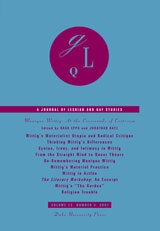
Monique Wittig
At the Crossroads of Criticism, Volume 13Brad Epps and Jonathan D. Katz, eds.
Duke University Press, 0
Contributors provide critical and disparate snapshots—some more theoretical and abstract, some more experiential and concrete—of debates on, and investments in, Wittig’s theoretical legacy. Judith Butler analyzes Wittig’s “particular” universalism and offers a careful exposition of her worldview. Diane Griffin Crowder studies Wittig within a context of materialist inquiry that has often been ignored or misunderstood. Robyn Wiegman examines the complex nature of memorialization and inquires into Wittig’s place in contemporary queer theory. Seth Clark Silberman, calling attention to Wittig’s fiction, reverses the usual ascendancy of critique over narrative fiction and produces a formally innovative, if willfully “parasitic,” account of Wittig’s claim on the contributor’s imagination as he watches his mother slowly die of cancer. Alice Jardine, who situates Wittig as a disruptive and disorienting force in a mother-centered feminism, provides an autobiographically charged review of the recent history of feminism, queer studies, and the still uneasy relations between them. The issue also includes a detailed introduction by Brad Epps and Jonathan Katz; a brief personal reflection by Sandra K. Soto, a close friend and colleague of Wittig’s; and two texts by Wittig, one critical (with a foreword by Sande Zeig) and the other creative, both previously unavailable in English.
Contributors. Judith Butler, Diane Griffin Crowder, Brad Epps, Alice Jardine, Jonathan Katz, Seth Clark Silberman, Sandra K. Soto, Robyn Wiegman, Monique Wittig, Sande Zeig
Ocean Yearbook, Volume 13
Edited by Elisabeth Mann Borgese, Aldo Chircop, Moira L. McConnell, and Joseph R
University of Chicago Press, 1998
Osiris, Volume 13
Beyond Joseph Needham: Science, Technology, and Medicine in East and Southeast AsiaEdited by Morris Low
University of Chicago Press, 2000
Specialist and non-specialist readers alike will leave this volume with a strong sense of the political and economic imperatives behind knowledge systems in Eastern Asia, their cultural contexts, and how they have coexisted along with those in the West.

Playwrights for Tomorrow
A Collection of Plays, Volume 13Arthur H. Ballet, EditorIntroduction by Arthur H. Ballet
University of Minnesota Press, 1975
Playwrights for Tomorrow was first published in 1975. Minnesota Archive Editions uses digital technology to make long-unavailable books once again accessible, and are published unaltered from the original University of Minnesota Press editions.
Four plays by writers who have worked under the auspices of the Office for Advanced Drama Research (O.A.D.R.) at the University of Minnesota are published in this volume, the thirteenth in the series of such collections. The O.A.D.R. program, which is directed by Arthur H.. Ballet, the series editor, provides an opportunity for promising playwrights to work with cooperating theatres in the production of their plays.
The plays in this volume are The Tunes of Chicken Little by Robert Gordon, The Inheritance by Ernest A. Joselovitz, Blessing by Joseph Landon, and The Kramer by Mark Medoff. Three of the plays—those by Robert Gordon, Joseph Landon, and Mark Medoff—were produced by the American Conservatory Theatre of San Francisco. The play by Mr. Joselovitz was presented by the University of Minnesota Theatre in Minneapolis.
In his introduction Mr. Ballet comments on the achievements and problems of the O.A.D.R. program. He reports that since the program began it had had about one hundred plays produced in some sixty theatres, not only in the United States but also in Australia, New Zealand, Scotland, and Canada. However, he writes, it became increasingly difficult to find playhouses willing to risk the challenge of new plays and playwrights. "More dangerous still," he writes, "has been the tendency for some directors to make theatre their own, highly personal art. Because so many of these directors only like what they know, and they don't know what to make of new work at all, they cannot truly judge and anticipate as a stage piece anything beyond their immediate ken. The rejections are cavalier and unthinking. The directors' lament that there are no new, exciting playwrights must be answered with the accusation that there really are damned few new, exciting, perceptive directors."

State Blues
The Michigan Review of Prisoner Creative Writing, Volume 13Michigan Publishing Services, 2021
www.prisonarts.org
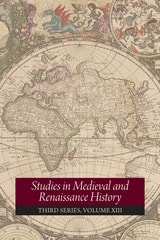
Studies in Medieval and Renaissance History
Volume 13Joel T. Rosenthal
Arizona Center for Medieval and Renaissance Studies, 2018

The Best American Newspaper Narratives, Volume 13
Gayle Reaves
University of North Texas Press, 2026

The Collected Letters of Thomas and Jane Welsh Carlyle
1841, Volume 13Clyde de L. Ryals and Kenneth J. Fielding
Duke University Press, 0
The Critical Limits of Embodiment
Reflections on Disability Criticism, Volume 13Carol A. Breckenridge and Candace Vogler, eds.
Duke University Press, 0
The articles in this collection build on recent work in the larger arena of disability studies and address such subjects as the hegemony of the concept of normalcy, the idea of the able body, and the constitutive place of disability in ethics, liberalism, and capitalism. The Critical Limits of Embodiment examines the commonsense foundations of disability studies, which tend to universalize Western norms and assumptions in which the normal is foregrounded and the able body forms the basis for the universal liberal subject. The broad geographic scope of these essays constitutes one of their greatest contributions to the field. In order to query the body-related universalisms of Western thought, the issue seeks to be self-conscious about cultural locations.
The volume examines the figure of the disabled in the cultural imaginaries of a variety of historical, cultural, and disciplinary contexts including literature, anthropology, philosophy, and art history.
Contributors. Renu Addlakha, Carol A. Breckenridge, Veena Das, Faye Ginsburg, Wu Hung, Eva Kittay, Celeste Langan, David Mitchell, Rayna Rapp, Susan Schweik, Sharon Snyder, Candace Vogler, Hank Vogler

The Samuel Gompers Papers, Volume 13
Cumulative IndexSamuel Gompers, Edited by Peter J. Albert and Grace Palladino
University of Illinois Press, 2013
The Talmud of the Land of Israel, Volume 13
Yerushalmi PesahimJacob Neusner, General Editor
University of Chicago Press, 1995
Yerushalmi Pesahim details the specific requirements regarding the preparation for Passover, the Passover sacrifice, and the Seder. Commenting on the many, often contradictory, prescriptions in Exodus, Leviticus, Numbers, and Deuteronomy, this tractate is an important part of a long tradition of interpretation regarding Passover.
Translation in a Global Market, Volume 13
Emily Apter, ed.
Duke University Press, 0
Translation in a Global Market assembles contributors from several academic disciplines as well as visual artists for a closer look at the formation of an international canon and at the kinds of texts that gain international visibility. The essays urge a shift in emphasis from global literacy—which implies the use of a standard language and a preference for translatability in texts—to transnational literacy, which places minority and diaspora literatures in direct conversation with each other rather than with Paris, London, or New York.
Contributors. Dina Al-Kassim, Emily Apter, Timothy Brennan, Elena Climent, Maryse Condé, Michael Eng, Renée Green, Rainer Ganahl, Sarah M. Hudgins, Michael North, Gayatri Chakravorty Spivak