Results by title

11 books match the query 'Vulnerability'
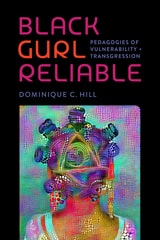
cover of Black Gurl Reliable: Pedagogies of Vulnerability and Transgression

Black Gurl Reliable

Pedagogies of Vulnerability and Transgression

Dominique C. Hill

Vanderbilt University Press, 2025

Black Gurl Reliable does the original work of curating Black girls’ and women’s experiences and experiential knowledge, indexing sociocultural tactics (schooling) that foreclose Black girl aliveness, while advancing embodiment as a key ingredient of Black mattering. Elevating Black Girlhood Studies as an ethos, narratives presented offer redress to inequities and hauntings of race-gender structures of dominance and position Black girls and girlhood as more than lamentation and what happens to the body. Hill solicits the strength and utility of arts-based methods in capturing identity, performance, and experimental design for ephemerality and improvisation. Hill makes clear Black feminism’s insistence that knowledge and possibility are produced through the body.

As a means of mitigating the deleterious effects of schooling on Black girls’ and women’s bodies and making legible the insights and knowledge produced from schooling experiences, Hill introduces the concept of Transgressngroove. This living feminist practice explores the relationships between Black girlhood, education, and the body, as researched for over a decade through workshops, consulting, classrooms, personal development, and other teaching/learning spaces.
[more]
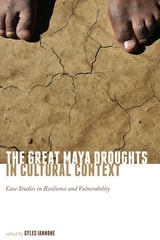
cover of Great Maya Droughts in Cultural Context: Case Studies in Resilience and Vulnerability

Great Maya Droughts in Cultural Context

Case Studies in Resilience and Vulnerability

Gyles Iannone

University Press of Colorado, 2014

In The Great Maya Droughts in Cultural Context, contributors reject the popularized link between societal collapse and drought in Maya civilization, arguing that a series of periodic “collapses,” including the infamous Terminal Classic collapse (AD 750–1050), were not caused solely by climate change–related droughts but by a combination of other social, political, and environmental factors. New and senior scholars of archaeology and environmental science explore the timing and intensity of droughts and provide a nuanced understanding of socio-ecological dynamics, with specific reference to what makes communities resilient or vulnerable when faced with environmental change.Contributors recognize the existence of four droughts that correlate with periods of demographic and political decline and identify a variety of concurrent political and social issues. They argue that these primary underlying factors were exacerbated by drought conditions and ultimately led to societal transitions that were by no means uniform across various sites and subregions. They also deconstruct the concept of “collapse” itself—although the line of Maya kings ended with the Terminal Classic collapse, the Maya people and their civilization survived.

The Great Maya Droughts in Cultural Context offers new insights into the complicated series of events that impacted the decline of Maya civilization. This significant contribution to our increasingly comprehensive understanding of ancient Maya culture will be of interest to students and scholars of archaeology, anthropology, geography, and environmental studies.

[more]
cover of Katrina's Imprint: Race and Vulnerability in America

Katrina's Imprint

Race and Vulnerability in America

Wailoo, Keith

Rutgers University Press, 2010

Katrina's Imprint highlights the power of this sentinel American event and its continuing reverberations in contemporary politics, culture, and public policy. Published on the fifth anniversary of Hurricane Katrina, the multidisciplinary volume reflects on how history, location, access to transportation, health care, and social position feed resilience, recovery, and prospects for the future of New Orleans and the Gulf region. Essays examine the intersecting vulnerabilities that gave rise to the disaster, explore the cultural and psychic legacies of the storm, reveal how the process of rebuilding and starting over replicates past vulnerabilities, and analyze Katrina's imprint alongside American's myths of self-sufficiency. A case study of new weaknesses that have emerged in our era, this book offers an argument for why we cannot wait for the next disaster before we apply the lessons that should be learned from Katrina.
[more]
cover of Queering Cold War Poetry: Ethics of Vulnerability in Cuba and the United States

Queering Cold War Poetry

Ethics of Vulnerability in Cuba and the United States

Eric Keenaghan

The Ohio State University Press, 2009
Many feel that individualism, and the security it demands, define democracy and freedom. This belief is characteristic of the attitude that thinkers from John Dewey to Michel Foucault have criticized as "liberalist." In actuality, we share intimate associations with one another through contacts established by our bodies and even by language.
In Queering Cold War Poetry, Eric Keenaghan offers queer theory, queer studies, and literary theory a new political and conceptual language for reevaluating past and present high valuations of individualism and security. He examines four Cold War poets from Cuba and the United States—Wallace Stevens, José Lezama Lima, Robert Duncan, and Severo Sarduy. These writers, who lived in an era when homosexuals were regarded as outsiders or even security threats, offer critiques of nationalism and liberalism. In their struggles against state and cultural mandates that foreclosed positive estimations of vulnerability, Stevens, Lezama, Duncan, and Sarduy radically revised ethics and identity in their day. Their work exemplifies how much modernist poetry disseminates experiences of differences that challenge prevailing attitudes about individuals' relationships to one another and to their nations. Through studies of Cuban and U.S. lyric and poetics, Queering Cold War Poetry clears the way for imagining what it means to belong to a passionate and compassionate citizenry which celebrates vulnerability, searches for difference in itself and each of its constituent individuals, and identifies less with a nation than with a global community.
 
[more]
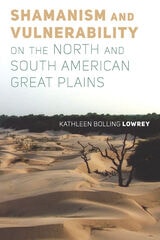
cover of Shamanism and Vulnerability on the North and South American Great Plains

Shamanism and Vulnerability on the North and South American Great Plains

Kathleen Bolling Lowrey

University Press of Colorado, 2020

In Shamanism and Vulnerability on the North and South American Great Plains Kathleen Bolling Lowrey provides an innovative and expansive study of indigenous shamanism and the ways in which it has been misinterpreted and dismissed by white settlers, NGO workers, policymakers, government administrators, and historians and anthropologists. Employing a wide range of theory on masculinity, disability, dependence, domesticity, and popular children’s literature, Lowrey examines the parallels between the cultures and societies of the South American Gran Chaco and those of the North American Great Plains and outlines the kinds of relations that invite suspicion and scrutiny in divergent contexts in the Americas: power and autonomy in the case of Amerindian societies and weakness and dependence in the case of settler societies. She also demonstrates that, where stigmatized or repressed in practice, dependence and power manifest and intersect in unexpected ways in storytelling, fantasy, and myth.
 
The book reveals the various ways in which anthropologists, historians, folklorists, and other writers have often misrepresented indigenous shamanism and revitalization movements by unconsciously projecting ideologies and assumptions derived from modern ‘contract societies’ onto ethnographic and historical realities. Lowrey also provides alternative ways of understanding indigenous American communities and their long histories of interethnic relations with expanding colonial and national states in the Americas. A creative historical and ethnographical reevaluation of the last few decades of scholarship on shamanism, disability, and dependence, Shamanism and Vulnerability on the North and South American Great Plains will be of interest to scholars of North and South American anthropology, indigenous history, American studies, and feminism.
 
[more]
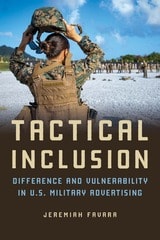
cover of Tactical Inclusion: Difference and Vulnerability in U.S. Military Advertising

Tactical Inclusion

Difference and Vulnerability in U.S. Military Advertising

Jeremiah Favara

University of Illinois Press, 2024

The revolution in military recruitment advertising to people of color and women played an essential role in making the US military one of the most diverse institutions in the United States. Starting at the dawn of the all-volunteer era, Jeremiah Favara illuminates the challenges at the heart of military inclusion by analyzing recruitment ads published in three commercial magazines: Sports Illustrated, Cosmopolitan, and Ebony. Favara draws on Black feminism, critical race theory, and queer of color critique to reveal how the military and advertisers affected change by deploying a set of strategies and practices called tactical inclusion. As Favara shows, tactical inclusion used representations of servicemembers in the new military to connect with people susceptible to recruiting efforts and rendered these new audiences vulnerable to, valuable to, and subject to state violence.

Compelling and eye-opening, Tactical Inclusion combines original analysis with personal experience to chart advertising’s role in building the all-volunteer military.
[more]
cover of The Children Of Africa Confront AIDS: From Vulnerability To Possibility

The Children Of Africa Confront AIDS

From Vulnerability To Possibility

Arvind Singhal

Ohio University Press, 2003
AIDS is now the leading cause of death in Africa, where twenty-eight million people are HIV-positive, and where some twelve million children have lost one or both parents to AIDS. In Zimbabwe, 45 percent of children under the age of five are HIV-positive, and the epidemic has shortened life expectancy by twenty-two years. A fifteen-year-old in Botswana or South Africa has a one-in-two chance of dying of AIDS. AIDS deaths are so widespread in sub-Saharan Africa that small children now play a new game called “Funerals.” The Children of Africa Confront AIDS depicts the reality of how African children deal with the AIDS epidemic, and how the discourse of their vulnerability affects acts of coping and courage. A project of the Institute for the African Child at Ohio University, The Children of Africa Confront AIDS cuts across disciplines and issues to focus on the world’s most marginalized population group, the children of Africa. Editors Arvind Singhal and Stephen Howard join conversations between humanitarian and political activists and academics, asking, “What shall we do?” Such discourse occurs in African contexts ranging from a social science classroom in Botswana to youth groups in Kenya and Ghana. The authors describe HIV/AIDS in its macro contexts of vulnerable children and the continent’s democratization movements and also in its national contexts of civil conflict, rural poverty, youth organizations, and agencies working on the ground. Singhal, Howard, and other contributors draw on compelling personal experience in descriptions of HIV/AIDS interventions for children in difficult circumstances and present thoughtful insights into data gathered from surveys and observations concerning this terrible epidemic.
[more]
cover of The Vulnerability of Public Higher Education

The Vulnerability of Public Higher Education

Michael Bernard-Donals

The Ohio State University Press, 2023

Reduced state funding to public institutions. The removal of tenure from state statutes. Attempts to silence faculty. Michael Bernard-Donals takes on these issues and other crises in higher education in The Vulnerability of Public Higher Education, exploring how values once used to justify higher education—the democratization of knowledge, the fostering of expertise, the creation of well-informed citizens, and critical engagement with issues—have been called into question.

Bernard-Donals argues that public higher education, especially the work of faculty, has become vulnerable—socially, politically, professionally—and this book takes seriously the idea of vulnerability, suggesting that university faculty see it not as an encumbrance to their work but as an opportunity to form relations of solidarity with one another through mutual recognition and shared, albeit different forms of, precarity. Through a series of case studies on faculty rights and responsibilities, the efficacy of diversity initiatives, and tenure and academic freedom, Bernard-Donals employs a rhetorical perspective to show how vulnerability can reshape faculty work and provide ways to shift the relations of materiality and power while opening up new forms of deliberation, engagement, and knowledge production.

[more]
cover of Unfolding Corpus: Radical Creativity and Vulnerability in Times of Plague

Unfolding Corpus

Radical Creativity and Vulnerability in Times of Plague

George Ayala

Rutgers University Press, 2027

UnfoldingCorpus is a carefully curated collection of visual and textual works by artists and writers from past issues of Corpus, a community produced journal, which was originally published between 2003 and 2008 by the AIDS Project Los Angeles (APLA). Corpus was a publication that held open valuable space for Black, Brown, and queer people to see themselves reflected in an honest exploration of HIV and sex, but it was also a celebration of sexuality, connectivity, curiosity, and resilience. 

Unfolding Corpus uses contributions from the original journal to draw parallels between HIV, COVID, and monkey pox, all of which have disproportionately affected the queer community. By centering the experiences of communities historically excluded from public health decision-making, the mix of art, poetry, essays, and radical storytelling throughout the collection aims to disrupt and reveal the wrongs waged on low income, Black, Brown, and queer bodies across time and across pandemics. This collection once again confronts a hostile state and cultural environment by celebrating a world in which queer and trans sexuality can flourish, be seen, and be understood as a tool to envision radical futures rooted in equality and unfurling justice.
[more]
cover of Vulnerability in Resistance

Vulnerability in Resistance

Judith Butler, Zeynep Gambetti, and Leticia Sabsay, editors

Duke University Press, 2016

Vulnerability and resistance have often been seen as opposites, with the assumption that vulnerability requires protection and the strengthening of paternalistic power at the expense of collective resistance. Focusing on political movements and cultural practices in different global locations, including Turkey, Palestine, France, and the former Yugoslavia, the contributors to Vulnerability in Resistance articulate an understanding of the role of vulnerability in practices of resistance. They consider how vulnerability is constructed, invoked, and mobilized within neoliberal discourse, the politics of war, resistance to authoritarian and securitarian power, in LGBTQI struggles, and in the resistance to occupation and colonial violence. The essays  offer a feminist account of political agency by exploring occupy movements and street politics, informal groups at checkpoints and barricades, practices of self-defense, hunger strikes, transgressive enactments of solidarity and mourning, infrastructural mobilizations, and aesthetic and erotic interventions into public space that mobilize memory and expose forms of power. Pointing to possible strategies for a feminist politics of transversal engagements and suggesting a politics of bodily resistance that does not disavow forms of vulnerability, the contributors develop a new conception of embodiment and sociality within fields of contemporary power.

Contributors. Meltem Ahiska, Athena Athanasiou, Sarah Bracke, Judith Butler, Elsa Dorlin, Başak Ertür, Zeynep Gambetti, Rema Hammami, Marianne Hirsch, Elena Loizidou, Leticia Sabsay, Nükhet Sirman, Elena Tzelepis
[more]
cover of Youth Who Trade Sex in the U.S.: Intersectionality, Agency, and Vulnerability

Youth Who Trade Sex in the U.S.

Intersectionality, Agency, and Vulnerability

Carisa R. Showden and Samantha Majic

Temple University Press, 2018

When cases of domestic minor sex trafficking (DMST) by predatory men are reported in the media, it is often presented that a young, innocent girl has been abused by bad men with their demand for sex and profit. This narrative has shaped popular understandings of young people in the commercialized sex trades, sparking new policy responses. However, the authors of Youth Who Trade Sex in the U.S. challenge this dominant narrative as incomplete. Carisa Showden and Samantha Majic investigate young people’s engagement in the sex trades through an intersectional lens. 

The authors examine the dominant policy narrative’s history and the political circumstances generating its emergence and current form. With this background, Showden and Majic review and analyze research published since 2000 about young people who trade sex since 2000 to develop an intersectional “matrix of agency and vulnerability” designed to improve research, policy, and community interventions that center the needs of these young people. Ultimately, they derive an understanding of the complex reality for most young people who sell or trade sex, and are committed to ending such exploitation.

[more]