Results by title
8 books match the query 'Wagner, Richard'

An Introduction to Richard Wagner’s Der Ring des Nibelungen
A HandbookWilliam O. Cord
Ohio University Press, 1995
Today, more than a century after its first performance, Richard Wagner’s The Ring of Nibelung endures as one of the most significant artistic creations in the history of opera. This monumental work not only altered previously accepted concepts of music and drama but also inspired creative and intellectual efforts far beyond the field of opera.
Previous studies of the Ring have appealed only to those already acquainted in some way with the Wagnerian art. For the uninitiated, Wagner and his landmark creation have seemed forbidding, and those eager to learn about the masterpiece have faced a vast and frequently esoteric body of commentary. Professor Cord addresses the interests of the non-specialist by taking the reader first into Wagner’s unique intent, and then through the complete history of the Ring.
Cord, who has attended forty performances of the Ring, considers the conception of the poem, its development into a music-drama exemplifying Wagnerian thought, its introduction to the world, and the reactions and interpretation it elicits.
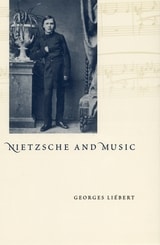
Nietzsche and Music
Georges Liébert
University of Chicago Press, 2003
In his youth, Friedrich Nietzsche yearned to become a great composer and wrote many pieces of music. He later claimed to be "the most musical of all philosophers." Yet most books on Nietzsche fail to explore the importance of music for his thought.
Nietzsche and Music provides the first in-depth examination of the fundamental significance of music for Nietzsche's life and work. Nietzsche's views on music are essential for understanding his philosophy as a whole. Part biography and part critical examination, Georges Liébert brilliantly demonstrates that despite failed attempts at a professional career as composer, Nietzsche never fully removed himself from the world of music, but instead, became a composer of philosophy, utilizing the musical form as a template for his own writings and creative thought. Liébert's study surveys Nietzsche's opinions about particular composers and compositions, as well as his more theoretical writings on music and its relation to the other arts. He also explores Nietzsche's listening habits, his playing and style of composition, and his many contacts in the musical world, including his controversial and contentious relationship with Richard Wagner. For Nietzsche, music gave access to a realm of wisdom that transcended thought. Music was Nietzsche's great solace; in his last years, it was his refuge from madness.
A virtuoso exploration of this little-known but crucial aspect of Nietzsche's life and work, this volume will be of enormous value to scholars of philosophy, music, aesthetics, and literature.
Religious Experience in the Work of Richard Wagner
Marcel Hebert
Catholic University of America Press, 2015
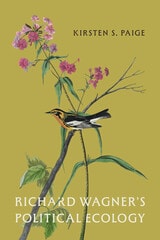
Richard Wagner's Political Ecology
Kirsten S. Paige
University of Chicago Press, 2026
A study of the deep history of the Wagnerian environmental imagination.
Richard Wagner’s operas are bursting with environmental imagery, from tittering birds to flowing rivers to towering trees. In Richard Wagner’s Political Ecology, Kirsten S. Paige asks where Wagner’s environmental imagination came from, how it was received by audience members and reconceived by stage directors, and how it refracts his politics. By tracing the ecological dimensions of the composer’s essays and dramas, Paige reveals how Wagner’s environmental imagination was inextricable from broader political concerns of his time.
The book begins by examining the way Wagner’s political ecology shape-shifted across its rhetorical, musical, scenographic, and technological permutations. Although Wagner’s essays and dramas invite a range of interpretations, for Paige, they point to an all-encompassing image of opera-as-climate. The book then turns to the ways Wagnerian drama—and opera more generally—at once participates in the industrial-technological lineage of climate change and helps spectators grapple with the challenges of living in a warming world. In providing the first close examination of Wagner’s artistic thought, practice, and reception in relation to nineteenth-century climate theory and the early history of environmentalism, Richard Wagner’s Political Ecology considers what it might mean to reimagine opera around ethical mandates of sustainability.
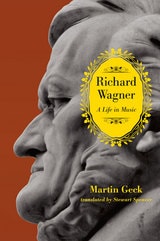
Richard Wagner
A Life in MusicMartin Geck
University of Chicago Press, 2013
Wagner has always inspired passionate admirers as well as numerous detractors, with the result that he has achieved a mythical stature nearly equal to that of the Valkyries and Viking heroes he popularized. There are few, if any, scholars today who know more about Wagner and his legacy than Geck, who builds upon his extensive research and considerable knowledge as one of the editors of the Complete Works to offer a distinctive appraisal of the composer and the operas. Using a wide range of sources, from contemporary scholars to the composer’s own words, Geck explores key ideas in Wagner’s life and works, while always keeping the music in the foreground. Geck discusses not only all the major operas, but also several unfinished operas and even the composer’s early attempts at quasi-Shakespearean drama.
Richard Wagner: A Life in Music is a landmark study of one of music’s most important figures, offering something new to opera enthusiasts, Wagnerians, and anti-Wagnerians alike.
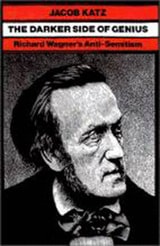
The Darker Side of Genius
Richard Wagner’s Anti-SemitismJacob. Katz
University Press of New England, 2002
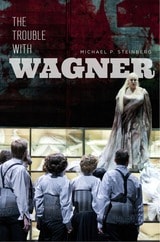
The Trouble with Wagner
Michael P. Steinberg
University of Chicago Press, 2018
Drawing on decades of engagement with Wagner and of experience teaching opera across disciplines, The Trouble with Wagner is packed with novel insights for experts and interested readers alike.
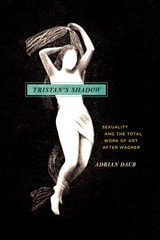
Tristan's Shadow
Sexuality and the Total Work of Art after WagnerAdrian Daub
University of Chicago Press, 2013
Das Rheingold, Die Walküre, and Siegfried. Parsifal. Tristan und Isolde. Both revered and reviled, Richard Wagner conceived some of the nineteenth century’s most influential operas—and created some of the most indelible characters ever to grace the stage. But over the course of his polarizing career, Wagner also composed volumes of essays and pamphlets, some on topics seemingly quite distant from the opera house. His influential concept of Gesamtkunstwerk—the “total work of art”—famously and controversially offered a way to unify the different media of an opera into a coherent whole. Less well known, however, are Wagner’s strange theories on sexuality—like his ideas about erotic acoustics and the metaphysics of sexual difference.
Drawing on the discourses of psychoanalysis, evolutionary biology, and other emerging fields of study that informed Wagner’s thinking, Adrian Daub traces the dual influence of Gesamtkunstwerk and eroticism from their classic expressions in Tristan und Isolde into the work of the generation of composers that followed, including Zemlinsky, d’Albert, Schreker, and Strauss. For decades after Wagner’s death, Daub writes, these composers continued to grapple with his ideas and with his overwhelming legacy, trying in vain to write their way out from Tristan’s shadow.