Results by title
10 books match the query 'Walker, Gila'
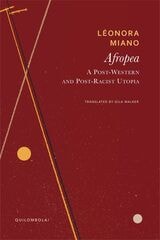
Afropea
A Post-Western and Post-Racist UtopiaLéonora Miano
Seagull Books, 2024
In this ground-breaking exploration, French-Cameroonian author Léonora Miano unveils a distinct sensibility shaped by her sub-Saharan African roots, setting her apart from those who identify as Afro-Europeans, or Afropeans, a group forged within the European context. Drawing on her unique perspective, Miano reveals the complexities that determine self-perception and complicate the bonds of identification and solidarity between Afro-Europeans and their sub-Saharan counterparts. Contrasting with France’s approach of lumping all citizens of sub-Saharan descent together under an “African” label, the author questions the effectiveness of such categorization in fostering a genuine connection to one’s country and assuming responsibility for its future.
Despite the many challenges, Miano finds hope in the Afropean identity—those who embrace the fusion of Africa and Europe within their self-designation—believing it holds the potential to embody a transformative, fraternal, anti-imperialist, and anti-racist societal project. Yet, she acknowledges the persistent struggle for acceptance and understanding in a society grappling with identity tensions. In this powerful narrative, Miano examines the allure of rejection that exists on both sides of the divide, offering a nuanced examination of the delicate balance between cultures, identities, and the pursuit of a utopian vision. Timely and captivating, this book is essential to understanding the Afropean perspective.

And the War Is Over . . .
Shmuel T. Meyer
Seagull Books, 2024
Sharp as a razor and as subtle as gossamer, Shmuel T. Meyer’s masterfully crafted stories evoke unique individual sensibilities and destinies, resonating with the sensual details, smells, tastes, music, and sounds of a specific time and place. And the War Is Over brings together three collections of short stories set on three continents in the aftermath of war: World War II and the Shoah in Grand European Express, the Korean War in The Great American Disaster, and the Arab-Israeli conflict in Kibbutz.
Characters both real and imagined run through a fabric so tightly woven that the threads of history and fiction can barely be separated: the Roman poet Clara who will never write again; Saul, a New York City police detective haunted by memories of the Pusan Perimeter; a brother out to avenge his sister’s murder; the son of a former Nazi who joins the Red Army Faction. Tracing moments of encounter, their paths cross those of Allen Ginsberg, Albert Cossery, John Coltrane, and Duke Ellington. Characters travel by train from Venice to Paris, hike up the Val d’Annivers, listen to jazz in Greenwich Village, and ride a motorcycle along the sandy road to Haifa. Under the shadow of war, with death lurking, these multifaceted, evocative lives move in a space between coincidence and fate.
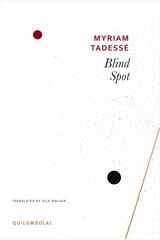
Blind Spot
Myriam Tadessé
Seagull Books, 2021
In Blind Spot, Myriam Tadessé exposes the difficulty, even the impossibility, for France to truly understand and celebrate the lived realities of mixed or biracial French citizens. What the French word métis—which translates to “half-breed” or “mixed-race”—hides is how central the notion of race actually is in a society that claims to repudiate it. The French film and theater world, in which Tadessé has made her career, appears unable to confront the individuality of the performers. They are required to correspond to categories—often based on race—that don’t allow for biracial identities. This classification not only contradicts France’s asserted ideals but also views as anomalies those who defy ethno-racial assumptions.
Drawing on her personal experiences as a biracial Ethiopian-French woman and her family history, Tadessé explores the realities of life for mixed-race individuals in France through her searing and honest memoir.
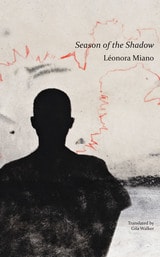
Season of the Shadow
Léonora Miano
Seagull Books, 2018
This powerful novel presents the early days of the transatlantic slave trade from a new perspective: that of the sub-Saharan population that became its first victims. Cameroonian novelist Léonora Miano presents a world on the brink of disappearing—a pre-colonial civilization with roots that stretch back for centuries. One day, a group of villagers finds twelve of their people missing. Where have they gone? Who is responsible? A collective dream, troubling a group of mothers in a communal dwelling, may have some of the answers, as the women’s missing sons call to them in terror; at the same time, a thick shadow settles over the huts, blocking out the light of day. It is the shadow of slavery, which will soon grow to blight the whole world.
Miano renders this brutal story in deliberately strange, dreamlike prose, befitting a situation that is, on its face, all but impossible for the villagers to believe.
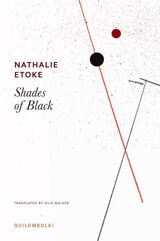
Shades of Black
Nathalie Etoke
Seagull Books, 2021
Situated at the crossroads of three countries—Cameroon, France, and, now, the United States—Nathalie Etoke is uniquely positioned for this polyphonic reflection on race. She examines what happens when race obliterates historical, social, cultural, and political differences among populations of African descent from different parts of the world. Focusing on recent and ongoing topics in the United States, including the murder of George Floyd, police brutality, the complex symbolism of Barack Obama and Kamala Harris, Etoke explores the relations of violence, oppression, dispossession, and inequalities that have brought us here, face to face with these existential questions: Are you breathing? Are we breathing?
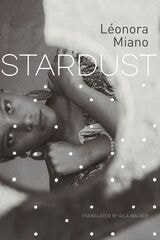
Stardust
Léonora Miano
Seagull Books, 2026
At just twenty-three, Louise finds herself stranded in a Paris shelter with her baby, Bliss, in her arms while battling homelessness, racism, and the struggles that come with being a female immigrant trying to keep her dignity alive. Yet amid the chaos, Louise encounters a fragile network of mothers and survivors from the Maghreb and sub-Saharan Africa, each carrying their own story of violence, addiction, and resilience.
Based on a pivotal moment in author Léonora Miano’s own life, Stardust is a luminous story of the quiet power of choosing life. The novel was first composed over twenty years ago and remained unpublished for years. Now, Miano invites readers into her world, shedding light on the invisible corners of French society and offering a moving meditation on motherhood, dignity, and renewal.
The Algerian Memoirs
Days of Hope and CombatHenri Alleg
Seagull Books, 2011
The personal history of journalist Henri Alleg is tied inextricably to the history of the French-Algerian Conflict. Best known for his book The Question, a first-hand account of his torture by French troops during the Algerian war for independence, Alleg is famous both for having brought the issue of French torture to the public eye and for his passionate work as a writer, a newspaperman, and a communist activist.

Torture and the War on Terror
Tzvetan Todorov
Seagull Books, 2009
One of the world's leading intellectuals dismantles the political and ethical justifications for institutional torture.
In the aftermath of 9/11, the US government approved interrogation tactics for enemy combatant detainees that could be defined as torture, which was outlawed in Europe in the eighteenth century and forbidden by the Geneva Conventions and the United Nations Convention Against Torture. In conjunction with these policies, the Bush administration vocally defended torture as a necessary tool in its Global War on Terror. Though the election of Barack Obama and his signing of the executive order to close the prison at Guantanamo Bay signaled a considerable shift away from the policies of the Bush era, the lessons to be learned from the Global War on Terror will remain relevant and necessary for many years to come.
In Torture and the War on Terror, Tzvetan Todorov argues that the use of the terms “war” and “terror” dehumanizes the enemy and permits treatment that would otherwise be impermissible. He examines the implications and corrupting impact of the attempt to impose “good” through violence and spread democratic values by unethical means. Todorov asks: Can violence overcome violence? Does the need to protect one’s own country justify violating human rights? Challenging one by one the political and ethical arguments in favor of torture, Todorov likens institutional torture to a cancer that is eroding our society and undermining the very fundamental democratic ideas of justice and right.
Twilight of Torment
II. HeritageLéonora Miano
Seagull Books, 2023
After beating his girlfriend and leaving her for dead on the street, Amok retraces his steps. Frightened by his act, which reproduces the violence of his father, he hopes to save the woman. But it is too late when he arrives at the scene; two women are already carrying the injured woman. Overwhelmed and not daring to reveal himself, he decides to find his father in order to learn how to rid himself of the dark force that he believes runs through the men of his lineage. He embarks on a journey that will be, more than anything, an inner one, forcing him to understand his story and choose a healthier way of being in the world. This second volume of Twilight of Torment is both intimate and political. Through the story of a man and his family, we discover an African bourgeoisie and its many social wanderings in a contemporary Africa whose future seems nebulous.
Twilight of Torment
MelancholyLéonora Miano
Seagull Books, 2022
Four women speak. They speak to the same man, who is not there. He is the son of the first, the great-yet-impossible love of the second, the platonic companion of the third, the older brother of the last. Speaking to him in his absence, it is to themselves that these women turn, examining their own stories to make sense of their journey, from twilight to twilight, through a mysterious stormy night in the middle of the dry season.
Together, the voices in Twilight of Torment: Melancholy, the first volume of a two-volume novel, perform a powerful and sometimes discordant jazz-inspired chorus about issues such as femininity, sexuality, self-love, and the intrusion of history into the intimate lives of people of African descent. Blackness confronts African-ness, love is sometimes discovered in the arms of another woman, the African renaissance tries to establish itself on the rubble of self-esteem damaged by history. Each of these women, with her own language and rhythm, ultimately represents a specific aspect of the tormented history of Africans in today’s world, and at the end of the night, they will each arrive at a dawn of hope.