Results by title
12 books match the query 'Walls'

Behind the Walls
A Guide for Families and Friends of Texas Prison InmatesJorge Antonio Renaud
University of North Texas Press, 2002
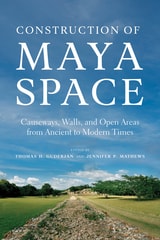
Construction of Maya Space
Causeways, Walls, and Open Areas from Ancient to Modern TimesThomas H. Guderjan
University of Arizona Press, 2023
Through fifteen engaging chapters, contributors examine the construction of spatial features by ancient, historic, and contemporary Maya elite and nonelite peoples to understand how they used spaces differently. Through cutting-edge methodologies and case studies, chapters consider how and why Maya people connected and divided the spaces they used daily in their homes, in their public centers, in their sacred places such as caves, and across their regions to inform us about the mental constructs they used to create their lives and cultures of the past.
Contributors
Elias Alcocer Puerto
Alejandra Alonso Olvera
Traci Ardren
Jaime J. Awe
Alejandra Badillo Sánchez
Nicolas C. Barth
Grace Lloyd Bascopé
Adolpho Iván Batún-Alpuche
Elizabeth Beckner
M. Kathryn Brown
Bernadette Cap
Miguel Covarrubias Reyna
Juan Fernandez Diaz
Alberto G. Flores Colin
Thomas H. Guderjan
C. Colleen Hanratty
Héctor Hernández Álvarez
Scott R. Hutson
Joshua J. Kwoka
Whitney Lytle
Aline Magnoni
Jennifer P. Mathews
Stephanie J. Miller
Shawn G. Morton
Holley Moyes
Shannon Plank
Dominique Rissolo
Patrick Rohrer
Carmen Rojas Sandoval
Justine M. Shaw
J. Gregory Smith
Travis W. Stanton
Karl A. Taube
Daniel Vallejo-Cáliz
No Walls of Stone
An Anthology of Literature by Deaf and Hard of Hearing WritersJill Jepson
Gallaudet University Press, 1992

Off the Walls
Inspired Re-Creations of Iconic ArtworksSarah Waldorf
J. Paul Getty Trust, The, 2020
Van Gogh’s Starry Night made out of spaghetti? Cat with a Pearl Earring? Frida Kahlo self-portraits with pets and toilet paper? While the world reeled from the rapid spread of the novel coronavirus (COVID-19), thousands of people around the globe, inspired by challenges from Getty and other museums, raided toy chests, repurposed pantry items, and enlisted family, roommates, and animals to re-create famous works of art at home. Astonishing in their creativity, wit, and ingenuity, these creations remind us of the power of art to unite us and bring joy during troubled times. Off the Walls: Inspired Re-Creations of Iconic Artworks celebrates these imaginative re-creations, bringing highlights from this challenge together in one whimsical, irresistible volume. Getty Publications will donate all profits from the sale of this book to a charity supporting art and artists.

Separate Games
African American Sport behind the Walls of SegregationDavid K. Wiggins
University of Arkansas Press, 2017
Winner of the 2017 NASSH Book Award for best edited collection.
The hardening of racial lines during the first half of the twentieth century eliminated almost all African Americans from white organized sports, forcing black athletes to form their own teams, organizations, and events. This separate sporting culture, explored in the twelve essays included here, comprised much more than athletic competition; these “separate games” provided examples of black enterprise and black self-help and showed the importance of agency and the quest for racial uplift in a country fraught with racialist thinking and discrimination.
The significance of this sporting culture is vividly showcased in the stories of the Cuban Giants baseball team, basketball’s New York Renaissance Five, the Tennessee State Tigerbelles track-and-field team, black college football’s Turkey Bowl Classic, car racing’s Gold and Glory Sweepstakes, Negro League Baseball’s East-West All-Star game, and many more. These teams, organizations, and events made up a vibrant national sporting complex that remained in existence until the integration of sports beginning in the late 1940s. Separate Games explores the fascinating ways sports helped bind the black community and illuminate race pride, business acumen, and organizational abilities.
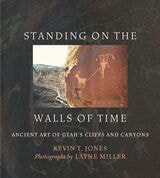
Standing on the Walls of Time
Ancient Art of Utah's Cliffs and CanyonsKevin T. Jones and Layne Miller
University of Utah Press, 2019
Miller’s photographs include many rare and relatively unknown panels and represent a lifetime of work by someone intimately familiar with the Colorado Plateau. The photos highlight the astonishing variety of rock art as well as the variability within traditions and time periods. Jones’s essays furnish general information about previous Colorado Plateau cultures and shine a light on rock art as art. The book emphasizes the exquisite artistry of these ancient works and their capacity to reach through the ages to envelop and inspire viewers.

Tear Down the Walls
White Radicalism and Black Power in 1960s RockPatrick Burke
University of Chicago Press, 2021
The Walls of Jericho
Rudolph Fisher
University of Michigan Press, 1994

Walls of Algiers
Narratives of the city through text and imageZeynep Çelik
J. Paul Getty Trust, The, 2023
The contributors' wide-ranging but intersecting essays span the disciplines of art history, social and cultural history, urban studies, and film history. Walls of Algiers presents a multifaceted look at the social use of urban space in a North African city. Its contributors' innovative methodologies allow important insights into often overlooked aspects of life in a city whose name even today conjures up enchantment as well as incomprehensible violence.
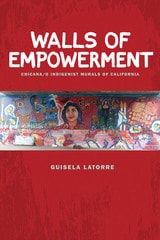
Walls of Empowerment
Chicana/o Indigenist Murals of CaliforniaBy Guisela Latorre
University of Texas Press, 2008
Exploring three major hubs of muralist activity in California, where indigenist imagery is prevalent, Walls of Empowerment celebrates an aesthetic that seeks to firmly establish Chicana/o sociopolitical identity in U.S. territory. Providing readers with a history and genealogy of key muralists' productions, Guisela Latorre also showcases new material and original research on works and artists never before examined in print.
An art form often associated with male creative endeavors, muralism in fact reflects significant contributions by Chicana artists. Encompassing these and other aspects of contemporary dialogues, including the often tense relationship between graffiti and muralism, Walls of Empowerment is a comprehensive study that, unlike many previous endeavors, does not privilege non-public Latina/o art. In addition, Latorre introduces readers to the role of new media, including performance, sculpture, and digital technology, in shaping the muralist's "canvas."
Drawing on nearly a decade of fieldwork, this timely endeavor highlights the ways in which California's Mexican American communities have used images of indigenous peoples to raise awareness of the region's original citizens. Latorre also casts murals as a radical force for decolonization and liberation, and she provides a stirring description of the decades, particularly the late 1960s through 1980s, that saw California's rise as the epicenter of mural production. Blending the perspectives of art history and sociology with firsthand accounts drawn from artists' interviews, Walls of Empowerment represents a crucial turning point in the study of these iconographic artifacts.
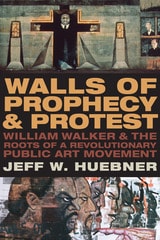
Walls of Prophecy and Protest
William Walker and the Roots of a Revolutionary Public Art MovementJeff W. Huebner
Northwestern University Press, 2019
Though his art could not have been more public, Walker maintained a low profile during his working life and virtually withdrew from the public eye after his retirement in 1989. Author Jeff W. Huebner met Walker in 1990 and embarked on a series of insightful interviews that stretched over the next two decades. Those meetings and years of research form the basis of Walls of Prophecy and Protest, the story of Walker’s remarkable life and the movement that he inspired.
Featuring forty-three color images of Walker’s work, most long since destroyed or painted over, this handsome edition reveals the artist who was the primary figure behind Chicago’s famed Wall of Respect and who created numerous murals that depicted African American historical figures, protested social injustice, and promoted love, respect, racial unity, and community change.
Walls
Enclosure and Ethics in the Modern LandscapeThomas Oles
University of Chicago Press, 2014
In Walls, Oles shows how our minds and our politics are shaped by–and shape–our divisions in the landscape. He traces the rich array of practices and meanings connected to the making and marking of boundaries across history and prehistory, and he describes how these practices have declined in recent centuries. The consequence, he argues, is all around us in the contemporary landscape, riven by walls shoddy in material and mean in spirit. Yet even today, Oles demonstrates, every wall remains potentially an opening, a stage, that critical place in the landscape where people present themselves and define their obligations to one another. In an evocative epilogue, Oles brings to life a society of productive, intentional, and ethical enclosure—one that will leave readers more hopeful about the divided landscapes of the future.