Results by title

4 books match the query 'Wang, Xinyuan'
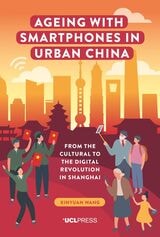
cover of Ageing with Smartphones in Urban China: From the Cultural to the Digital Revolution in Shanghai

Ageing with Smartphones in Urban China

From the Cultural to the Digital Revolution in Shanghai

Xinyuan Wang

University College London, 2023

An anthropological account of the experience of aging in the smartphone era in China.

The current oldest generation in Shanghai was born at a time when the average household could not afford electric lights, but today they can turn their lights off using smartphone apps. Grounded in extensive ethnographic fieldwork in Shanghai, Ageing with Smartphones in Urban China tackles the intersection between the “two revolutions” experienced by the older generation in Shanghai: the contemporary smartphone-based digital revolution and the earlier communist revolutions and argues that we can only understand the smartphone revolution if we first appreciate the long-term consequences of these people’s experiences during the communist revolutions. Supported by detailed ethnographic material, the observations and analysis here provide a panorama view of the social landscape of contemporary China, addressing such topics the digital and everyday life, aging and healthcare, intergenerational relations and family development, community building and grassroots organizations, collective memories, and political attitudes among ordinary Chinese people.
 
[more]
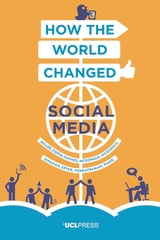
cover of How the World Changed Social Media

How the World Changed Social Media

Daniel Miller, Elisabetta Costa, Nell Haynes, Tom McDonald, Razvan Nicolescu, Jolynna Sinanan, Juliano Spyer, Shriram Venkatraman, and Xinyuan Wang,

University College London, 2016
How the World Changed Social Media is the first book in Why We Post, a book series that investigates the findings of anthropologists who each spent 15 months living in communities across the world. This book offers a comparative analysis summarising the results of the research and explores the impact of social media on politics and gender, education and commerce. What is the result of the increased emphasis on visual communication? Are we becoming more individual or more social? Why is public social media so conservative? Why does equality online fail to shift inequality offline? How did memes become the moral police of the internet? Supported by an introduction to the project’s academic framework and theoretical terms that help to account for the findings, the book argues that the only way to appreciate and understand something as intimate and ubiquitous as social media is to be immersed in the lives of the people who post. Only then can we discover how people all around the world have already transformed social media in such unexpected ways and assess the consequences.
[more]
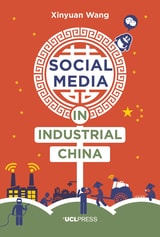
cover of Social Media in Industrial China

Social Media in Industrial China

Xinyuan Wang

University College London, 2016

‘Life outside the mobile phone is unbearable.’ Lily, 19, factory worker Described as the biggest migration in human history, an estimated 250 million Chinese people have left their villages in recent decades to live and work in urban areas. Xinyuan Wang spent 15 months living among a community of these migrants in a small factory town in southeast China to track their use of social media. It was here she witnessed a second migration taking place: a movement from offline to online. As Wang argues, this is not simply a convenient analogy but represents the convergence of two phenomena as profound and consequential as each other, where the online world now provides a home for the migrant workers who feel otherwise ‘homeless’. Wang’s fascinating study explores the full range of preconceptions commonly held about Chinese people – their relationship with education, with family, with politics, with ‘home’ – and argues why, for this vast population, it is time to reassess what we think we know about contemporary China and the evolving role of social media.
[more]
cover of Understanding China through Digital Anthropology

Understanding China through Digital Anthropology

Edited by Daniel Miller and Xinyuan Wang

University College London, 2026

A reconsideration of the meaning of “digital” in light of China's distinct technological trajectory. 

Understanding China through Digital Anthropology questions our understanding of digital technologies by demonstrating fundamental differences in the meaning of both technology and the digital between China and the West. This follows from a longstanding historical divergence in the meaning of and attitude towards the relationship between technology and humanity. The book includes coverage of a considerable body of scholarship on digital anthropology previously only published in Chinese. 

[more]