Results by title
34 books match the query 'War on Terrorism, 2001-2009'
A Foreigner Carrying in the Crook of His Arm a Tiny Bomb
Amitava Kumar
Duke University Press, 2010

A War on Terror
Afghanistan and AfterPaul Rogers
Pluto Press, 2004
Paul Rogers is one of the world's leading security experts. Since the 11 September attacks, he has been a regular guest on TV news channels throughout America and Britain, where he has offered expert advice on the real implications of 9/11 and Bush's 'war on terror'. His articles in newspapers around the world, and in the web journal Open Democracy, have become essential reading for many thousands of people, including government officials, senior military, heads of UN agencies, opinion formers, journalists and peace activists.
A War on Terror is Paul Roger's radical assessment of Bush's new policy, the way it has affected world security and the grave implications that it holds for future peace, not only in the Middle East but throughout the world. Moving from the war in Afghanistan and its aftermath to the Israeli/Palestinian conflict, the continuing development of al-Qaida and its associates through to the war on Iraq, Rogers presents a uniquely cogent analysis of these rapid and traumatic events.
In a world in which the US and other states of the Atlantic community are increasingly speaking a different language to that of the majority of the world, Paul Rogers offers a vital critical assessment of the language of dominance and control as 'the New American Century' unfolds.
For the US, in particular, the post-9/11 world is one in which it is essential to maintain firm control of international security, extending to pre-emptive military action. In this book, Rogers demonstrates how futile, mistaken and deeply counter-productive that belief is, and points the way to more effective routes to a more just and secure world.
An Empire of Indifference
American War and the Financial Logic of Risk ManagementRandy Martin
Duke University Press, 2007
Drawing on theorists including Michel Foucault, Giorgio Agamben, Michael Hardt, Antonio Negri, and Achille Mbembe, Martin illuminates a frightening financial logic that must be understood in order to be countered. Martin maintains that finance divides the world between those able to avail themselves of wealth opportunities through risk taking (investors) and those who cannot do so, who are considered “at risk.” He contends that modern-day American imperialism differs from previous models of imperialism, in which the occupiers engaged with the occupied to “civilize” them, siphon off wealth, or both. American imperialism, by contrast, is an empire of indifference: a massive flight from engagement. The United States urges an embrace of risk and self-management on the occupied and then ignores or dispossesses those who cannot make the grade.
Baseball and Rhetorics of Purity
The National Pastime and American Identity During the War on TerrorMichael L. Butterworth
University of Alabama Press, 2010
An investigation into the culture and mythology of baseball, a study of its limits and failures, and an invitation to remake the game in a more democratic way.
Baseball has long been considered America’s “national pastime,” touted variously as a healthy diversion, a symbol of national unity, and a model of democratic inclusion. But, according to Michael Butterworth, such favorable rhetoric belies baseball’s complicity in the rhetorical construction of a world defined by good and evil.
Baseball and Rhetorics of Purity is an investigation into the culture and mythology of baseball, a study of its limits and failures, and an invitation to remake the game in a more democratic way. It pays special attention to baseball’s role in the reconstruction of American identity after September 11, 2001. This study is framed by a discussion that links the development of baseball to the discourses of innocence and purity in 19th-century America. From there, it examines ritual performances at baseball games; a traveling museum exhibit sponsored by the National Baseball Hall of Fame and Museum; the recent debate about the use of performance-enhancing drugs; the return of Major League Baseball to Washington, D.C., in 2005; and the advent of the World Baseball Classic in 2006.
Butterworth argues that by promoting myths of citizenship and purity, post-9/11 discourse concerning baseball ironically threatens the health of the democratic system and that baseball cannot be viewed as an innocent diversion or escape. Instead, Butterworth highlights how the game on the field reflects a more complex and diverse worldview, and makes a plea for the game’s recovery, both as a national pastime and as a site for celebrating the best of who we are and who we can be.
Beyond September 11
An Anthology of DissentEdited by Phil Scraton
Pluto Press, 2002
This anthology includes some of the world's leading commentators - Noam Chomsky, Robert Fisk, Naomi Klein, John Pilger, Paul Foot and A.Sivanandan. It presents accessible, detailed and often deeply personal accounts of the aftermath, the bombing of Afghanistan and the dubious claims for its legality. From investigative journalists to critical academics, human rights lawyers and anti-racist campaigners, the contributors are united in their opposition to military intervention in Afghanistan and beyond and to the attack on civil liberties in the US, the UK and Europe.
From the US and Canada, Herman and Julia Schwendinger, Jonathan Farley, Tony Platt, Cecilia O'Leary, Christian Parenti and Michael Mandel are among critical academics who assess the validity, lawfulness and political consequences of the Bush/Blair agenda. European based commentators include Martti Gronfors and Thomas Mathiesen.
Examining the the context and rhetoric of US vengeance -- ennobled by the symbolic title 'Enduring Freedom' -- they challenge political and popular definitions, constructions,pathologisation and reporting of terrorism. In questioning the representation of war as 'just', the anthology focuses on civilian deaths in Afghanistan, evidence of US/allied atrocities, violations of prisoners' rights and US determination to escalate military offensives, regardless of global destabilisation.
Beyond the Checkpoint
Visual Practices in America's Global War on TerrorRebecca A. Adelman
University of Massachusetts Press, 2014
Tracing the connections between citizenship and spectatorship, and moving beyond the close reading of visual representations, this book focuses on the institutions and actors that create, monitor, and regulate the visual landscape of the GWOT. Adelman looks around and through common images to follow the complex patterns of practice by which institutions and audiences engage them in various contexts. In the process, she proposes a new methodology for studying visual cultures of conflict, and related phenomena like violence, terror, and suffering that are notoriously difficult to represent.
Attending to previously unanalyzed dimensions of this conflict, this book illustrates the complexity of GWOT visual culture and the variegated experiences of citizenship that result as Americans navigate this terrain.
Civic War and the Corruption of the Citizen
Peter Alexander Meyers
University of Chicago Press, 2008
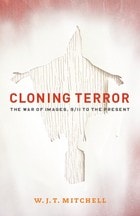
Cloning Terror
The War of Images, 9/11 to the PresentW. J. T. Mitchell
University of Chicago Press, 2010
The phrase “War on Terror” has quietly been retired from official usage, but it persists in the American psyche, and our understanding of it is hardly complete. Nor will it be, W. J. T Mitchell argues, without a grasp of the images that it spawned, and that spawned it.
Exploring the role of verbal and visual images in the War on Terror, Mitchell finds a conflict whose shaky metaphoric and imaginary conception has created its own reality. At the same time, Mitchell locates in the concept of clones and cloning an anxiety about new forms of image-making that has amplified the political effects of the War on Terror. Cloning and terror, he argues, share an uncanny structural resemblance, shuttling back and forth between imaginary and real, metaphoric and literal manifestations. In Mitchell’s startling analysis, cloning terror emerges as the inevitable metaphor for the way in which the War on Terror has not only helped recruit more fighters to the jihadist cause but undermined the American constitution with “faith-based” foreign and domestic policies.
Bringing together the hooded prisoners of Abu Ghraib with the cloned stormtroopers of the Star Wars saga, Mitchell draws attention to the figures of faceless anonymity that stalk the ever-shifting and unlocatable “fronts” of the War on Terror. A striking new investigation of the role of images from our foremost scholar of iconology, Cloning Terror will expand our understanding of the visual legacy of a new kind of war and reframe our understanding of contemporary biopower and biopolitics.
Combating Jihadism
American Hegemony and Interstate Cooperation in the War on TerrorismBarak Mendelsohn
University of Chicago Press, 2009
Cultures of Fear
A Critical ReaderEdited by Uli Linke and Danielle Taana Smith
Pluto Press, 2009
In Cultures of Fear, a truly world-class line up of scholars explore the formation and normalisation of fear in the context of war and terrorism.
"Freedom from fear" is a universal right and fundamental for human well-being. People often look to governments, humanitarian agencies, and other institutions to further this aim. However, this book shows that these organisations often use the same "logic of fear" to monitor, control, and contain human beings in zones of violence.
This is an excellent interdisciplinary reader for students of anthropology, sociology and politics. Contributors include Noam Chomsky, Slavoj Zizek, Jean Baudrillard, Catharine MacKinnon, Neil Smith, Cynthia Enloe, David L. Altheide, Cynthia Cockburn and Carolyn Nordstrum.
Cutting the Fuse
The Explosion of Global Suicide Terrorism and How to Stop ItRobert A. Pape and James K. Feldman
University of Chicago Press, 2012
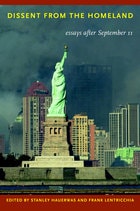
Dissent from the Homeland
Essays after September 11Stanley Hauerwas and Frank Lentricchia, eds.
Duke University Press, 2003
Whether illuminating the narratives that have been used to legitimate the war on terror, reflecting on the power of American consumer culture to transform the attack sites into patriotic tourist attractions, or insisting that to be a Christian is to be a pacifist, these essays refuse easy answers. They consider why the Middle East harbors a deep-seated hatred for the United States. They argue that the U.S. drive to win the cold war made the nation more like its enemies, leading the government to support ruthless anti-Communist tyrants such as Mobutu, Suharto, and Pinochet. They urge Americans away from the pitfall of national self-righteousness toward an active peaceableness—an alert, informed, practiced state of being—deeply contrary to both passivity and war. Above all, the essays assembled in Dissent from the Homeland are a powerful entreaty for thought, analysis, and understanding. Originally published as a special issue of the journal South Atlantic Quarterly, Dissent from the Homeland has been expanded to include new essays as well as a new introduction and postscript.
Contributors. Srinivas Aravamudan, Michael J. Baxter, Jean Baudrillard, Robert N. Bellah, Daniel Berrigan, Wendell Berry, Vincent J. Cornell, David James Duncan, Stanley Hauerwas, Fredric Jameson, Frank Lentricchia, Catherine Lutz, Jody McAuliffe, John Milbank, Peter Ochs, Donald E. Pease, Anne R. Slifkin, Rowan Williams, Susan Willis, Slavoj Zizek
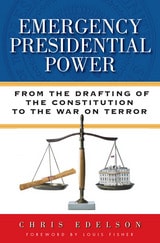
Emergency Presidential Power
From the Drafting of the Constitution to the War on TerrorChris Edelson; Foreword by Louis Fisher
University of Wisconsin Press, 2013
Winner, Crader Family Book Prize in American Values, Department of History and Crader Family Endowment for American Values, Southeast Missouri State University
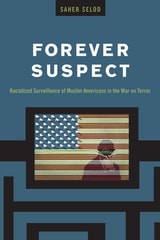
Forever Suspect
Racialized Surveillance of Muslim Americans in the War on TerrorSelod, Saher
Rutgers University Press, 2018
Frustrated Empire
US Foreign Policy, 9/11 to IraqDavid Ryan
Pluto Press, 2007

History And 9/11
Joanne Meyerowitz
Temple University Press, 2003
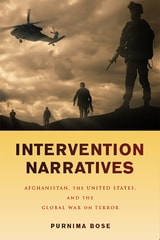
Intervention Narratives
Afghanistan, the United States, and the Global War on TerrorPurnima Bose
Rutgers University Press, 2020
No God but Man
On Race, Knowledge, and TerrorismAtiya Husain
Duke University Press, 2025
Ontopower
War, Powers, and the State of PerceptionBrian Massumi
Duke University Press, 2015
Our Grief Is Not a Cry for War
The Movement to Stop the War on TerrorJeremy Varon
University of Chicago Press, 2025
Just after 9/11, President George W. Bush climbed the rubble where the World Trade Center had stood. Surrounded by shouts of anger, he said, “The people who knocked these buildings down will hear all of us soon!” With these words, Bush ushered in the War on Terror. Quickly, a global protest movement mobilized against it, reshaping the political, moral, and media landscape.
Jeremy Varon’s Our Grief Is Not a Cry for War is the definitive history of that movement. Millions of Americans participated in thousands of acts of protest, from demonstrations to civil disobedience to peace encampments in Iraq. On February 15, 2003, up to 30 million people worldwide took to the streets in the largest protest in human history. But this enormous outcry was not enough to stop the US invasion of Iraq. Varon explores the limits to the movement’s power but also shows how it worked to make opposition to the Iraq War a part of public debate, hastening its end and limiting the broader War on Terror. In the book, you’ll meet the families of the 9/11 victims, Iraq War veterans, and Gold Star families who spoke out against war.
Written with a lively and revelatory voice, Our Grief Is Not a Cry for War illuminates the passion of the peace movement, the mark it made, and the enduring legacies of the War on Terror.
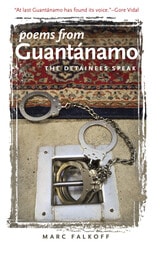
Poems from Guantanamo
The Detainees SpeakMarc Falkoff
University of Iowa Press, 2007
Since 2002, at least 775 men have been held in the U.S. detention center at Guantánamo Bay, Cuba. According to Department of Defense data, fewer than half of them are accused of committing any hostile act against the United States or its allies. In hundreds of cases, even the circumstances of their initial detainment are questionable.
This collection gives voice to the men held at Guantánamo. Available only because of the tireless efforts of pro bono attorneys who submitted each line to Pentagon scrutiny, Poems from Guantánamo brings together twenty-two poems by seventeen detainees, most still at Guantánamo, in legal limbo.
If, in the words of Audre Lorde, poetry “forms the quality of light within which we predicate our hopes and dreams toward survival and change,” these verses—some originally written in toothpaste, others scratched onto foam drinking cups with pebbles and furtively handed to attorneys—are the most basic form of the art.
Race and Human Rights
Curtis Stokes
Michigan State University Press, 2008
The terrorist attacks against U.S. targets on September 11, 2001, and the subsequent wars in Afghanistan and Iraq, sparked an intense debate about "human rights." According to contributors to this provocative book, the discussion of human rights to date has been far too narrow. They argue that any conversation about human rights in the United States must include equal rights for all residents.
Essays examine the historical and intellectual context for the modern debate about human rights, the racial implications of the war on terrorism, the intersection of racial oppression, and the national security state. Others look at the Pinkerton detective agency as a forerunner of the Federal Bureau of Investigation, the role of Africa in post–World War II American attempts at empire-building, and the role of immigration as a human rights issue.
Scapegoats of September 11th
Hate Crimes & State Crimes in the War on TerrorWelch, Michael
Rutgers University Press, 2006
The altered American landscape, however, includes more than security measures and ID cards. The country's desperate quest for security is visible in many less obvious, yet more insidious ways. In Scapegoats of September 11th, criminologist Michael Welch argues that the "war on terror" is a political charade that delivers illusory comfort, stokes fear, and produces scapegoats used as emotional relief. Regrettably, much of the outrage that resulted from 9/11 has been targeted at those not involved in the attacks on the Pentagon or the Twin Towers. As this book explains, those people have become the scapegoats of September 11th. Welch takes on the uneasy task of sorting out the various manifestations of displaced aggression, most notably the hate crimes and state crimes that have become embarrassing hallmarks both at home and abroad.
Drawing on topics such as ethnic profiling, the Abu Ghraib scandal, Guantanamo Bay, and the controversial Patriot Act, Welch looks at the significance of knowledge, language, and emotion in a post-9/11 world. In the face of popular and political cheerleading in the war on terror, this book presents a careful and sober assessment, reminding us that sound counterterrorism policies must rise above, rather than participate in, the propagation of bigotry and victimization.
Selling Fear
Counterterrorism, the Media, and Public OpinionBrigitte L. Nacos, Yaeli Bloch-Elkon, Robert Y. Shapiro
University of Chicago Press, 2011
While we’ve long known that the strategies of terrorism rely heavily on media coverage of attacks, Selling Fear is the first detailed look at the role played by media in counterterrorism—and the ways that, in the wake of 9/11, the Bush administration manipulated coverage to maintain a climate of fear.
Drawing on in-depth analysis of counterterrorism in the years after 9/11—including the issuance of terror alerts and the decision to invade Iraq—the authors present a compelling case that the Bush administration hyped fear, while obscuring civil liberties abuses and concrete issues of preparedness. The media, meanwhile, largely abdicated its watchdog role, choosing to amplify the administration’s message while downplaying issues that might have called the administration’s statements and strategies into question. The book extends through Hurricane Katrina, and the more skeptical coverage that followed, then the first year of the Obama administration, when an increasingly partisan political environment presented the media, and the public, with new problems of reporting and interpretation.
Selling Fear is a hard-hitting analysis of the intertwined failures of government and media—and their costs to our nation.
September 11 in History
A Watershed Moment?Mary L. Dudziak, ed.
Duke University Press, 2003
From a variety of perspectives, the contributors to this collection scrutinize claims about September 11, in terms of both their historical validity and their consequences. Essays range from an analysis of terms like “ground zero,” “homeland,” and “the axis of evil” to an argument that the U.S. naval base at Guantánamo Bay has become a site for acting out a repressed imperial history. Examining the effect of the attacks on Islamic self-identity, one contributor argues that Osama bin Laden enacted an interpretation of Islam on September 11 and asserts that progressive Muslims must respond to it. Other essays focus on the deployment of Orientalist tropes in categorizations of those who “look Middle Eastern,” the blurring of domestic and international law evident in a number of legal developments including the use of military tribunals to prosecute suspected terrorists, and the justifications for and consequences of American unilateralism. This collectionultimately reveals that everything did not change on September 11, 2001, but that some foundations of democratic legitimacy have been significantly eroded by claims that it did.
Contributors. Khaled Abou el Fadl, Mary L. Dudziak, Christopher L. Eisgruber, Laurence R. Helfer, Sherman A. Jackson, Amy B. Kaplan, Elaine Tyler May, Lawrence G. Sager, Ruti G. Teitel, Leti Volpp, Marilyn B. Young
Shadow Lives
The Forgotten Women of the War on TerrorVictoria Brittain
Pluto Press, 2013
Shadow Lives reveals the unseen side of the '9/11 wars': their impact on the wives and families of men incarcerated in Guantanamo, or in prison or under house arrest in Britain and the US. Victoria Brittain shows how these families have been made socially invisible and a convenient scapegoat for the state in order to exercise arbitrary powers under the cover of the 'War on Terror'.
A disturbing exposé of the perilous state of freedom and democracy in our society, the book reveals how a culture of intolerance and cruelty has left individuals at the mercy of the security services’ unverifiable accusations and punitive punishments.
Both a j'accuse and a testament to the strength and humanity of the families, Shadow Lives shows the methods of incarceration and social control being used by the British state and gives a voice to the families whose lives have been turned upside down. In doing so it raises urgent questions about civil liberties which no one can afford to ignore.
Terrorism
The Self-Fulfilling ProphecyJoseba Zulaika
University of Chicago Press, 2009
In counterterrorism circles, the standard response to questions about the possibility of future attacks is the terse one-liner: “Not if, but when.” This mantra supposedly conveys a realistic approach to the problem, but, as Joseba Zulaika argues in Terrorism, it functions as a self-fulfilling prophecy. By distorting reality to fit their own worldview, the architects of the War on Terror prompt the behavior they seek to prevent—a twisted logic that has already played out horrifically in Iraq. In short, Zulaika contends, counterterrorism has become pivotal in promoting terrorism.
Exploring the blind spots of counterterrorist doctrine, Zulaika takes readers on a remarkable intellectual journey. He contrasts the psychological insight of Truman Capote’s In Cold Blood with The 9/11 Commission Report, plumbs the mindset of terrorists in works by Orianna Fallaci and Jean Genet, maps the continuities between the cold war and the fight against terrorism, and analyzes the case of a Basque terrorist who tried to return to civilian life. Zulaika’s argument is powerful, inventive, and rich with insights and ideas that provide a new and sophisticated perspective on the War on Terror.
Terrorizing Latina/o Immigrants
Race, Gender, and Immigration Policy Post-9/11Anna Sampaio
Temple University Press, 2015
Immigration politics has been significantly altered by the advent of America’s war on terror and the proliferation of security measures. In her cogent study, Terrorizing Latina/o Immigrants, Anna Sampaio examines how these processes are racialized and gendered and how they impose inequitable burdens on Latina/o immigrants. She interrogates the rise of securitization, restrictive legislation, and the return of large-scale immigration raids and describes how these re-articulate and re-inscribe forms of racial and gender hierarchy.
Terrorizing Latina/o Immigrants demonstrates how the ascendance of America as a security state serves as a template to scrutinize, harass, and encumber immigrants while also reconfiguring citizenship. Sampaio uses intersectional analysis coupled with theoretical and empirical approaches to develop a critical framework for analyzing current immigration politics.
Sampaio provides a sustained and systematic examination of policy and enforcement shifts impacting Latinas/os. Her book concludes with an examination of immigration reform under the Obama administration, contrasting the promise of hope and change with the reality of increased detentions, deportations, and continued marginalization.
The Betrayal of Dissent
Beyond Orwell, Hitchens and the New American CenturyScott Lucas
Pluto Press, 2004
political writer, and the standard-bearer of honesty and decency for the honourable 'Left'. In this controversial polemic, Scott Lucas argues that the exaltation of Orwell, far from upholding dissent against the State, has sought to quash such opposition. Indeed, Orwell has become the icon of those who, in the pose of the contrarian, try to silence public opposition to US and U K foreign policy in the 'War on Terror'.
Lucas's lively and readable critique of public intellectuals including Christopher Hitchens, Michael Walzer, David Aaronovitch, and Johann Hari – who have all invoked Orwellian honesty and decency to shut down dissent – will appeal to anyone disillusioned with the wars in Afghanistan and Iraq.
Lucas contends that these leading journalists and commentators have used Orwell to justify their own political transition from radicals to upholders of the establishment. All of them play influential roles in supporting the UK and US governments' charge that opponents of war -- and those who question the motives behind American foreign policy and its implementation -- should be condemned as 'appeasers of mass murder'.
This controversial book shows how Orwell has been used since 9/11 to justify, in the guise of independent thought, the suppression of dissent. We must rescue ourselves from Orwell and from those who take on his guise so, as Lucas puts it, our ‘silencing is… vital to a "manufacture of consent" for the wars which are supposedly being fought in our name and for our good’.
The Intensification of Surveillance
Crime, Terrorism and Warfare in the Information AgeEdited by Kirstie Ball and Frank Webster
Pluto Press, 2003
The War of My Generation
Youth Culture and the War on TerrorKieran, David
Rutgers University Press, 2015
The War of My Generation is the first essay collection to focus specifically on how the terrorist attacks and their aftermath have shaped these new generations of Americans. Drawing from a variety of disciplines, including anthropology, sociology, cultural studies, and literary studies, the essays cover a wide range of topics, from graphic war images in the classroom to computer games designed to promote military recruitment to emails from parents in the combat zone. The collection considers what cultural factors and products have shaped young people's experience of the 9/11 attacks, the wars that have followed, and their experiences as emerging citizen-subjects in that moment. Revealing how young people understand the War on Terror—and how adults understand the way young people think—The War of My Generation offers groundbreaking research on catastrophic events still fresh in our minds.
Torture and the War on Terror
Tzvetan Todorov
Seagull Books, 2009
One of the world's leading intellectuals dismantles the political and ethical justifications for institutional torture.
In the aftermath of 9/11, the US government approved interrogation tactics for enemy combatant detainees that could be defined as torture, which was outlawed in Europe in the eighteenth century and forbidden by the Geneva Conventions and the United Nations Convention Against Torture. In conjunction with these policies, the Bush administration vocally defended torture as a necessary tool in its Global War on Terror. Though the election of Barack Obama and his signing of the executive order to close the prison at Guantanamo Bay signaled a considerable shift away from the policies of the Bush era, the lessons to be learned from the Global War on Terror will remain relevant and necessary for many years to come.
In Torture and the War on Terror, Tzvetan Todorov argues that the use of the terms “war” and “terror” dehumanizes the enemy and permits treatment that would otherwise be impermissible. He examines the implications and corrupting impact of the attempt to impose “good” through violence and spread democratic values by unethical means. Todorov asks: Can violence overcome violence? Does the need to protect one’s own country justify violating human rights? Challenging one by one the political and ethical arguments in favor of torture, Todorov likens institutional torture to a cancer that is eroding our society and undermining the very fundamental democratic ideas of justice and right.
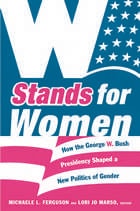
W Stands for Women
How the George W. Bush Presidency Shaped a New Politics of GenderMichaele L. Ferguson and Lori J. Marso, eds.
Duke University Press, 2007
In W Stands for Women ten feminist scholars analyze various aspects of Bush’s persona, language, and policy to show how his administration has shaped a new politics of gender. One contributor points out the shortcomings of “compassionate conservatism,” a political philosophy that requires a weaker class to be the subject of compassion. Another examines Lynndie England’s participation in the abuse of prisoners at Abu Ghraib in relation to the interrogation practices elaborated in the Army Field Manual, practices that often entail “feminizing” detainees by stripping them of their masculine gender identities. Whether investigating the ways that Bush himself performs masculinity or the problems with discourse that positions non-Western women as supplicants in need of saving, these essays highlight the far-reaching consequences of the Bush administration’s conflation of feminist rhetoric, conservative gender ideology, and neoconservative national security policy.
Contributors. Andrew Feffer, Michaele L. Ferguson, David S. Gutterman, Mary Hawkesworth, Timothy Kaufman-Osborn, Lori Jo Marso, Danielle Regan, R. Claire Snyder, Iris Marion Young, Karen Zivi
Michaela Ferguson and Karen Zivi appeared on KPFA’s Against the Grain on September 11, 2007. Listen to the audio.
Michaela Ferguson and Lori Jo Marso appeared on WUNC’s The State of Things on August 30, 2007. Listen to the audio.
Weapon of the Strong
Conversations on US State TerrorismJon Bailes and Cihan Aksan
Pluto Press, 2012
Weapon of the Strong analyses the forms of US state terrorism through exclusive, never before published interviews with leading commentators and theorists, including Noam Chomsky, Edward S. Herman, Richard A. Falk, Judith Butler, Ted Honderich, Norman Finkelstein and Gilbert Achcar. The interviews explore the different aspects of state terrorism: its functions, institutional supports and the legal and moral arguments surrounding it, and consider specific case studies in Europe, Latin America and the Middle East.
Weapon of the Strong makes an indispensable contribution to contemporary debates on terrorism and constructs a damning critique of US foreign policy from World War Two to the present day.