Results by title
7 books match the query 'War photography'

Aerial Aftermaths
Wartime from AboveCaren Kaplan
Duke University Press, 2018
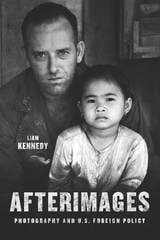
Afterimages
Photography and U.S. Foreign PolicyLiam Kennedy
University of Chicago Press, 2016
Liam Kennedy here maps the evolving relations between the American way of war and photographic coverage of it. Organized in its first section around key US military actions over the last fifty years, the book then moves on to examine how photographers engaged with these conflicts on wider ethical and political grounds, and finally on to the genre of photojournalism itself. Illustrated throughout with examples of the photographs being considered, Afterimages argues that photographs are important means for critical reflection on war, violence, and human rights. It goes on to analyze the high ethical, sociopolitical, and legalistic value we place on the still image’s ability to bear witness and stimulate action.
Cold War Camera
Thy Phu, Erina Duganne, and Andrea Noble, editors
Duke University Press, 2023
Contributors. Ariella Azoulay, Jennifer Bajorek, Erina Duganne, Evyn Lê Espiritu Gandhi, Eric Gottesman, Tong Lam, Karintha Lowe, Ángeles Donoso Macaya, Darren Newbury, Andrea Noble, Sarah Parsons, Gil Pasternak, Thy Phu, Oksana Sarkisova, Olga Shevchenko, Laura Wexler, Guigui Yao, Donya Ziaee, Marta Ziętkiewicz
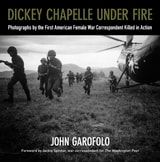
Dickey Chapelle Under Fire
Photographs by the First American Female War Correspondent Killed in ActionJohn Garofolo
Wisconsin Historical Society Press, 2026
Striking photographs and stories from more than two decades on the frontlines by a groundbreaking photojournalist—and the first female American war correspondent to be killed in action.
In 1941, twenty-two-year-old Georgette "Dickey" Chapelle sold her first photo essay to Look magazine. A year later, with World War II underway, she was photographing American soldiers in combat training in Panama. By the end of the war, she had captured the devastation at Iwo Jima and Okinawa, and in the ensuing decades, Dickey and her camera were on the scene at many of the world’s hotspots—from Cuba and the Dominican Republic to Algeria and Lebanon to Vietnam and Laos. Dickey Chapelle Under Fire exposes her remarkable story and shares over 150 stunning images from her extraordinary career as a photojournalist.
In the male-dominated world of war journalism, Chapelle fought to be taken seriously. She eventually earned the respect of many of her male colleagues and broke down barriers for future generations of female journalists. She embedded herself with military units on frontlines around the globe, capturing not only the horrors of war but also the camaraderie and everyday routines of service men and women.
Always one to follow the action, Chapelle traveled with Algerian rebels across the North African desert and with Fidel Castro through the jungles of Cuba. She spent two months in a Hungarian prison after being caught smuggling aid to refugees fleeing a Soviet invasion. Beginning in 1961, Chapelle set her lens and viewfinder on Southeast Asia, capturing the growing conflict there, until she was killed while on patrol with marines in Vietnam in April 1965—making her the first female American war correspondent to be killed in action.
For twenty-five years, Chapelle's photographs graced the pages of National Geographic, the National Observer, Life, and other major publications. Despite her tragic end, Chapelle’s tenacity, courage, and compassion shine throughout her work, highlighting the human impact of war while revealing the larger stories beyond the battlefield. Her legacy lives on through this powerful collection.
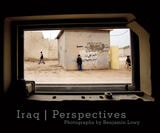
Iraq | Perspectives
Benjamin Lowy
Duke University Press, 2011
The Center for Documentary Studies / Honickman First Book Prize in Photography
Benjamin Lowy’s powerful and arresting color photographs, taken over a six-year period through Humvee windows and military-issue night vision goggles, capture the desolation of a war-ravaged Iraq as well as the tension and anxiety of both U.S. soldiers and Iraqi civilians. To photograph on the streets unprotected was impossible for Lowy, so he made images that illuminate this difficulty by shooting photographs through the windows and goggles meant to help him, and soldiers, to see. In doing so he provides us with a new way of looking at the war—an entirely different framework for regarding and thinking about the everyday activities of Iraqis in a devastated landscape and the movements of soldiers on patrol, as well as the alarm and apprehension of nighttime raids.
“Iraq was a land of blast walls and barbed wire fences. I made my first image of a concrete blast wall through the window of my armored car. These pictures show a fragment of Iraqi daily life taken by a transient passenger in a Humvee; yet they are a window to a world where work, play, tension, grief, survival, and everything in between are as familiar as the events of our own lives. . . . [In] the ‘Nightvision’ images . . . as soldiers weave through the houses and bedrooms of civilians during nighttime military raids, they encounter the faces of their suspects as well as bystanders, many of whom are parents protecting their children. . . . I hope that these images provide the viewer with momentary illumination of the fear and desperation that is war.”—Benjamin Lowy
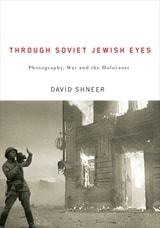
Through Soviet Jewish Eyes
Photography, War, and the HolocaustShneer, David
Rutgers University Press, 2012
These wartime photographers were the first liberators to bear witness with cameras to Nazi atrocities, three years before Americans arrived at Buchenwald and Dachau. In this passionate work, David Shneer tells their stories and highlights their work through their very own images-he has amassed never-before-published photographs from families, collectors, and private archives.
Through Soviet Jewish Eyes helps us understand why so many Jews flocked to Soviet photography; what their lives and work looked like during the rise of Stalinism, during and then after the war; and why Jews were the ones charged with documenting the Soviet experiment and then its near destruction at the hands of the Nazis.
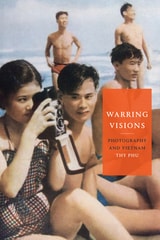
Warring Visions
Photography and VietnamThy Phu
Duke University Press, 2021